
Lieferung heute & morgen

Qualitätsgarantie

Willkommens-Angebote freischalten: KOSTENLOSE Lieferung | Bis zu 80 % RABATT | Kostenlose 30-Tage-JoyPlus-Testphase
App herunterladen
A stainless steel sieve is one of those kitchen essentials where small design details make all the difference to everyday use. A model that’s too shallow can splash when you drain food, an awkward handle may feel insecure in your hand, and the wrong mesh size can let too much liquid or too much food through. Barbecuing and making coffee also call for different features from washing vegetables.
If you focus only on a shiny metal finish or big promises of durability, it’s easy to overlook important details. This buying guide explains which specifications to look for before choosing a stainless steel kitchen sieve, grill basket or coffee filter.
“Stainless steel” describes a group of materials; it doesn’t automatically tell you everything about a product. When choosing, also check:
For barbecue accessories, the product description should explicitly state that the item is heat-resistant. An ordinary draining sieve isn’t automatically suitable for open flames or high barbecue temperatures.
A small hand-held sieve is ideal for berries, herbs or a single portion. But a capacity of 0.5 litres can quickly prove limiting when you’re draining pasta or preparing larger quantities of vegetables. A large pasta strainer, meanwhile, needs enough space in your sink and kitchen cupboard.
So check the diameter, height and capacity. For an extendable sink strainer, check the minimum and maximum width too.
A fine-mesh sieve catches small particles, making it suitable for fine ingredients or coffee, for example. When draining pasta, very tight mesh can slow the flow of water. For rice, flour, tea or pour-over coffee, however, much smaller openings are more suitable than those in a traditional colander.
Choose a mesh size that suits the food:
The shape of the filter is also important when choosing a stainless steel coffee filter. The product name describes the 800-mesh model as particularly fine. Check its dimensions and design to make sure it fits your filter holder.
A long handle can keep your hand away from the pan when draining hot food. For safe use, it should be firmly attached to the sieve and shouldn’t tip when under load. A stand is useful if you want the sieve to sit securely on the worktop.
For a grill basket, consider a few other features too: a long enough handle, a secure fastening and a stable base on the barbecue grill. Metal parts can get very hot, so use heat-resistant gloves and keep a safe distance from the flames.
Smooth stainless steel surfaces are generally easy to clean with warm water and washing-up liquid. Clean any residue off grill baskets promptly. If the manufacturer recommends hand-washing, avoid wire wool and abrasive cleaners, as these can scratch the surface.
Stackable or extendable models are handy in smaller kitchens. Before you buy, measure the width of your sink and the storage space available.
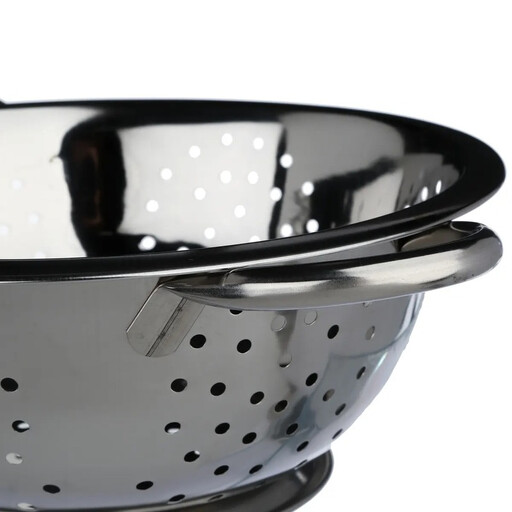
Why it suits this need: With a 2.2-litre capacity and a 24 cm diameter, it’s designed for everyday tasks such as draining pasta and washing vegetables and fruit.
The stated dimensions make it easier to check that the sieve suits your portion sizes and fits in your available storage space.
24 cm diameter, 12 cm height and versatile enough for washing, draining and sieving.

Why it suits this need: Its extendable design is made to fit sinks of different widths and offers a 3.6-litre capacity.
The precise length of 53.5 cm lets you check whether it fits your sink, rather than relying on a vague claim that it’s “universal”.
Extendable design, 3.6-litre capacity and ergonomic handle.
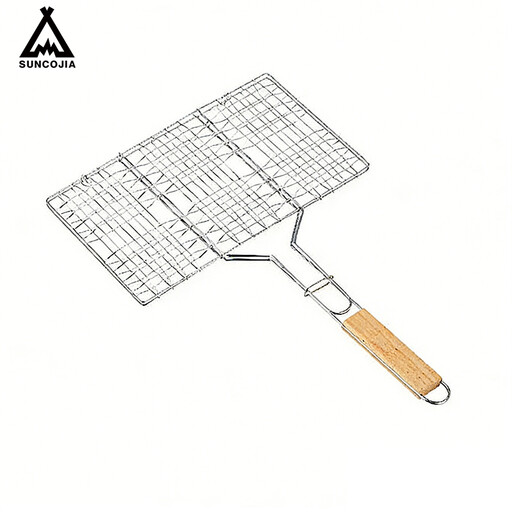
Why it suits this need: This BBQ grill basket is designed for fish, prawns, vegetables and other food for the barbecue, with a 32 × 19 cm stainless steel grill mesh.
The specified fine 304 stainless steel mesh is designed for small pieces of food, while the long handle keeps you further from the heat.
304 stainless steel grill mesh, 29 cm wooden handle and a design that requires no assembly.
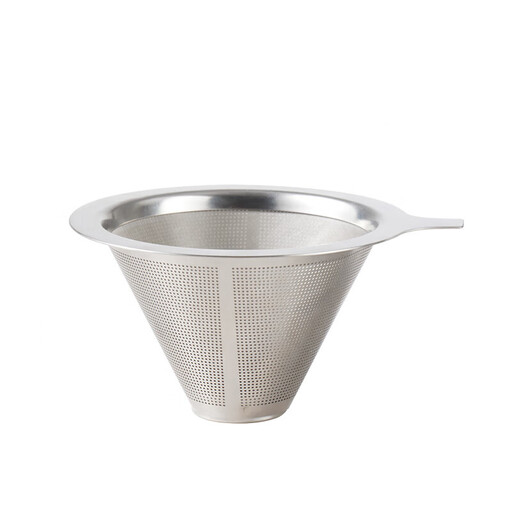
Why it suits this need: The product name specifies 800-mesh fabric and 304 stainless steel. This makes it a good choice if you’re looking for a particularly fine filter.
A specific mesh rating is more useful than vague terms such as “extra fine” and makes it easier to compare different filters.
800-mesh design and 304 stainless steel, as stated in the product name.
We’ve put together a complete, regularly updated list of products that meet these strict selection criteria and the safety regulations in force in the EU.
Rinse your stainless steel sieve with warm water after use, especially if starch, salt or barbecue marinade has stuck to it. Dry it thoroughly afterwards. For a grill basket, follow the care instructions provided by the manufacturer and don’t use wire wool. Also check regularly:
Don’t continue using a damaged sieve for food if metal parts are breaking off or the mesh has any open, sharp-edged areas.
A sturdy colander or pasta sieve with enough capacity and larger drainage holes is suitable for pasta. Look for a secure handle, a stable base and a diameter that suits the size of the pan you’re using.
That depends on how you prepare your coffee and how many fine particles you want to catch. A specific mesh rating, such as 800 mesh, is more useful for comparing filters than a general description such as “fine”. Also check that the shape and diameter fit your coffee machine or pour-over setup.
No. A kitchen draining sieve isn’t automatically designed for open flames or high temperatures. For this purpose, choose a product specifically described as a BBQ grill basket, fish grill basket or vegetable grill basket, and follow the safety instructions for use.