
Lieferung heute & morgen

Qualitätsgarantie

Willkommens-Angebote freischalten: KOSTENLOSE Lieferung | Bis zu 80 % RABATT | Kostenlose 30-Tage-JoyPlus-Testphase
App herunterladen
A stainless steel kitchen sieve should be able to drain pasta, rinse rice, wash fruit or sift flour finely. In practice, however, it quickly becomes clear whether a model is really suitable for your household. Bowls that are too small, unsuitable mesh sizes or poorly positioned handles can make a stainless steel kitchen sieve impractical – regardless of how high-quality the product images look.
The term stainless steel alone says little about the specific construction. For everyday kitchen use, details such as 304 stainless steel, 18/8 or 18/10 are more helpful, as they describe the alloy used in greater detail. An uncoated surface is also easier to check for visible damage.
For products with plastic parts, it should also be clear which components are suitable for contact with hot liquids. A stainless steel sieve with a plastic frame is not automatically suitable for boiling water.
A coarsely perforated pasta colander lets water drain quickly, but does not reliably retain fine flour particles or small grains of rice. A fine-mesh sieve, on the other hand, is suitable for straining stock, juice or flour, but may drain more slowly when handling large quantities of pasta.
The mesh size should therefore suit the food:
A draining colander with a diameter of 24 to 27 cm offers enough room for family-sized portions, but it also requires sufficient storage space and a suitably sized sink. A small strainer with a handle is more suitable for individual portions or small quantities of ingredients.
A stable base, side handles and a sufficiently deep bowl are also important. If you choose a colander without a stand, the bowl underneath must fit properly so that water does not flow back into the food.
Look for:
A 304 stainless steel sieve is often marketed for food contact. Even so, you should always check the relevant product details and care instructions when choosing a model. With some products, acidic and salty foods should not be left in the sieve for extended periods.
A classic sieve for straining often has a finer mesh structure than a large colander. For keen bakers, for example, a stated opening of around 1.5 mm is more useful than a general description such as “fine”. For coffee, very dense filters with 300 or 800 Mesh may be worth considering. However, these are not automatically suitable for pasta or coarse ingredients.
A dishwasher-safe kitchen sieve saves time, provided the manufacturer expressly states this feature. Plastic frames and wooden handles may require different care from a bowl made entirely from stainless steel.
The sieve should be allowed to dry completely after cleaning. Abrasive cleaners, steel wool and harsh detergents can damage the surface or fine mesh. With a mesh sieve, you should also check whether any of the openings have become misshapen.
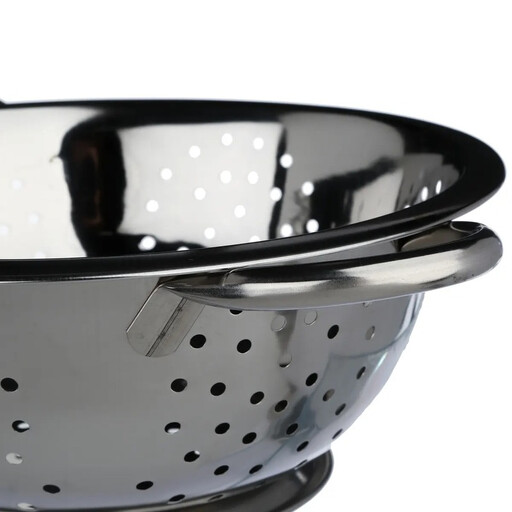
Why this product suits this profile: With a diameter of 24 cm and a capacity of 2.2 l, this colander handles everyday tasks such as pasta, fruit and vegetables without requiring a specialist model.
The stated dimensions make the capacity easy to understand. This makes it easier to judge whether the sieve is intended for individual portions or larger quantities.
Stainless steel construction, 24 cm diameter and 12 cm height; according to the product description, suitable for pasta, fruit, vegetables and dry ingredients.
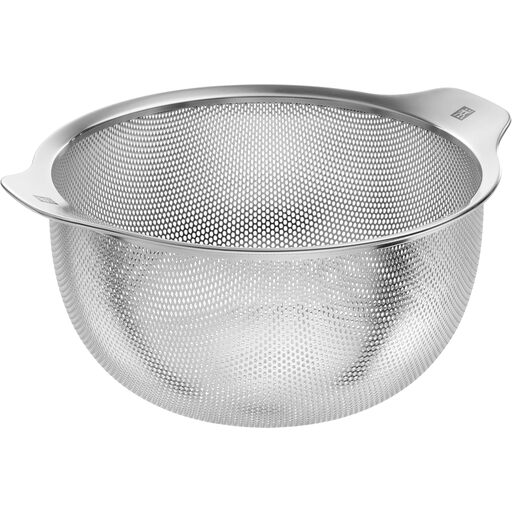
Why this product suits this profile: The 24 cm bowl, side handles and raised stand are designed for larger quantities and regular use.
The material, diameter, handles and stand are all clearly stated in the product details. The dishwasher suitability information should be checked again on the product page before use.
18/10 stainless steel according to the product description, side handles, 24 cm diameter and raised stand.
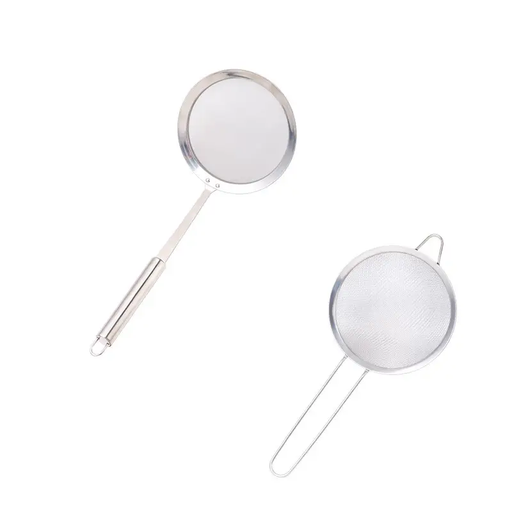
Why this product suits this profile: The fine-mesh sieve, with an additional skimming spoon, is aimed at users who want to filter flour, soya milk or liquids.
The fine mesh structure is designed for small particles and should not be confused with a coarsely perforated pasta colander. This makes it easier to choose the right tool for each task.
304 stainless steel according to the product details; two-piece set with fine-mesh filter and skimming spoon.
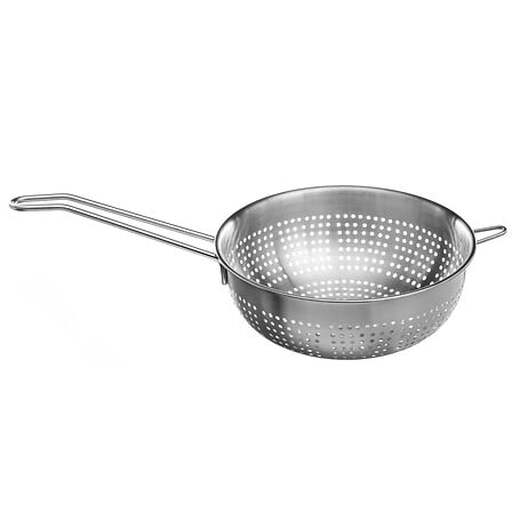
Why this product suits this profile: Its compact size is suitable for berries, small portions of vegetables or a single portion of pasta, and it can be stored without taking up much space.
The 0.5 l capacity prevents a small sieve from being used accidentally for large quantities. A larger model is more suitable for family-sized portions.
Compact stainless steel model with a long handle and fine drainage openings for small quantities.
We have put together a complete, regularly updated list of products that fully meet these strict selection criteria and the safety regulations applicable in the EU.
For rice, a rice sieve with small, evenly distributed openings is a sensible choice. With very large holes, individual grains may fall through. A deep bowl makes it easier to wash larger quantities, while a small sieve is sufficient for individual portions.
No. Many models made entirely from stainless steel are suitable for the dishwasher, but this must be stated in the relevant product description. Plastic frames, wooden handles or special finishes may come with different care instructions. Gentle hand washing can help extend the product’s service life.
Its lifespan depends on the material thickness, construction, level of use and care. Misshapen mesh, loose handles and rust spots are signs that the product should be replaced. Drying the sieve after cleaning, avoiding abrasive cleaners and not overloading it with excessively heavy ingredients can reduce common causes of wear.