
Lieferung heute & morgen

Qualitätsgarantie

Willkommens-Angebote freischalten: KOSTENLOSE Lieferung | Bis zu 80 % RABATT | Kostenlose 30-Tage-JoyPlus-Testphase
App herunterladen
A stainless steel skimmer can handle several jobs in the kitchen: lifting dumplings out of stock, separating vegetables from cooking liquid, removing foam and draining oil from fried food. But not every model suits every household. It’s often the combination of material, perforations, handle and spoon size — rather than the product name — that matters most.
The term stainless steel alone tells you little about the exact construction. For everyday use, details such as 304 stainless steel or a clearly specified stainless steel construction are more useful than an unexplained metal finish. Even stainless steel shouldn’t be left in contact with salt, acid or moisture for long periods.
A fine-mesh skimmer holds back small pieces and foam, but drains liquid more slowly. Larger, evenly spaced holes are more practical for quickly lifting pasta, vegetables, dumplings or fried food out of water or oil. For soup leftovers and fine foam, a frying skimmer with a different hole pattern may be a better choice.
A long handle keeps your hands further away from hot oil and boiling water. However, with coated pots and pans, the part that touches the cookware shouldn’t scratch the surface. A metal head is suitable for stainless steel or cast-iron cookware, while nylon or silicone can be a gentler alternative for delicate coatings. No handle is guaranteed to stay cool during prolonged exposure to heat.
Look for a specific material description and a smooth surface that’s easy to reach and clean. 304 stainless steel is specified for several available models. Rounded edges make cleaning easier. Welds, fine lines or small marks from the manufacturing process can occur on metal products and aren’t necessarily defects.
For coated cookware, look for a nylon or silicone head and a clearly stated temperature limit. For example, the Leifheit Spaghetti Spoon NylonSterling is listed as heat-resistant up to 160 °C. The manufacturer recommends hand washing and advises against leaving it in a hot pan for extended periods.
A compact model measuring 15 to 20 cm is suitable for smaller pans, bowls and occasional skimming. Longer options of around 32 to 34 cm are worth considering for deep pans, deep-fat fryers or larger family portions. Also check:
A pan hook can be useful when you need to rest the skimmer between tasks. It’s no substitute for careful handling if the handle has become hot from steam or prolonged exposure to heat.
A draining skimmer with larger holes is suitable for pasta, vegetables and hotpot ingredients. A finer mesh can separate liquid from smaller residue more effectively. A slotted ladle, on the other hand, often has a deeper bowl with drainage holes, making it suitable for lifting solid ingredients out of stock.
A traditional pasta server or spaghetti spoon has prongs or a specially shaped bowl. It helps you portion spaghetti, while a flat skimmer is better suited to vegetables or fried food. Retailers sometimes use these terms interchangeably, so the product description is the most useful guide.
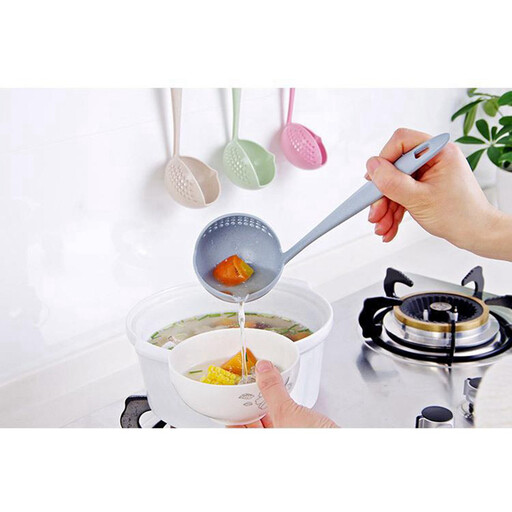
Why it suits this profile: The combination of a solid soup spoon and a perforated straining side covers everyday kitchen tasks in smaller households, on camping trips or at home.
Its two-in-one design means you need fewer separate utensils. Before buying, bear in mind that it’s made of plastic and shouldn’t be used over an open flame or on coated cooking surfaces.
Two functions in one kitchen utensil; listed as dishwasher-safe and suitable for hot liquids.
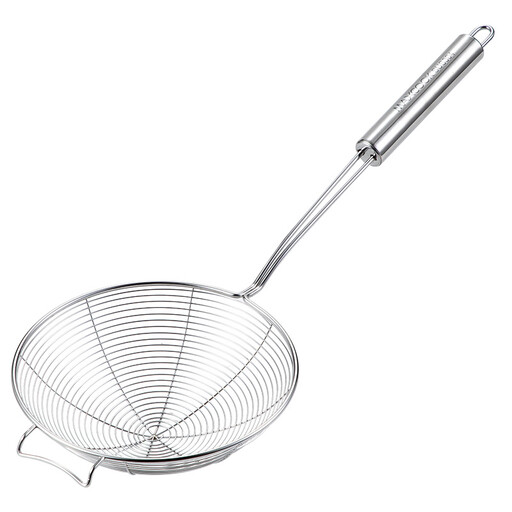
Why it suits this profile: This model is aimed at households looking for a 304 stainless steel utensil for hotpot, noodles, dumplings, soup and draining oil.
The stated material grade, deep spoon head and pan hook give you specific details to check, rather than vague marketing claims. The handle can still become warm with prolonged exposure to heat.
304 stainless steel, 20 cm size, hollow handle and hanging hole; smooth surface for easier cleaning.
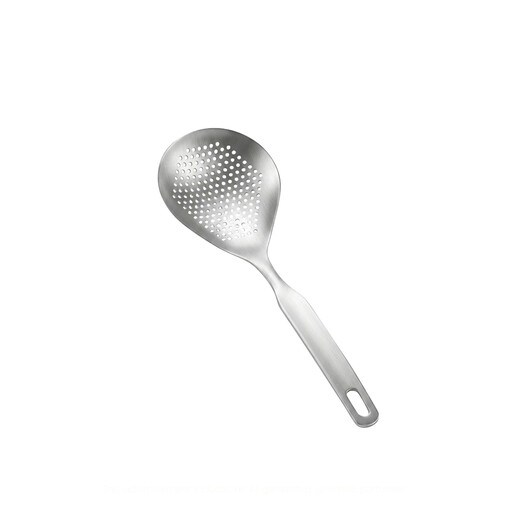
Why it suits this profile: The 32.6 cm model has a large straining head, making it well suited to frequent draining, hotpot and lifting food out of hot oil.
The long handle keeps your hands further from the heat, while the large, evenly spaced holes help oil and water drain away. You’ll still need to take care when working with hot oil.
304 stainless steel, one-piece long handle, large straining head and listed as dishwasher-safe.
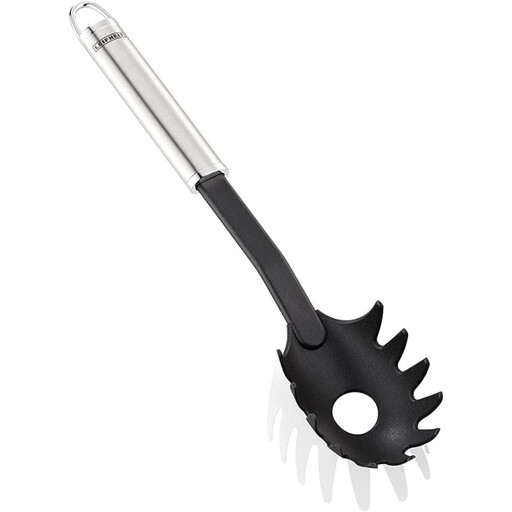
Why it suits this profile: The nylon head is designed for serving spaghetti and use with coated pots and pans.
The combination of materials avoids direct metal contact with the coating. The clear 160 °C limit and hand-washing advice help prevent misuse.
Nylon head for coated cookware, BPA-free according to the product information, hanging loop and 29 cm length.
We’ve put together a complete, regularly updated list of products that meet these strict selection criteria and the safety regulations in force in the EU.
To keep a stainless steel kitchen strainer or skimmer in good condition for longer, clean it promptly after use. For stainless steel, use a soft sponge and mild washing-up liquid. Steel wool, harsh acids and stiff brushes can damage the surface. Dry the product afterwards and avoid leaving it to soak for long periods.
When working with hot oil, boiling water or steam, use gloves or keep a safe distance from the heat by holding the handle further down. Don’t leave a skimmer unattended in a pan. Avoid metal edges on coated cookware; choose nylon or silicone instead.
Only if the manufacturer says it’s suitable and no metal edges come into contact with the coating. Nylon or silicone models are usually a better choice for delicate surfaces. According to the product information, the Leifheit NylonSterling is designed for use with coated pots and pans.
Longer models of around 30 cm or more are useful for hot oil, as they keep your hands further away from the frying area. How safe they are also depends on the handle’s insulation, its shape and how you use it. Don’t leave the skimmer in hot oil for long periods.
A skimmer or straining spoon has holes for draining water, stock or oil. A pasta server or spaghetti spoon usually has prongs and a shaped bowl for gripping and serving long pasta. If you often cook pasta, a pasta server is more specialised; a skimmer is more versatile for vegetables, dumplings and fried food.