
Lieferung heute & morgen

Qualitätsgarantie

Willkommens-Angebote freischalten: KOSTENLOSE Lieferung | Bis zu 80 % RABATT | Kostenlose 30-Tage-JoyPlus-Testphase
App herunterladen
A stainless-steel thermal bottle should keep drinks hot or cold for several hours, sit securely in your rucksack and be easy to clean. For commuters, professionals, students and active people, design and capacity are therefore not the only considerations. The technical specifications, closure and suitability for the intended use are all crucial.
Claims such as ‘keeps drinks cold all day’ are difficult to assess without temperature values. Check whether the manufacturer specifies precise periods and target temperatures. The starting temperature, fill level and ambient temperature also affect the result.
A vacuum flask with a double-wall construction reduces heat transfer. Even so, a claim such as ‘up to 24 hours’ is not a blanket promise for every everyday situation. It should be understood as the manufacturer’s stated performance under specific conditions.
A screw cap, one-touch lid and drinking-straw lid are designed for different uses. A lid with a drinking opening can be convenient when walking, while a fully closed screw cap is often better suited to carrying in a rucksack.
Pay attention to the sealing ring, safety lock and closure mechanism. Before using the bottle for an extended period, test it with cold water over a sink. Damaged seals or a lid that has not fully clicked into place can compromise leak resistance.
Not every stainless-steel drinking bottle is dishwasher-safe. With some models, the lid, seals and straws must be cleaned by hand. A wide bottle neck makes filling and cleaning easier. Narrow openings, on the other hand, can make removing drink residue more time-consuming.
When using hot drinks, you should also follow the manufacturer’s safety instructions. Carbonated drinks, dry ice and dairy products stored for very long periods can build up pressure in sealed containers and are not suitable for many insulated bottles.
Stainless steel is robust, odourless and suitable for repeated use. Product specifications may list different grades of steel, such as STS304, 304 or 316/316L. Some models describe 316-grade stainless steel as offering enhanced corrosion resistance. However, the material specification alone does not replace proper care instructions.
It is also important to check whether the specification refers to the bottle body, inner wall or individual components. Lids and seals are often made from different materials. For a BPA-free drinking bottle, this feature should be stated explicitly in the product details.
A double-wall drinking bottle with vacuum insulation is suitable for hot and cold drinks. Compare:
A 350 ml model is lightweight and fits into smaller bags. 500 to 550 ml is often suitable for commuting or a day at the office. 720 ml provides a larger supply of drinks, but also requires more space.
For the daily commute or the car, a leak-proof closure, a suitable diameter and, where relevant, compatibility with cup holders are important. A one-touch lid can be opened with one hand, while a screw cap usually offers a simple, straightforward closure design.
Before buying, check:
The following models differ in capacity, closure, cleaning requirements and intended use. The details on insulation performance and materials come from the respective product information.
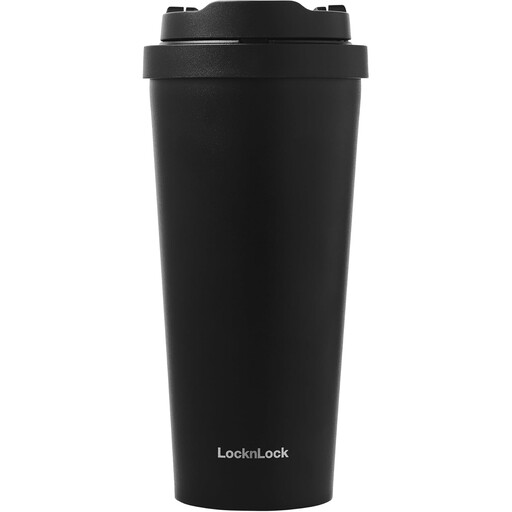
Why this product suits the profile: The 550 ml thermal mug is designed for the office, car and commute. According to the product information, its cylindrical shape fits standard cup holders.
The product details specify a one-touch opening with a safety lock, a wide opening and a leak-proof design. This makes it easier to assess the closure operation and cleaning requirements before buying.
550 ml capacity, STS304 stainless steel, BPA-free according to the product information, plus keeps drinks hot for up to 4 hours and cold for up to 28 hours under the stated conditions. Not dishwasher-safe.
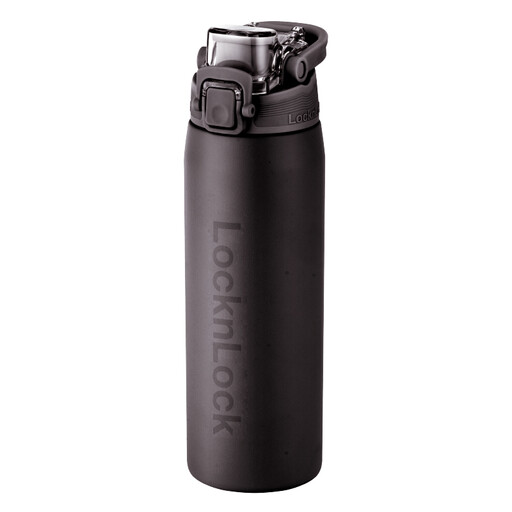
Why this product suits the profile: The larger capacity is designed for people who want to take drinks with them for longer periods during sport, travel, studying or outdoor activities.
The product description specifies 316 stainless steel, a drinking straw and a design suitable for transport. At the same time, it clearly states that the bottle must be washed by hand, making the care requirements transparent.
720 ml capacity, 316 stainless steel according to the product details, and a drinking straw for frequent sipping. According to the safety information, the model is not designed for carbonated drinks.
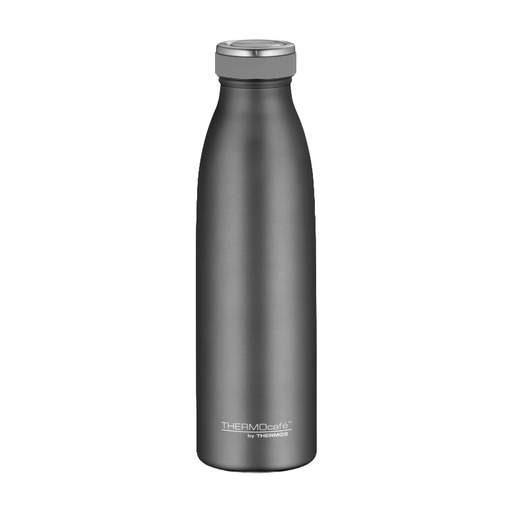
Why this product suits the profile: The 0.5-litre insulated bottle is designed for commuting, the office, the gym and day trips. Its stated dimensions make it easier to check whether it will fit in your bag or cup holder.
The manufacturer specifies a rubberised twist cap and a leak-proof design. It also states that the bottle should be washed by hand, rather than making vague dishwasher claims.
Keeps drinks hot for up to 12 hours and cold for up to 24 hours according to the product information, is BPA-free and has a diameter of 75 mm. Hand-washing is recommended for cleaning.
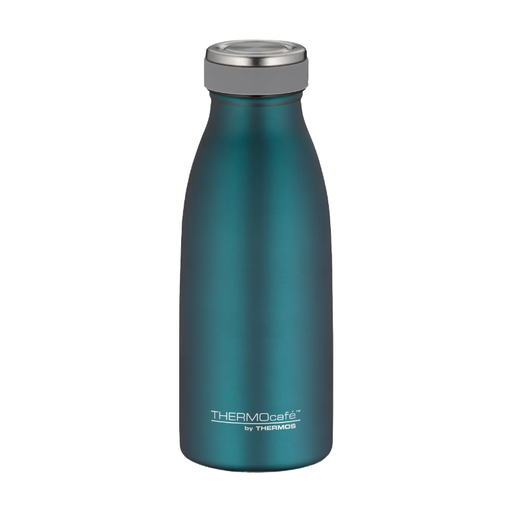
Why this product suits the profile: The compact capacity is suitable for schoolchildren, students and anyone looking for a lightweight drinking bottle for short journeys or smaller bags.
The product details specify the dimensions, a twist cap and hand-washing. This makes it easier to check before buying whether the capacity, care requirements and portability suit your everyday use.
350 ml capacity, keeps drinks hot for up to 12 hours and cold for up to 24 hours according to the product information, plus BPA-free materials.
We have put together a complete, regularly updated list of products that fully meet these strict selection criteria and the safety regulations applicable in the EU.
This depends on the vacuum insulation, fill level, starting temperature and surroundings. The product details for the models featured, for example, state up to 4, 8 or 12 hours for hot drinks and up to 24, 28 or 37 hours for cold drinks. These figures should be understood as the manufacturer’s stated performance under the relevant testing conditions.
For coffee or tea during a commute, 350 to 550 ml is often enough. If you do not want to refill during sport, travel or longer outdoor activities, you could consider a 720 ml model. Before buying, check the weight, bag size and compatibility with cup holders.
Rinse the bottle and lid with warm water and mild washing-up liquid after every use. Seals and drinking straws need particular attention. Use a soft bottle brush and allow all parts to dry completely. Whether the insulated bottle is dishwasher-safe is stated solely in the relevant product information.