
Lieferung heute & morgen

Qualitätsgarantie

Willkommens-Angebote freischalten: KOSTENLOSE Lieferung | Bis zu 80 % RABATT | Kostenlose 30-Tage-JoyPlus-Testphase
App herunterladen
A stainless steel thermos flask should keep drinks at the right temperature, remain leakproof in your backpack and be easy to clean. However, there are clear differences between a classic stainless steel water bottle, an insulated flask and a travel mug. The key is not the design alone, but the combination of insulation, closure, capacity and cleaning requirements.
Claims such as “up to 24 hours cold” usually refer to defined conditions, such as a completely full bottle and a specific ambient temperature. A small bottle that is only partially filled will generally lose its temperature more quickly. If you fill the bottle with a hot drink in the morning for the working day, you should therefore look for a specific heat-retention time rather than relying solely on a general insulation claim.
How securely a thermos flask seals depends on the gasket, thread and lid construction. Removable silicone rings can make cleaning easier, but they are also more likely to get lost. A push-button drinking lid is convenient for commuters, while a simple screw cap has fewer moving parts. Before carrying the bottle in a bag or backpack for the first time, test the closure with water.
With a dishwasher-safe water bottle, the manufacturer’s instructions may distinguish between the bottle body, lid and gasket. Some models may only be placed in the upper rack, while others should be washed by hand. A narrow opening also makes drying more difficult. If moisture or drink residue remains in the lid, unpleasant odours can develop.
Double-walled stainless steel with vacuum insulation reduces heat exchange between the drink and its surroundings. For everyday use, specifications such as 304 stainless steel or 18/8 stainless steel are common material designations. The LocknLock Metro Dual-Use, for example, is specified with an inner liner made from 316L stainless steel and an outer body made from 304 stainless steel. 316L is a specific material designation, but it is not a blanket quality guarantee for the entire bottle.
A BPA-free water bottle is particularly useful when the lid contains plastic components. Check whether the BPA-free claim applies to the entire product or only to specific components.
The external dimensions matter if the bottle needs to fit into a bike bottle cage, backpack or car cup holder. A wider bottle body often provides greater stability, but may not be compatible with every holder.
A large drinking spout makes it easier to drink during sports. A wide opening helps when adding ice cubes and cleaning the bottle. For hot drinks, the lid should be explicitly designed for that purpose. Steam and pressure can cause scalding when the lid is opened.
Carbonated drinks are not suitable for many insulated flasks because pressure can build up inside the closed container. Stainless steel bottles are also unsuitable for use in microwaves, ovens or on stovetops. Before buying, check whether the lid can be fully disassembled and whether replacement gaskets are available.
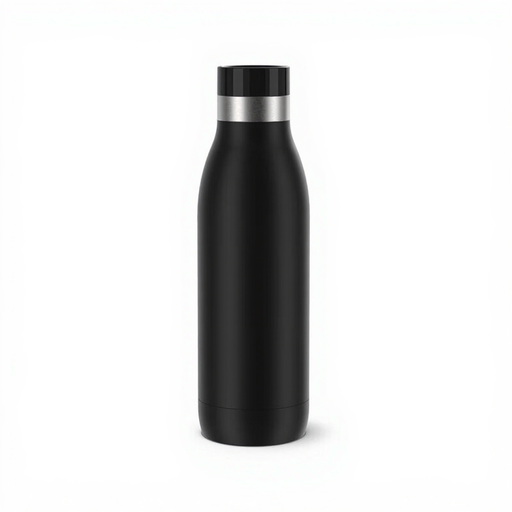
Why it suits this profile: Its compact format is ideal for commuters, students and everyday journeys on public transport.
The manufacturer specifies a leakproof design and dishwasher cleaning. This reduces maintenance compared with models that require hand washing.
500 ml capacity, Quick-Press-360° lid and, according to the product specifications, up to 12 hours hot and 24 hours cold.
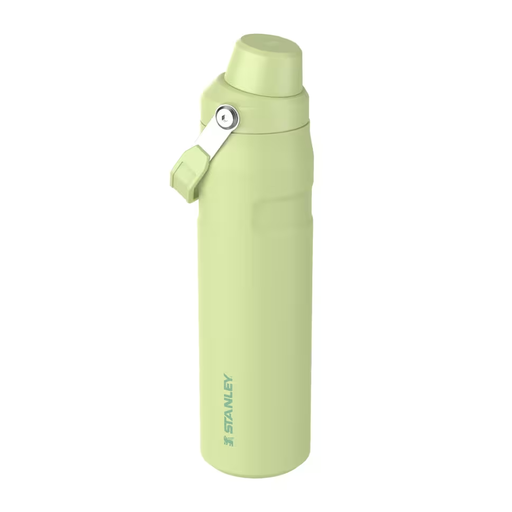
Why it suits this profile: This bottle is designed for active users who want to drink quickly during training, commuting or short outdoor trips.
The wide opening makes filling and cleaning easier. At the same time, the manufacturer advises against filling it with carbonated drinks.
90 percent recycled stainless steel according to the product description, Fast-Flow drinking opening, carry handle and dishwasher suitability. The stated cold-retention time is up to 10 hours; according to the manufacturer, ice remains intact for up to two days.
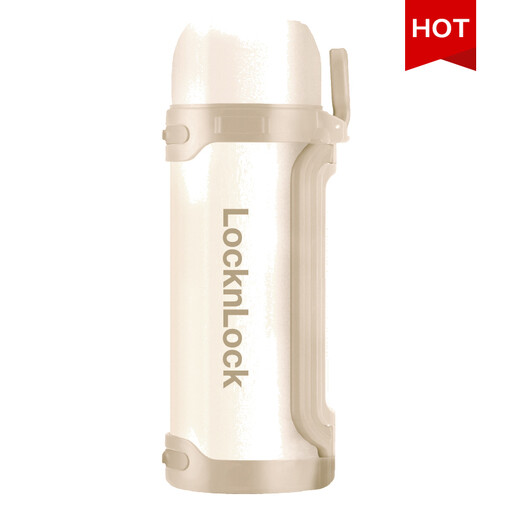
Why it suits this profile: Its generous capacity is designed for the office, car, home and longer periods outdoors.
The wide opening makes filling and cleaning easier. Because the bottle is heavy when full, it is better suited to stable placement or carrying by the handle.
304 stainless steel, carry handle, wide opening and a leakproof lid for hot and cold drinks according to the product specifications.
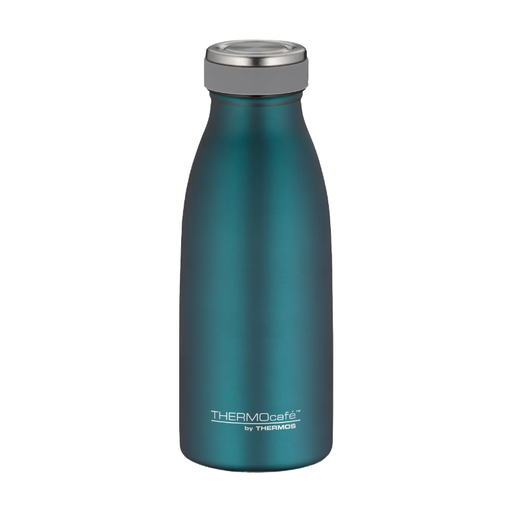
Why it suits this profile: With a 350 ml capacity and slim design, it fits small bags, office desks and short trips.
The bottle is not dishwasher-safe. Anyone who values effortless cleaning should weigh this point against their own habits before buying.
Double-walled stainless steel, BPA-free construction and, according to the product specifications, up to 12 hours hot and 24 hours cold.
For morning coffee, a travel mug with a capacity of 350 to 500 ml is generally more convenient than a large insulated flask. Anyone carrying water during sport or on a hike will benefit from 600 to 750 ml and a carry handle. For longer car journeys or use in the office, a thermos flask for work and travel with a capacity of 1,800 ml can reduce the need for refills. With every size, check whether the model fits your existing cup holders.
Our selection includes more products for hot and cold drinks, a range of capacities and different closure types.
Rinse the bottle with warm water and mild washing-up liquid after every use. Lids and gaskets should be cleaned separately and dried completely. When washing by hand, a bottle brush helps remove deposits from the inner wall. Store the bottle with the lid open so that air can circulate.
Avoid abrasive cleaners, steel wool and use in a microwave or oven. If a gasket becomes brittle, the lid no longer closes securely or the bottle body is badly damaged, the product should no longer be carried in a bag. A reusable water bottle only delivers long-term savings on disposable packaging, however, if it is maintained regularly and used for a long time.
Service life depends on the material, closure, gaskets and handling. With normal use, stainless steel can last for many years. Gaskets and lids are often the first components to wear out. Check regularly that the closure still seals securely.
A thermos flask for hot and cold drinks is generally designed for both, provided the product description explicitly states this. Hot liquids should not be filled right to the brim. Open the lid carefully and follow the manufacturer’s safety instructions.
It can reduce the cleaning effort involved in everyday use. Even so, check whether all components are dishwasher-safe and whether the manufacturer recommends using the upper rack. For coated surfaces or complex lids, hand washing may help extend the practical service life.