
Lieferung heute & morgen

Qualitätsgarantie

Willkommens-Angebote freischalten: KOSTENLOSE Lieferung | Bis zu 80 % RABATT | Kostenlose 30-Tage-JoyPlus-Testphase
App herunterladen
A vegetable cutter can make preparing potatoes, carrots, cucumbers, fruit or cheese considerably easier. However, the products differ significantly in terms of materials, blade geometry, cleaning and handling. A shiny stainless steel surface alone says little about whether a kitchen tool will be reliable in everyday use.
Anyone looking to buy a vegetable cutter should therefore consider more than just the number of functions. What matters is whether the design and accessories suit your household.
Products described as “multi-functional vegetable cutters” often combine several cutting methods. This can be practical if you regularly slice, grate and cut food. For individual tasks, however, a specialised tool may be easier to understand and simpler to clean.
Before buying, you should be clear about the following:
“Stainless steel” is a general material description. It does not automatically apply to every component of the product. With a stainless steel vegetable cutter, for example, only the blades may be made of metal, while the body, holder or handle may be made of plastic.
A more precise specification is 304 stainless steel. According to the product description, this material is used throughout the PURECOOK peeler. With the 5five mandoline slicer, on the other hand, the blade is made of stainless steel, while the blade guard or body is made of ABS plastic. These differences should be taken into account when choosing a product.
Slicing and grating blades need to be sharp to cut food evenly. However, that same sharpness increases the risk of injury. A missing finger guard, slippery handle or unstable base can make use unnecessarily unsafe.
The following features are therefore useful:
For frequent use, corrosion-resistant, food-safe materials are important. The PURECOOK set is described as having a smooth surface as well as resistance to wear and corrosion thanks to its 304 stainless steel construction. This makes cleaning easier and can support reliable everyday use when properly maintained.
When buying stainless steel kitchen tools, you should also check whether the welds, edges and joins are cleanly finished. Gaps can trap food residue. A simple design without hard-to-reach spaces is often easier to maintain.
A vegetable peeler with a straight blade is typically suitable for firmer skins, such as those of potatoes, apples or carrots. A serrated blade can be useful for softer skins, such as those of tomatoes, kiwis or mangoes. The PURECOOK set combines both blade types in a double-ended peeler.
If you need fine strips, look for a julienne cutter or a mandoline with a suitable attachment. A mandoline vegetable slicer can produce slices, strips or shavings, but requires particular care when using the finger guard. A vegetable grater, on the other hand, is designed for grating vegetables, cheese, nuts or chocolate.
Size affects both your worktop space and storage options. The 5five Multi-Purpose Mandoline Slicer measures 26.5 × 15 × 9.5 cm and weighs 550 g. This can be helpful when preparing larger quantities, but it requires more storage space than a compact hand peeler.
For everyday use, removable parts, easy washing and dry storage are important. According to the product descriptions, some of the products featured are dishwasher-safe. Even so, you should follow the manufacturer’s instructions and dry blades completely after cleaning. Abrasive cleaners and wire wool can damage surfaces.
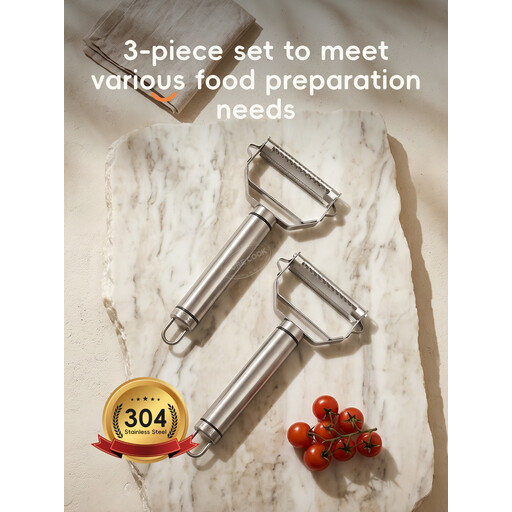
Why this product suits this profile: This three-piece set focuses on peeling and is suitable for households that need several peelers or prepare a variety of foods.
The two blade types are clearly assigned: the straight blade is for firmer skins, while the serrated blade is for softer skins. This means the functionality is explained clearly rather than simply described as a generic multi-purpose feature.
304 stainless steel according to the product description, three double-ended peelers, a simple design and stated dishwasher suitability.
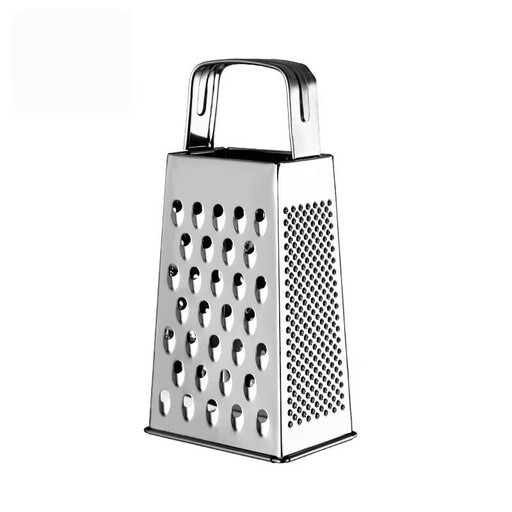
Why this product suits this profile: The four-sided design is appealing to users looking for a kitchen tool that can cut and grate a variety of foods in a classic format.
The product name specifies a four-sided stainless steel grater. This allows buyers to compare the design directly with their need for grating and different cutting surfaces.
Four sides for different food-preparation methods and a stainless steel construction according to the product name.
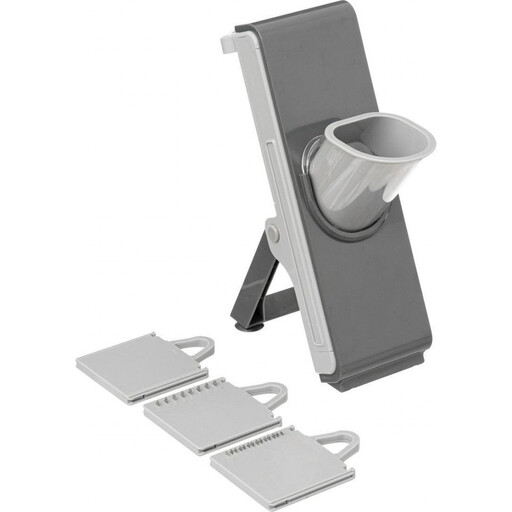
Why this product suits this profile: Families, keen home cooks and catering users who regularly prepare food can benefit from multiple functions for slicing, cutting and shredding.
The integrated pusher and finger guard address the risks of working with a mandoline. At the same time, the material breakdown and dimensions are specified clearly.
Stainless steel blade, ABS body, functions for slicing, grating and shredding, plus stated dishwasher suitability.
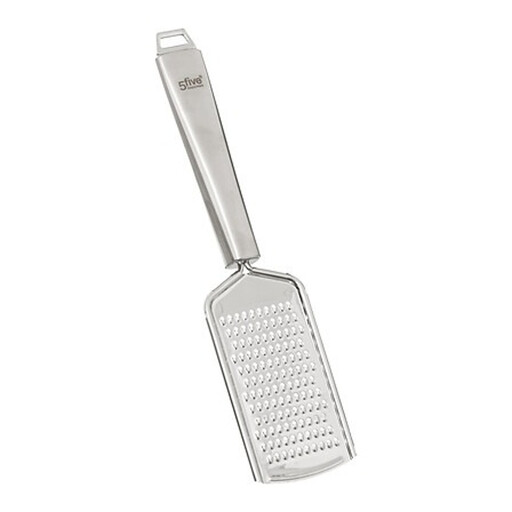
Why this product suits this profile: The compact handle is suitable for smaller kitchens, camping equipment or users who mainly want to grate hard cheese, nuts and chocolate.
The function is clearly focused on grating rather than promising several unused cutting options. Its compact dimensions make storage easier.
INOX-430 stainless steel according to the product description, ergonomic handle, 25.2 cm length and low product weight.
For occasional peeling, a simple vegetable peeler is enough. If you want to cut vegetables into uniform slices or sticks, choose a mandoline or vegetable slicer with a holder. A vegetable grater is the better choice if you regularly prepare cheese, nuts and chocolate.
A vegetable chopper with a hand guard can be useful for onions, potatoes and cucumbers. According to the product description, the BJ model with three blades is designed for chopping, cutting and julienne cutting, and features a hand guard. For cheese in specific thicknesses, an adjustable cheese slicer with a stainless steel wire may be more suitable than a grater.
We have put together a complete, regularly updated list of products that fully meet these strict selection criteria and the safety regulations applicable in the EU.
After use, rinse off food residue as soon as possible. Removable parts can go in the dishwasher if the manufacturer permits this. Blades and metal surfaces should then be dried completely. Abrasive cleaners, wire wool and harsh cleaning products can damage the surface.
It is not possible to give a general fixed lifespan. This depends on the materials, build quality, frequency of use and care. Regular visual checks for bent blades, rust, cracks or loose handles are important. Damaged cutting parts should not be used again.
That depends on how you plan to use it. For families or frequent users, a device with slicing, cutting, grating and julienne functions can replace several individual tools. If you only peel or grate cheese occasionally, a specialised kitchen tool is often easier to use and more space-efficient. The key is to make sure you genuinely need every function you choose.