
Lieferung heute & morgen

Qualitätsgarantie

Willkommens-Angebote freischalten: KOSTENLOSE Lieferung | Bis zu 80 % RABATT | Kostenlose 30-Tage-JoyPlus-Testphase
App herunterladen
If you regularly take meals with you, you need more than an attractive container. Stainless steel lunch boxes and thermal containers need to suit the food, how long it will be carried and your everyday routine. A bento lunch box for sandwiches and snacks has different requirements from an insulated food container or a soup thermos.
Three common buying misconceptions can lead to the wrong choice:
The product description for a stainless steel lunch box should specify the material used as clearly as possible. 304 stainless steel is used in many food containers. 316 stainless steel is also a commonly used grade of corrosion-resistant steel and is highlighted as a material specification for certain products. However, the material number does not replace checking the product as a whole.
You should also look for:
A leakproof lunch box with a tight-fitting lid is suitable for dry or low-moisture foods. For soup, stew or sauce, a wide-mouth, vacuum-insulated container with a screw-top lid is often a better choice. Before carrying it for the first time, test it with water over the sink.
The capacity should suit your portion size without taking up unnecessary space in your rucksack, briefcase or lunch bag. A container with a capacity of 61.2 fl oz holds approximately 1.81 litres. The dimensions of 18 × 15 × 6.7 cm are relevant to its flat, rectangular shape and should be compared with the storage space you have available.
These questions can help you choose:
A bento lunch box with several compartments is suitable for snacks, fruit, bread and side dishes. For meal prep, however, a larger single compartment may be more practical when the meal consists of one dish.
An insulated food container usually uses vacuum insulation. Temperature-retention claims should always be considered in relation to how full the container is, the starting temperature and the ambient temperature. Preheating it with hot water or cooling it first with cold water can help it retain temperature.
The following features are also important:
The 4 to 6 hours of temperature retention stated in the product information for certain models are manufacturer specifications, not a guarantee for every usage situation. A thermal lunch box with a capacity of 1.4 or 1.5 litres is more suitable for large portions, several people or longer periods away from home than for a short school morning.
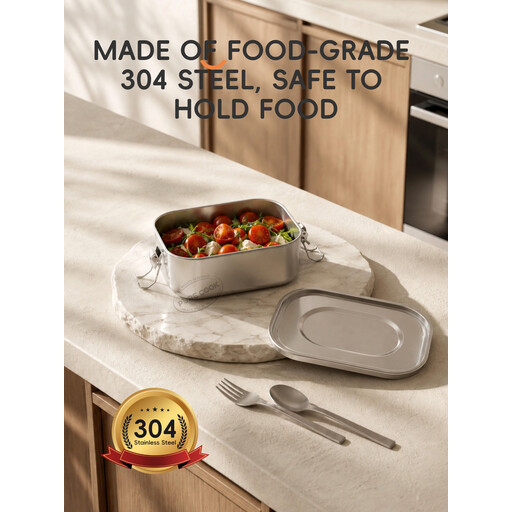
Why this product suits the profile: The rectangular single compartment, measuring 18 × 15 × 6.7 cm, with a stated capacity of 61.2 fl oz, is suitable for a larger meal at work, school or while travelling.
The product details specify 304 stainless steel, fastening clips and a removable silicone seal. This makes it possible to check key sealing and cleaning features before buying.
Single compartment, 304 stainless steel, clips and removable seal; dishwasher-safe according to the product details.
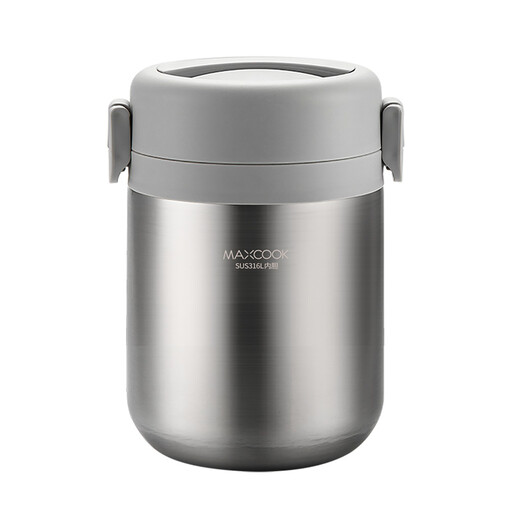
Why this product suits the profile: This vacuum-insulated stainless steel food container has a wide opening and, according to the product description, is designed for hot and cold foods as well as longer journeys.
Rather than making a blanket advertising claim, the product description specifies the material, vacuum insulation, wide opening and care instructions. The stated warnings should be followed when carrying hot food.
316 stainless steel, 1.5 l capacity, vacuum insulation, wide opening and tightly sealing lid according to the product details.

Why this product suits the profile: This soup thermos is aimed at commuters, outdoor users and frequent users who want to carry hot food in a single container.
The product details specifically point out the correct lid assembly, advise against tipping the container and recommend hand washing. This helps reduce misuse when carrying liquid foods.
304 stainless steel, vacuum insulation, 1.5 l capacity, wide opening and stated temperature retention of 4 to 6 hours.
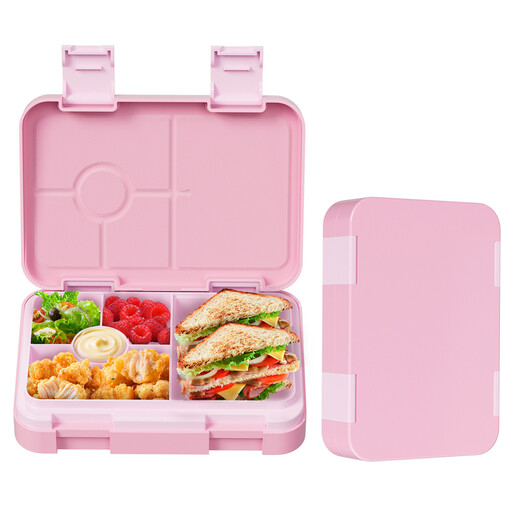
Why this product suits the profile: The divided lunch box is suitable for users who want to carry bread, fruit, snacks or side dishes separately, whether at school, in the office or on days out.
The compartment layout makes the intended use clear. Even so, liquid foods should be assessed separately, as dividers do not automatically create individual, independently sealed compartments.
Divided design, 54 oz capacity and one closure; suitable for various dry or semi-solid components of a meal.
Even a reusable lunch box needs regular care. Remove the silicone seal if it is designed to be removed, and clean the contact surfaces thoroughly. For thermal containers, the lid and sealing area should be hand-washed according to the manufacturer’s instructions. Allow all parts to dry completely before closing the container.
For transport:
We have put together a complete, regularly updated list of products that fully meet these strict selection criteria and the safety regulations applicable in the EU.
A classic stainless steel lunch box is primarily suitable for solid or low-moisture foods. For soup, stew and liquid sauces, a wide-mouth, vacuum-insulated container with a tightly sealing lid is recommended. Check the manufacturer’s details and test the seal before carrying it for the first time.
This depends on factors including the fill level, starting temperature, preheating and ambient temperature. Some models are stated to retain heat for 4 to 6 hours. These figures should be understood as manufacturer specifications and may vary in everyday use.
Not necessarily. 316 stainless steel is a specific material grade, but seals, closures, capacity, cleaning and insulation are also crucial to everyday usability. Choose the material alongside the other product features, taking the intended use into account.