
Lieferung heute & morgen

Qualitätsgarantie

Willkommens-Angebote freischalten: KOSTENLOSE Lieferung | Bis zu 80 % RABATT | Kostenlose 30-Tage-JoyPlus-Testphase
App herunterladen
A stainless steel sieve is a basic piece of equipment in many British kitchens. It is useful for draining pasta, washing vegetables, sifting flour and preparing tea or coffee. Even so, unclear product specifications and unsuitable dimensions often lead to disappointing purchases.
A fine-mesh sieve is suitable for flour, icing sugar, tea or very small particles. However, it may work more slowly when draining large pieces of pasta. A coarse-mesh stainless steel colander lets liquid drain more quickly, but does not reliably retain fine ingredients.
The term “fine” is not always used consistently. Wherever possible, look for a specific mesh or opening size, such as 1.5 mm for a flour sieve.
Depending on the alloy, material thickness and workmanship, stainless steel can be more or less suitable for a particular purpose. For products that come into direct contact with food, clear specifications such as 304 stainless steel or “suitable for food contact” are helpful. These details should come from the product description, rather than relying solely on marketing keywords.
Even a stainless steel sieve can develop marks if it is exposed to moisture, salt residue or harsh cleaning products over a prolonged period. It should therefore be dried completely after washing.
A sieve with a fine mesh can trap residue that is difficult to rinse away. Check whether the product is described as a dishwasher-safe sieve. Grill baskets and very fine filters, on the other hand, may be recommended for hand washing.
A sturdy rim, a secure handle and – in the case of a sink sieve – a suitable support surface are also important. A large draining sieve must sit securely over the sink without tipping.
A diameter of 16 cm is handy for smaller baking and kitchen tasks. For pasta, salad or larger quantities of vegetables, a considerably larger model may be more practical. Expandable versions can be placed over sinks of different widths. Check the actual length, width and height – not just the capacity.
A product specification such as 304 stainless steel is a specific material description. However, it does not replace checking the quality of the construction. Look for:
Hot liquids and grill accessories require additional care. Metal parts can become extremely hot, so heat-resistant gloves and a safe distance from naked flames are essential.
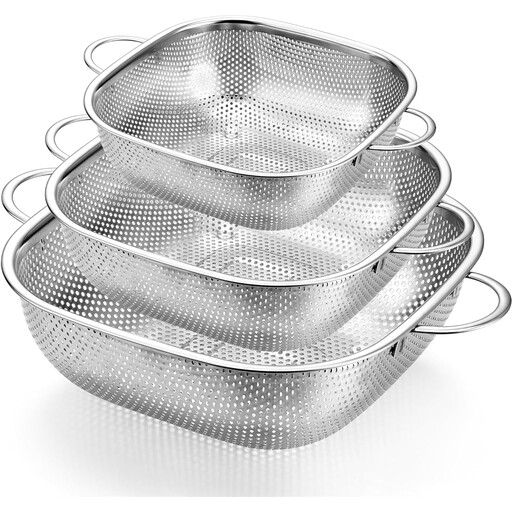
Why this product suits this profile: Three diameters of 20, 24 and 28 cm cover a range of quantities and kitchen tasks. The set is suitable for households that need more than just one sieve.
The different sizes reduce the risk of having to use an unsuitable single-size sieve for each application.
Three sizes; handles for easy straining.
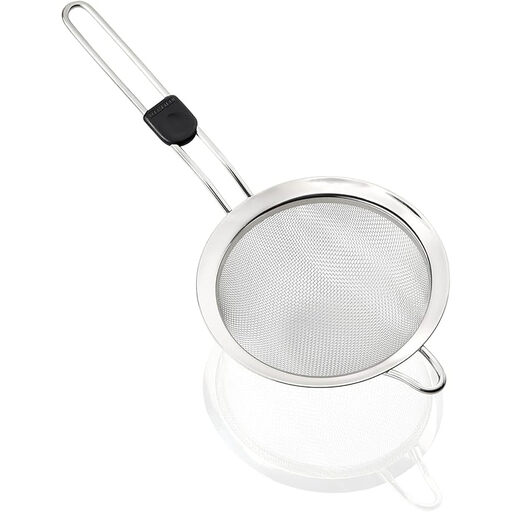
Why this product suits this profile: According to the product specification, this model has a 1.5 mm opening size, a thumb rest and a hanging loop. It is therefore particularly suited to baking and smaller kitchen tasks.
The specific mesh measurement makes its suitability as a flour sieve clearer than a description such as “fine” on its own.
1.5 mm opening; dishwasher-safe according to the manufacturer’s specification.
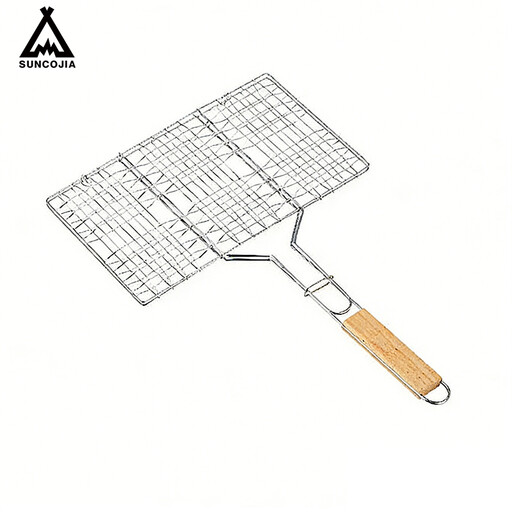
Why this product suits this profile: According to the product specification, this grill basket is designed for fish, vegetables, prawns and other foods for the barbecue. The mesh measures 32 × 19 cm and the handle is 29 cm long.
The stated mesh size and extended handle make its intended use on the barbecue clearer than with a universal kitchen sieve.
304 stainless steel grill mesh according to the product specification; 29 cm handle for keeping a safe distance from the heat.
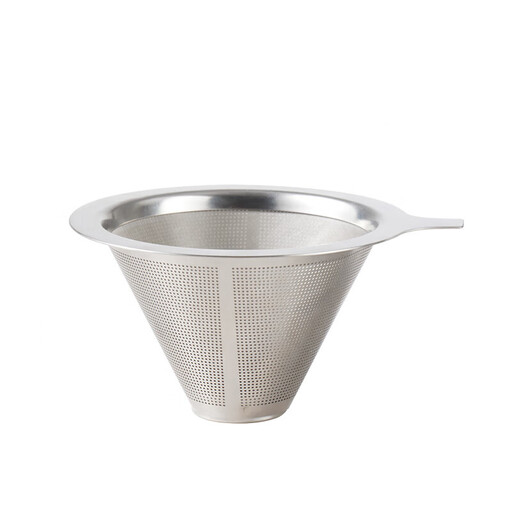
Why this product suits this profile: This very fine filter is designed for pour-over coffee preparation. It is a useful addition to a suitable cup or pot when you do not want to use a paper filter.
The stated 800-mesh design indicates a considerably finer filter than an ordinary pasta sieve.
304 stainless steel according to the product name; specifically positioned as a pour-over coffee filter.
We have put together a complete, regularly updated list of products that fully meet these strict selection criteria and the safety regulations applicable in the EU.
Rinse a stainless steel sieve as soon as possible after use, especially after contact with salt, starch or acidic foods. With fine filters, a soft brush helps to remove particles from the mesh. Do not use wire wool or highly abrasive cleaning products if you want to protect the surface.
With a stainless steel grill basket, the metal parts must cool completely before you touch them. Follow the manufacturer’s cleaning instructions for the particular product: while some models are described as dishwasher-safe, hand washing is recommended for others.
For flour, icing sugar and cocoa, a fine-mesh sieve with a specific small opening size is a sensible choice. For example, according to the product specification, a model with a 1.5 mm opening is designed for sifting dry ingredients. For larger quantities, you should also consider the diameter.
No. Whether a sieve is suitable for the dishwasher depends on the product specification and its construction. Check the care instructions before buying. Cleaning is more straightforward when a sieve is explicitly described as dishwasher-safe; grill accessories and very fine filters may require hand washing.
A stainless steel colander or pasta sieve is usually larger and has openings for liquids and larger foods. A tea strainer is smaller and finer, so that it retains tea leaves. For coffee, you also need to check whether the filter fits the cup, pot or brewing attachment you use.