
Lieferung heute & morgen

Qualitätsgarantie

Willkommens-Angebote freischalten: KOSTENLOSE Lieferung | Bis zu 80 % RABATT | Kostenlose 30-Tage-JoyPlus-Testphase
App herunterladen
The weekly grocery run, hauling beverage crates, or carrying heavy loads up several flights of stairs without an elevator—these tasks can make daily life significantly more difficult. A stair-climbing shopping trolley, sometimes colloquially known as a 'granny cart', is a practical wheeled shopping aid designed to overcome these exact hurdles. However, the market is flooded with models of widely varying quality. Many buyers discover only after a short time that their new helper can't withstand the strain.
This guide highlights the three most common design flaws that lead to a bad purchase and explains which technical features you should look for to find a durable and functional solution.
Before you make a decision, it's important to understand the typical weak points that often only become apparent with daily use.
To avoid a bad purchase, you should focus on the following technical parameters. These determine the durability and functionality of your shopping trolley.
The stair-climbing function lives or dies by the quality of its wheels. Look for models with a 3-wheel system where the wheels are made of Polyurethane (PU) or high-quality rubber. These materials are abrasion-resistant, run quieter, and offer better cushioning than hard plastic. The wheel mount should be securely welded or robustly bolted to the main frame to withstand the forces of climbing stairs.
The frame material is crucial for the stability-to-weight ratio.
Check whether the stated load capacity applies to the entire foldable shopping cart, including the bag and dynamic use on stairs. You can identify a solid construction by its reinforced axles and clean weld seams.
The bag's volume is specified in litres. For a single person's weekly shopping, 30–40 litres is often sufficient. For families or bulk shopping, models with 50 litres or more are recommended. Useful features can significantly enhance comfort:
Here is a selection of models tailored to specific user profiles that meet the quality criteria mentioned above.
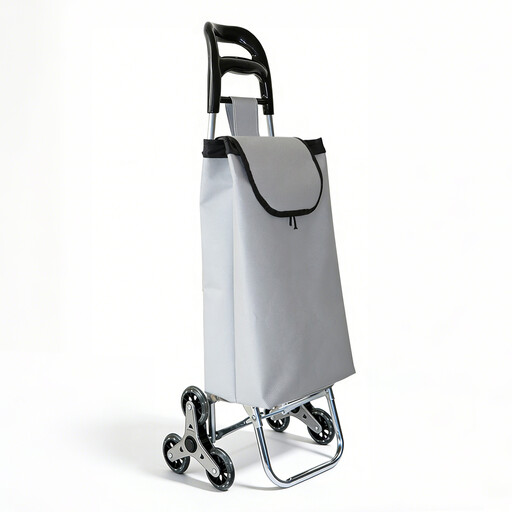
Why This Fits Their Persona: This model is designed for easy and safe handling. The ergonomic handle and dedicated stair-climbing feature provide the necessary support to bring groceries home safely without excessive strain.
The design is explicitly described as a 'Stair-Climbing Grocery Cart,' which indicates a wheel system and a sturdy frame built for dynamic loads.
The focus on an ergonomic handle reduces strain on the hands and back. Its large capacity is designed for a full week's worth of groceries.
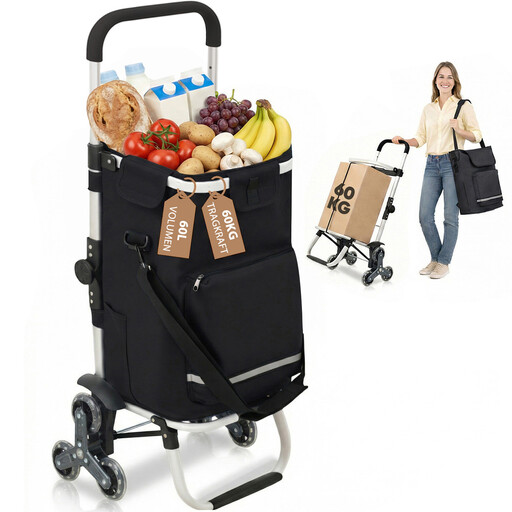
Why This Fits Their Persona: Ideal for people who need more than just a shopping trolley. Its 3-in-1 functionality (trolley, hand truck, shoulder bag) and large volume make it an all-rounder for bulk shopping, moving, or day trips.
The PU stair-climbing wheels are designed for demanding surfaces. According to the manufacturer, the lightweight aluminium frame is designed for a load of up to 60 kg, providing a solid foundation for versatile transport tasks.
The multi-functionality as a hand truck and the integrated cooler compartment offer significant added value. The large 60-litre capacity is suitable for extensive shopping trips or transporting bulky items.
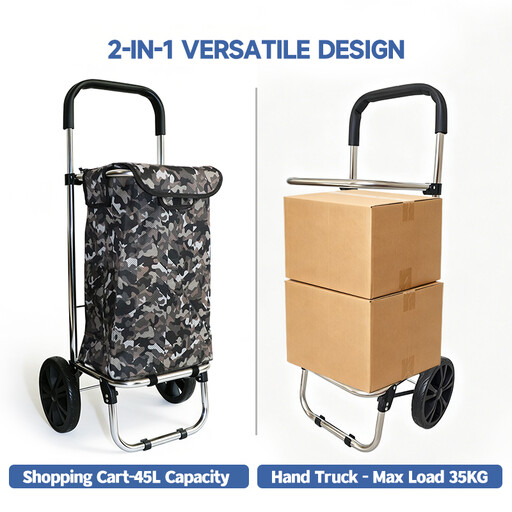
Why This Fits Their Persona: For city apartment dwellers seeking a durable, robust, yet space-saving solution. The focus is on a resilient material and a simple folding mechanism for storage in small spaces.
The stainless steel frame promises greater resistance to bending under load than basic aluminium frames. The 'Foldable & Heavy-Duty' description directly addresses the pitfalls of poor durability and impractical design.
The use of stainless steel ensures high durability and robustness. The folding mechanism is designed for easy, space-saving storage, which is crucial in smaller apartments.
We have compiled a complete, up-to-date list of products that fully meet these strict selection criteria and local safety regulations.
1. How durable is a stair-climbing shopping trolley, really? The load capacity depends heavily on the frame construction and material. Pay attention to the distinction between static and dynamic load capacity. A model with a steel frame and robust PU wheels can easily transport multiple beverage crates, while lighter aluminium models are better suited for a typical weekly grocery run. Refer to the manufacturer's specifications and check if they seem realistic for pulling up stairs.
2. Are the 3-wheel systems complicated to use? No, they are generally very intuitive to handle. When you pull the trolley up to a stair, the bottom wheel makes contact. As you continue to pull, the wheel cluster rotates, allowing the next wheel to grip the step. This mechanism significantly reduces the effort required compared to lifting a conventional trolley. It's important to pull the trolley smoothly and not jerkily.
3. How do I maintain my shopping trolley to ensure it lasts? Maintenance is straightforward. Regularly clean the frame and wheels with a damp cloth to remove dirt. The fabric bag on most models is detachable and can be cleaned separately (follow the manufacturer's care instructions). Occasionally check that all screws are still tight, and avoid consistently overloading the trolley beyond its recommended maximum capacity to maximize the lifespan of the frame and wheels.