
Lieferung heute & morgen

Qualitätsgarantie

Willkommens-Angebote freischalten: KOSTENLOSE Lieferung | Bis zu 80 % RABATT | Kostenlose 30-Tage-JoyPlus-Testphase
App herunterladen
As soon as children become mobile, your home transforms into an adventure playground full of potential hazards. Stairs, doors, and other passageways must be reliably secured. A stair gate is an essential purchase for this purpose. However, the market is overwhelming, and not every model delivers on its promise. Many parents invest in products that turn out to be impractical, unstable, or unsuitable for their living situation.
This guide shows you what to look for to avoid common buyer's remorse. We focus on the crucial features that define a good door gate and help you make the right choice for your needs. Because while a stair gate is indispensable for protecting against falls on steps, other areas may require solutions like a playpen for a safe play area or a bed rail for the transition to a toddler bed.
Before you make a decision, you should be aware of the most common problems that occur with low-quality or poorly chosen gates:
To avoid these problems, you should base your choice on objective criteria. The following three points are crucial for a safe and practical child safety solution.
The choice of mounting method depends on the location and your personal circumstances.
Measure the clear width of the opening precisely before buying a gate.
A reliable gate must not only be stable but also easy to handle in everyday life.
Based on these criteria, we have identified some products that are well-suited for specific requirement profiles.
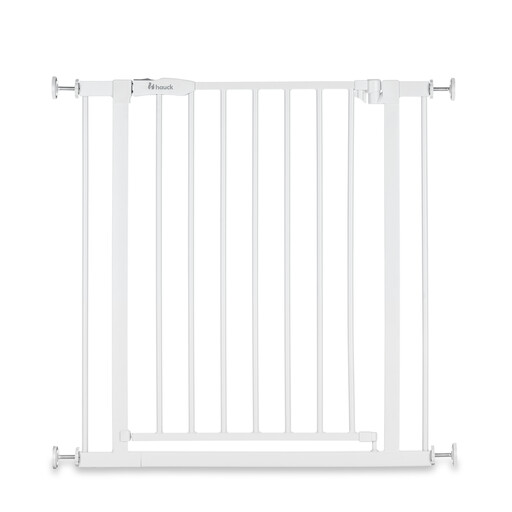
Why This Fits Their Persona: Ideal for anyone looking for a straightforward, no-drill solution for standard doorways (75-80 cm). Perfect for rental properties as it can be removed without leaving marks.
The gate is firmly tensioned using four pressure bolts. This ensures a stable hold and, when installed correctly, prevents the loosening or slipping that is often a problem with basic pressure-fit gates.
The manual, double-action lock can be operated one-handed by adults but is difficult for toddlers to overcome. The gate is also expandable with separate extensions.
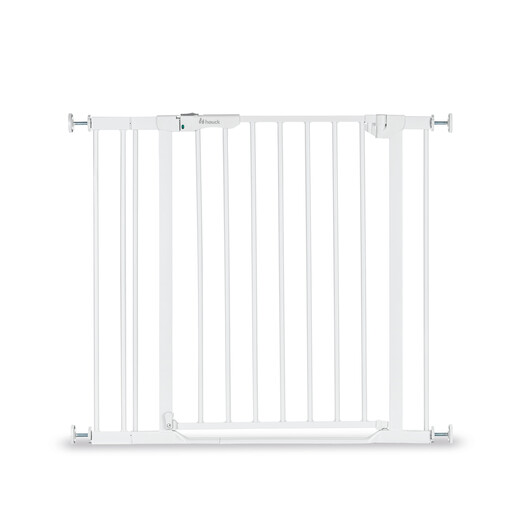
Why This Fits Their Persona: This set is designed for wider doorways of 84-89 cm and offers great convenience for parents who often have their hands full, thanks to its auto-close feature and low threshold.
It solves the compatibility problem for wider openings right out of the box with the included 9 cm extension. The magnetic lock closes automatically and reliably, minimising the risk of a gate being left open by mistake.
The combination of a self-closing mechanism and a flat step-over bar significantly reduces the tripping hazard and increases everyday convenience. A visual indicator also shows if the gate is correctly locked.
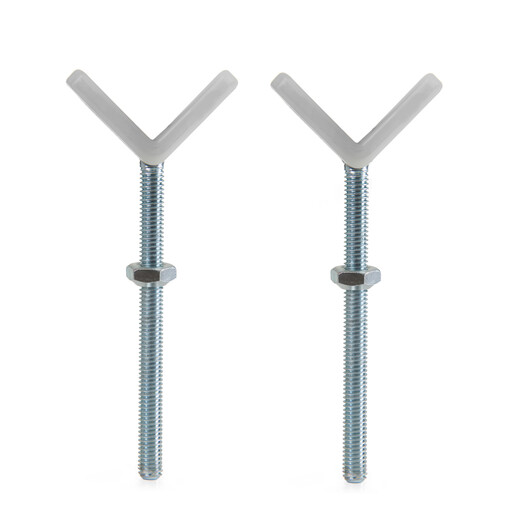
Why This Fits Their Persona: This isn't a gate, but the essential accessory for anyone who has a stair banister with round or oval posts and wants to securely mount a pressure-fit gate without drilling.
The Y-spindle solves the incompatibility issue with round posts (up to 6 cm in diameter). Instead of a flat pressure plate that would slip, the Y-shape envelops the round post and ensures a secure pressure-fit connection.
Enables the no-drill installation of compatible Hauck safety gates on banisters where it would otherwise not be possible. The installation is tool-free and leaves no marks on the banister.
We have compiled a complete, real-time list of products that fully satisfy these strict selection criteria and UK safety regulations.
Many manufacturers and safety institutions recommend a permanently screw-fitted gate for installation at the top of the stairs, as the risk of falling is greatest there. A pressure-fit gate can give way under improper installation or heavy force. If you do use a pressure-fit gate, ensure it is extremely tight, use the included wall cups, and check the tension regularly. The door should also only open away from the stairs, not out over them.
Measure the clear opening at its narrowest point. For door frames, measure between the frames, not on top of them. If you are mounting the gate on a wall with skirting boards, measure both at the height of the skirting board and further up, as the width may vary. The gate must fit securely at the narrowest point.
The EN 1930:2011 standard is a European safety standard for child safety barriers for domestic use. It specifies requirements for materials, construction, and stability. Key points include that the gaps between the bars must be between 50 mm and 65 mm to prevent a child's body from slipping through but their head from becoming trapped. The locking mechanisms and the overall durability of the gate are also tested. A gate that meets this standard offers a certified baseline of safety.