Collectors comparing duplicates
If you compare entries, lists and stamp images side by side, you need a window layout that keeps both text and images easy to read.


When comparing catalogue entries and images, a clear, easy-to-read window layout matters more than resolution alone. A 27-inch QHD monitor can be a good place to start. Dell specifies the U2724D as a 27-inch model with 2560 × 1440 pixels, while ASUS lists the PA279CRV as a 4K monitor with 3840 × 2160 pixels. For reliable colour comparisons, your scans, profiling and lighting also need to work together. A monitor won’t identify duplicates for you.
If you compare entries, lists and stamp images side by side, you need a window layout that keeps both text and images easy to read.
If you often enlarge images, consider how clearly you can see image details and whether you need a controlled colour workflow.
If you work through lots of entries in one sitting, consider screen position, readable text and how the monitor connects to your computer.
Start by considering how you actually arrange your catalogue and images. Then check that the resolution, colour workflow, ergonomics and computer connections suit your workspace.
| What matters to you | What to check before buying | Who this matters most to |
|---|---|---|
| Comparing catalogue entries and duplicates | Try your own entries in a split-screen layout and check the text size. Consider screen size and resolution together. | If I want to read catalogue entries and compare images at the same time, usable screen space matters most. Around 36% of collectors prioritise side-by-side comparisons. |
| Assessing image details and colours | View your own scans at the magnification you usually use. For colour-critical work, consider capture, display and profiles together. | If I’m checking small image details or colour differences, I want the display to suit my scans. Around 29% of collectors prioritise checking images and colours. |
| Staying comfortable during long sessions | Check the height adjustment, tilt, stand footprint and preferred text size at the desk where you plan to use the monitor. | During longer cataloguing sessions, I want to be able to adjust the screen to suit my seating position. Around 21% of collectors place particular importance on ergonomics and readability. |
| Connecting your computer | Check the video output, power delivery you need, cables and any hub requirements against the specifications for the exact monitor model. | If I’m connecting a computer I already own, its video and charging capabilities need to match the monitor. Around 14% of collectors prioritise computer connectivity. |
Even at a high resolution, catalogue text and comparison windows need to remain readable at your chosen scaling.
Try your usual window layout and text size rather than comparing only the maximum resolutions.
The monitor is just one part of the process, which also includes capture, the image file and viewing conditions.
For colour-critical records, consider scanning, calibration, profiling and viewing conditions together.
A controlled colour workflow may involve extra checks and, in some cases, suitable tools.
Dell lists the P2422HE with a stand and a version without a stand as separate variants.
Before buying, check the full model variant, what’s included and the mounting option you need.
A version supplied without a stand may need a suitable mount.
The Dell models listed here include a QHD option for working with multiple windows and a more compact Full HD hub model.
The ProArt PA279CRV is a 27-inch 4K option for workflows that involve enlarged images and different colour modes.
The SW242Q is a 24.1-inch option for a deliberately colour-managed scanning workflow.
The 27UP850K-W is another 27-inch 4K option, with USB-C and an adjustable stand.
The ColorEdge CS2400S is a 24.1-inch wide-gamut option for workflows focused on colour editing.
This selection includes QHD and 4K monitors for catalogue windows and enlarged scan views, as well as a compact Full HD monitor. Compare the resolution and connections with your workflow and the computer you already own.
 No image available
Could suit side-by-side catalogue windows and checking enlarged scans. Check that the text size works with your usual scaling.
Listed in the product name: QHD, 27 inches, 99% Adobe RGB and 99% sRGB.
Colour gamut specifications alone don’t guarantee consistent colour reproduction of a stamp. You also need to consider scanning, profiling and lighting.
 No image available
The 4K resolution could be useful for enlarged images. Check that catalogue text remains readable at your preferred scaling.
Listed in the product name: 3840 × 2160 pixels, USB-C with 90 W Power Delivery, and PIP and PBP.
 No image available
Could suit enlarged scan views and a workspace with a compatible USB-C connection. Check that it works with your computer.
Listed in the product name: 4K 160Hz/FHD 320Hz, Type-C 65W, KVM, and height, tilt and swivel adjustment.
 No image available
The QHD specification could be useful for displaying catalogue entries and comparison images. Check both views at your usual text size.
Listed in the product name: 2560 × 1440 pixels, 75Hz, USB-C 65W Power Delivery, USB hub and height adjustment.
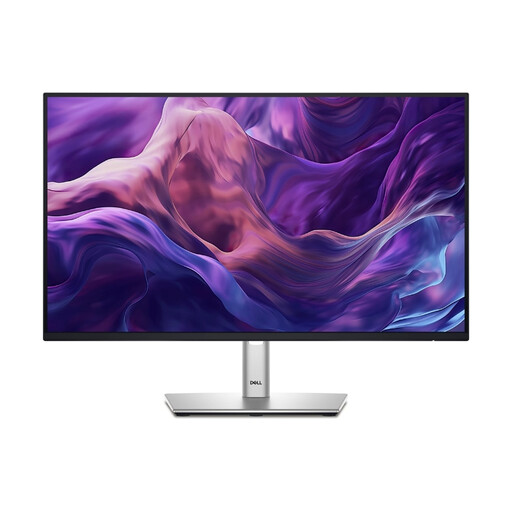 No image available
This more compact Full HD model could suit a workspace with limited desk space. It has fewer pixels for side-by-side views than QHD and 4K options.
Listed in the product name: 24 inches, FHD, IPS and USB-C. Check that your computer’s connections and the accessories you need suit your workflow.
No. A monitor displays entries and images; duplicates need to be checked as part of your cataloguing workflow. OpenNumismat describes features for managing catalogues, wish lists and sales lists, but a higher screen resolution doesn’t automatically detect duplicates.
Open the catalogue entry and comparison image side by side, then adjust the text so both are easy to read. Set the screen height and tilt to suit your workspace. The ASR A6 sets out requirements for workplaces and doesn’t apply simply because you have a private collecting hobby.
No. The International Color Consortium describes calibration and profiling as complementary steps for consistent on-screen display. You should also consider the scan or photograph you’re using and the viewing conditions.
Check whether a stand and the cables you need are included, and whether your colour workflow requires any additional tools. For a typical distance sale to a consumer, §§ 312g and 355 BGB generally provide a 14-day right of withdrawal. The start of the period and statutory exceptions depend on the circumstances and applicable legal requirements.
EU energy-labelling requirements apply to electronic displays. The energy label and product information sheet can help you compare the stated values. The German Environment Agency advises that an old monitor must not be put in household waste; take it to a designated return or collection point instead. Energy labelling and disposal are separate requirements and don’t establish a general minimum energy class for choosing a monitor.