
Lieferung heute & morgen

Qualitätsgarantie

Willkommens-Angebote freischalten: KOSTENLOSE Lieferung | Bis zu 80 % RABATT | Kostenlose 30-Tage-JoyPlus-Testphase
App herunterladen
A stand blender might seem like a simple purchase, but the market is flooded with devices whose marketing promises often outpace their actual performance. Many buyers quickly discover that their new blender struggles with tougher ingredients, is complicated to clean, or loses power unexpectedly fast. To help you make an informed decision, we'll highlight the most common pitfalls and the features that truly matter.
Before diving into technical specifications, it's wise to understand the typical marketing traps that often lead to a bad buy.
To avoid these traps, you should focus on objective, technical parameters that determine a device's real-world utility.
The raw wattage is only part of the equation. A good kitchen blender is defined by the interplay of motor power, the number and shape of its blades, and the maximum speed (RPM).
The jar's material affects its durability, hygiene, and range of applications.
The right type depends on your intended use.
Here are a few recommendations tailored to specific user profiles that take the above criteria into account.
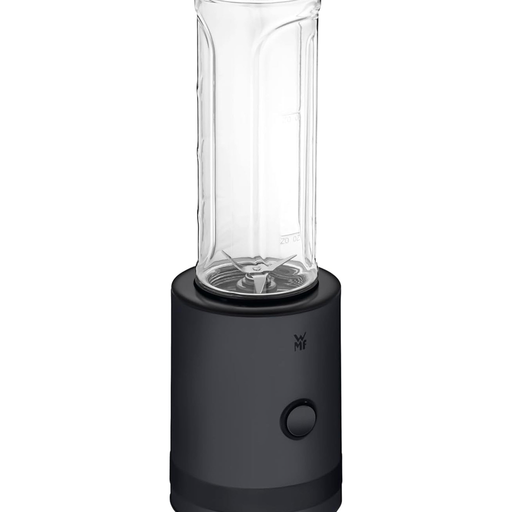
Why it's a good fit: Ideal for professionals or students who want to quickly make a fresh smoothie for the road. Its compact design and the two included to-go containers make it a practical everyday companion.
This device avoids the "all-in-one" illusion by focusing on one core function: blending smoothies. The 300-watt power is perfectly suited for this purpose.
Two 0.6-litre Tritan containers that double as blending jars and to-go cups. The removable parts are dishwasher-safe, which bypasses the cleaning trap.
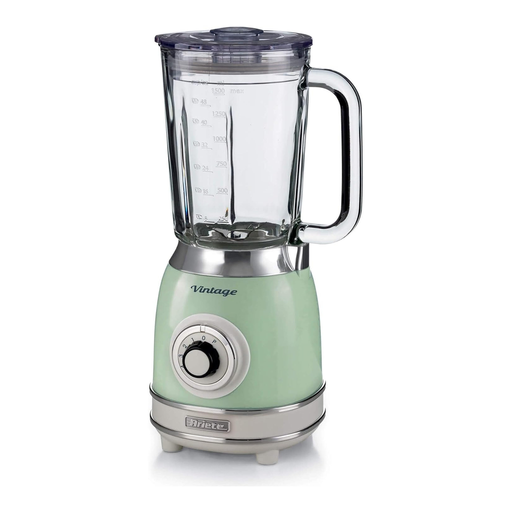
Why it's a good fit: For families and home cooks who value both aesthetics and functionality. The retro design is an eye-catcher, while the powerful motor and large glass jar allow for versatile applications to meet family needs.
This model avoids the wattage trap by combining a solid 1000-watt performance with a robust 1.5-litre glass jar and a 4-blade system. The separate ice-crusher function is designed for a specific, demanding task.
Four speed settings plus a pulse function for precise control. The glass jar is hygienic, durable, and dishwasher-safe, simplifying cleanup.
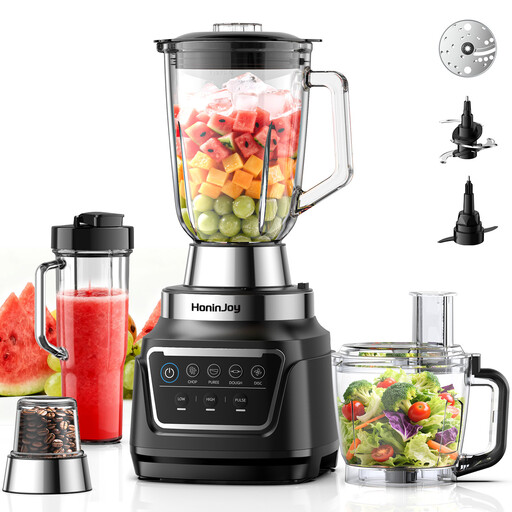
Why it's a good fit: For anyone looking for a true workhorse in the kitchen. This set is more than just a blender—it's a complete food processor that covers a wide range of tasks, from kneading dough and chopping vegetables to grinding spices.
This model addresses the "all-in-one" trap with a high peak power of 1300 watts and dedicated, full-sized attachments, including a 2-litre food processor bowl and a separate grinding cup. The preset programs (CHOP/PUREE/DOUGH) are optimised for specific tasks.
Comprehensive accessory set including a 1.5-litre glass blending pitcher, 2-litre food processor bowl, grinding cup, and sports bottle. All removable parts are dishwasher-safe.
We've compiled a complete, up-to-date list of products that fully meet these strict selection criteria and comply with UK safety regulations.
1. How many watts does a good stand blender really need? The required wattage depends on the intended use. For soft fruits and liquids, 300–600 watts, typical of a personal blender, is sufficient. For crushing ice, frozen ingredients, or grinding nuts, a high-performance blender with at least 1000 watts and a robust blade system should be chosen. Always consider the interplay of power, blades, and jar design.
2. Can I blend hot liquids in any stand blender? No, not every blender is suitable for this. A blender with a glass jar is generally the safest choice for hot soups. For plastic jars, even high-quality Tritan, you must check the manufacturer's specifications for maximum temperature resistance. Never fill the jar to the brim with hot liquids, as pressure can build up from the steam.
3. What's the easiest way to clean a stand blender? The quickest method is self-cleaning. Fill the jar halfway with warm water and add a drop of dish soap. Close the lid and run the blender on high for about 30 seconds. Then rinse. For a more thorough cleaning, models with removable blade assemblies or dishwasher-safe parts are advantageous.