
Lieferung heute & morgen

Qualitätsgarantie

Willkommens-Angebote freischalten: KOSTENLOSE Lieferung | Bis zu 80 % RABATT | Kostenlose 30-Tage-JoyPlus-Testphase
App herunterladen
A versatile stand blender has become an indispensable appliance in many kitchens. Whether you're preparing nutrient-rich smoothies, creamy soups, sauces, or crushing ice, its applications are incredibly diverse. However, with a vast selection of models featuring different performance levels and functions, making a choice can be complex. This guide provides an objective framework to help you select an appliance that meets your specific needs. We will outline key criteria and present a selection of models with various specialities.
Before making a decision, it's important to consider a few technical specifications. These will help you objectively assess a blender's performance and suitability for your intended use.
A blender's power, measured in watts (W), and its maximum revolutions per minute (RPM) are crucial indicators of its performance.
The material and size of the jar affect the blender's handling, durability, and overall versatility.
Modern stand blenders offer various control schemes, from simple manual dials to digital touch displays with automatic programs. A professional-grade blender often stands out with its precise manual controls and preset programs for tasks like smoothies, soups, ice crushing, or cleaning. These programs automatically adjust the speed and duration to deliver consistent results. A pulse function is also useful for controlled chopping of ingredients.
Here is a selection of appliances that cater to different user profiles—from the flexible all-rounder to the compact specialist.
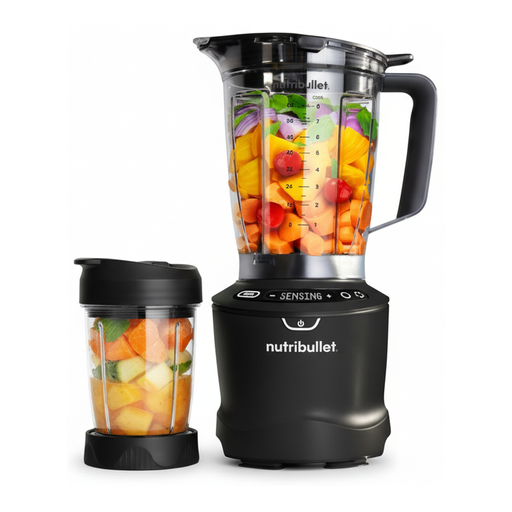
What sets it apart: The Nutribullet SmartSense Blender Combo is a versatile system that combines a powerful motor with smart controls. With 1500 watts of power, it effortlessly handles both hard and soft ingredients. It is operated via a touchscreen display that provides access to five variable speed settings, a pulse function, and automatic blending programs. Its flexibility is highlighted by the included accessories: a large 1.8-litre pitcher for family-sized portions and two to-go cups (0.9 L and 0.7 L) for single smoothies on the go.
Pros:
Who it's for: This model is ideal for households looking for a flexible all-in-one solution. It is suitable for preparing large batches as well as quick, single servings for on the go.
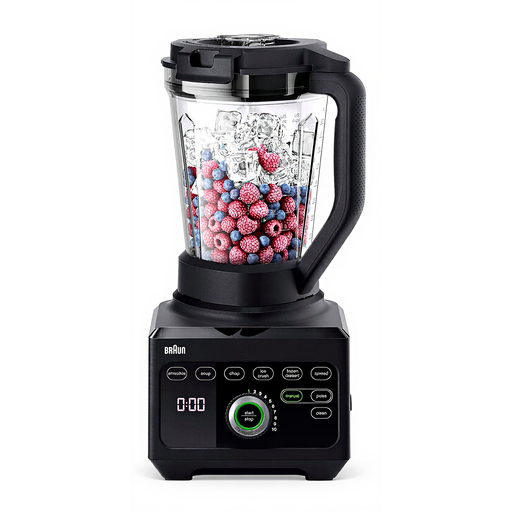
What sets it apart: The Braun PowerBlend 9 stand blender is designed for high performance and precise texture control. Its 1600-watt motor delivers the power needed for demanding tasks. According to the manufacturer, the TriAction Technology, featuring a triangular-shaped jar, ensures ingredients are blended more efficiently. A standout feature is the iTextureControl, which offers 18 possible blending results through 6 automatic programs and 3 texture settings. The Precision-Edge blades are made in Solingen, Germany.
Pros:
Who it's for: This appliance is aimed at users who want maximum power and control over the texture of their creations. It is particularly well-suited for large batches and blending very hard ingredients.
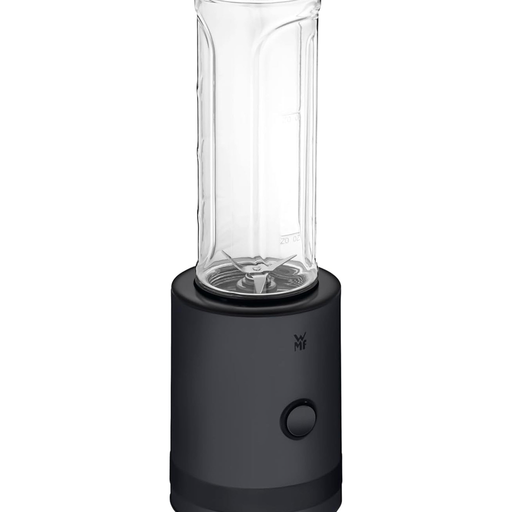
What sets it apart: The WMF stand blender from the Küchenminis series is designed as a compact personal blender. With 300 watts of power and up to 23,000 RPM, it specialises in the quick preparation of smoothies. The appliance comes with two 0.6-litre Tritan blending jars that, thanks to the included drinking lids, can be used directly as to-go bottles. According to WMF, the 4-pronged stainless steel blade is also suitable for crushing ice. Its compact design in Cromargan stainless steel makes it a space-saving solution.
Pros:
Who it's for: This model is the perfect choice for individuals, couples, or professionals who want a straightforward, fast blender primarily for on-the-go smoothies and who value a small footprint.
If you haven't found the right appliance for your kitchen among these models, or if you're looking for special accessories, you can find a wider selection in our category.
? Discover more blenders and jars here
1. What is the difference between a standard stand blender and a high-performance blender? A high-performance blender typically has significantly more motor power (often over 1,000 watts) and higher RPMs. This allows it to process very hard and fibrous ingredients like nuts, frozen fruits, or dense leafy greens into a very fine, creamy consistency—something standard blenders often can't fully achieve.
2. Can I make hot soups in a stand blender? Yes, many stand blenders are suitable for preparing soups. Some high-performance blenders can even heat cold ingredients through the high-speed friction of their blades. It is important to follow the manufacturer's instructions. When processing hot liquids, the blender jar should have a vented lid to allow steam to escape and prevent pressure build-up. Alternatively, let hot ingredients cool slightly before blending.
3. What's the easiest way to clean a stand blender? Most stand blenders are very easy to clean. Immediately after use, fill the jar halfway with warm water and add a drop of dish soap. Secure the lid and run the blender on high for about 30 seconds. Then, simply rinse out the jar. Many blender jars and lids are also dishwasher-safe, but the motor base should only be wiped with a damp cloth.