Large batches to freeze
If you want to prepare as much dough as possible in one go, compare the flour and dough weight limits for the exact model. Kenwood and Ankarsrum each publish specifications for their individual models.


Choose based on the flour quantity and total weight of your recipe per kneading cycle, as well as the guidance for the relevant dough type – not just the bowl capacity. For firm yeast dough, Kenwood lists up to 1.5 kg of flour and a total weight of 2.4 kg for the Chef XL; Ankarsrum lists up to 5 kg of dough for the Assistent Original. These manufacturer specifications are not limits specifically tested for bagel dough. If your batch exceeds the limits of a smaller model, you may be able to split it into several cycles, provided the appliance’s instructions allow this – although it will take more time.
If you want to prepare as much dough as possible in one go, compare the flour and dough weight limits for the exact model. Kenwood and Ankarsrum each publish specifications for their individual models.
If you can split the recipe into smaller portions, a smaller machine may be suitable. Just check the permitted quantities and kneading instructions for the model in question. KitchenAid and Kenwood provide different specifications for their models and dough types.
If you want to mix or whisk as well as make bagel dough, check which tools are actually included with the appliance and intended for your other tasks. Kenwood and IMTEST’s specifications relate to specific models and uses.
A good fit if: You often prepare large batches to freeze and your recipe quantity is within the limits for the exact model. For firm yeast dough, Kenwood lists 1.5 kg of flour and a total weight of 2.4 kg for the Chef XL; Ankarsrum lists up to 5 kg of dough for the Assistent Original.
Keep in mind: These manufacturer specifications are not confirmed maximum quantities for firm bagel dough. Check the kneading instructions and dough type, too.
A good fit if: You bake less often or can split your recipe into smaller portions. KitchenAid lists a maximum of 1 kg of flour for certain 4.8-l Artisan models; Kenwood lists 800 g of flour and 1.6 kg of bread dough for the Smart-Touch KHC40.080BK.
Keep in mind: These specifications relate to different models and dough categories, so they are not directly comparable and do not replace the instructions for kneading in several cycles.
| Buying priority | What to check | Who it matters most to |
|---|---|---|
| Permitted dough quantity | Compare the flour quantity and total weight for the specified dough type with the figures for the exact model. | If I’m planning a large batch to freeze, I’d like to knead it in one go if possible. Around 36% of consumers put the permitted batch size first. |
| Kneading firm dough | Check the dough hook, the model-specific kneading instructions and any guidance on heavy dough. | For firm dough, having a dough hook and instructions suited to kneading matters more to me than having the biggest possible bowl. Around 29% of consumers prioritise how the machine handles firm dough. |
| Split batches and counter space | Plan portions within the model limits, and check the dimensions and instructions. | If I can split the batch, I want to take the time needed for several cycles and the space required into account. Around 21% of consumers prioritise split batches and counter space. |
| Other kitchen tasks | Check what’s included and which tools you’ll actually want to use besides the dough hook. | If I also want to mix or whisk with the appliance, the right tools should be included and intended for those tasks. Around 14% of consumers put other kitchen tasks and what’s included first. |
Manufacturers sometimes list separate limits for bowl capacity, flour and different types of dough. A volume in litres alone won’t tell you how much firm dough the machine can handle in one cycle.
Work out the flour quantity and total dough weight in your recipe for each cycle, then compare both figures with the instructions for the exact model.
If your planned quantity exceeds the model limit, you may need to knead the dough in several cycles.
IMTEST reported that the Kenwood Smart-Touch KHC40.080BK needed some follow-up work with heavy bread dough. An overall ranking across different kitchen tasks doesn’t prove that the model can knead a large batch of firm bagel dough without further work.
Treat test results for heavy dough as a useful indication, and also check the manufacturer’s limits for the specific model.
Speed and timing recommendations may be specific to a particular model. Kenwood also warns against exceeding the maximum filling quantities for the appliance in question.
Follow the kneading instructions and quantity limits for your specific machine.
According to Kenwood, exceeding the specified filling quantities may damage the appliance.
The specifications for the Chef XL and Smart-Touch show why it’s important to check the capacity of the exact model.
The Assistent Original is a useful comparison for shoppers considering larger quantities of dough.
The specifications for Artisan models are useful for shoppers planning dough portions around the permitted flour quantity.
Specifications for a particular model can help with comparisons, but shouldn’t be assumed to apply to other appliances from the same brand.
The SKM 600 F1 is a useful comparison for general mixing tasks, but isn’t a proven solution for a large batch of firm bagel dough.
The products below are for shoppers who are planning to mix or whisk as well as knead. Check whether a specific model is suitable for your firm bagel dough batch by referring to its specifications and instructions.
 No image available
For shoppers looking for an appliance with a dough hook and additional mixing tools.
The product title lists a 5.5-l bowl, a 4.5-inch LED touchscreen and 11 speed settings.
 No image available
For shoppers planning to mix and whisk as well as knead.
The product title lists a 5-l stainless steel bowl, 600 W, a dough hook, beater, whisk and splash guard.
 No image available
For shoppers considering an appliance described as a dough mixer, with a stainless steel bowl.
The product title lists a 4.5-l bowl, 1300 W and six speed settings with a pulse function.
 No image available
For shoppers looking for an appliance with dough programmes and other pre-set kitchen functions.
The product title lists five pre-set programmes, a 5.5-l bowl and 11 speed settings.
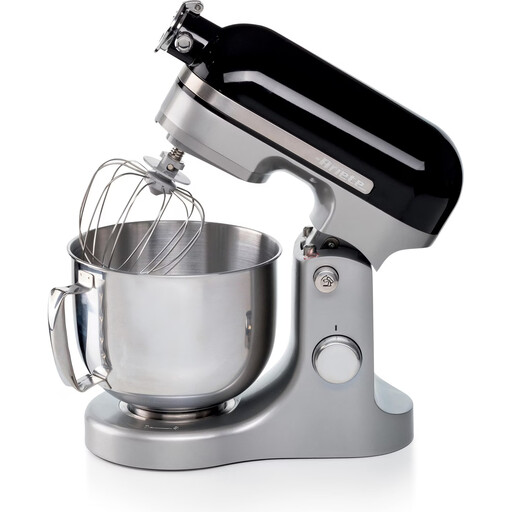 No image available
For shoppers looking for tools for mixing and whisking as well as a dough hook.
The product title lists a dough capacity of 1.4 kg, 11 speed settings, a 5.5-l stainless steel bowl and a 3D planetary mixing system.
No. Bowl capacity alone isn’t enough to assess this. Compare the flour quantity and total weight of your recipe with the specifications for the appropriate dough type for the exact model. A bread dough capacity doesn’t automatically confirm that the machine is suitable for every type of firm bagel dough.
Follow your machine’s instructions. For yeast dough, KitchenAid recommends speed 2, kneading at this speed for no more than 2 minutes, and mixing and kneading for 4–6 minutes in total. This guidance isn’t a general setting for other brands.
Yes. The Verbraucherzentrale (German consumer advice centre) explains that bread and rolls can be frozen and defrosted in portions. This is advice on storing baked goods; it doesn’t indicate which stand mixer can handle the dough.
According to consumer information from the European Union, if you buy from a trader, you have a minimum of two years’ statutory guarantee from the date you receive the goods, with the seller. This is separate from any voluntary manufacturer’s warranty; the stated rule doesn’t apply to purchases from private individuals.
If the appliance is covered by relevant harmonised EU rules that require it, it must carry the CE marking. This is the manufacturer’s declaration of conformity, not an independent quality mark. Check the information for the specific appliance and listing.