Bagel bakers with a narrow cupboard
If you want to put your mixer away after baking, compare the width, depth and height of the cupboard space with the appliance dimensions. A narrow appliance isn’t necessarily the shortest one.


Only choose a stand mixer for bagel dough once you’ve checked that both your cupboard dimensions and your recipe’s ingredient quantities are within the limits for the specific model. A dough hook alone doesn’t guarantee that a mixer can handle every firm dough. Kenwood specifies a maximum of 0.5 kg of flour and 1.5 kg of bread dough for the slim Go KZM35.000GY, while Bosch gives a limit of up to 1.9 kg of yeast dough for the lower MUM58710. These are manufacturer figures, not tested capacities for bagel dough, so also follow the quantity and kneading instructions in the relevant manual.
If you want to put your mixer away after baking, compare the width, depth and height of the cupboard space with the appliance dimensions. A narrow appliance isn’t necessarily the shortest one.
If you want to knead a relatively dry, firm dough, check the quantity and operating limits for the specific model rather than relying on its wattage or bowl capacity alone.
If you’re making a larger recipe, compare its quantities with the model’s specifications and divide the dough into smaller batches if needed.
First, measure the cupboard space. Then check that the recipe quantity and kneading instructions are suitable for your chosen model.
| What to look for | What to check before buying | Who should pay particular attention? |
|---|---|---|
| Putting away and taking out | Compare the internal dimensions of the cupboard with the appliance’s width, depth and height, and allow room to use it. Kenwood gives the Go’s dimensions as 33.5 × 18 × 30 cm; Bosch lists the MUM58710 as 282 × 280 × 271 mm (H × W × D). | If I need to put the mixer away after baking, I want to be sure the appliance and the space needed to use it will fit. Around 31% of consumers prioritise putting away and taking out their appliance. |
| Firm bagel dough | Check the dough hook and the quantity, speed and time instructions in the manual for the exact model. King Arthur Baking notes that firm, low-hydration bagel dough can be difficult to knead even in a stand mixer. | If I regularly make firm bagel dough, I want to be able to follow the mixer’s kneading instructions rather than relying on a dough hook alone. Around 31% of consumers prioritise how the mixer handles firm dough. |
| Recipe size and kneading in batches | Compare the flour quantity and dough weight separately with the model’s specifications. Kenwood gives the Go a maximum of 0.5 kg of flour and 1.5 kg of bread dough; Bosch lists a maximum bowl flour capacity of 0.8 kg and up to 1.9 kg of yeast dough for the MUM58710. These figures aren’t bagel dough test results. | If I want to make a particular recipe quantity, I want to know whether it will fit in one batch or need several. Around 25% of consumers prioritise getting the batch size right. |
| Accessories and customer service | Compare what’s included and check you have space to store the accessories. Check the warranty terms separately, along with whom to contact about a fault; the Verbraucherzentrale distinguishes between a voluntary guarantee and statutory rights. | If I want more than a dough hook, as well as clear guidance on who to contact if there’s a fault, I check the accessories and terms before buying. Around 13% of consumers prioritise accessories and customer service. |
According to King Arthur Baking, firm, low-hydration bagel dough can be difficult to knead even in a stand mixer. General specifications for flour, bread dough or yeast dough don’t prove that a mixer can handle every bagel recipe.
Compare the recipe quantity with the model’s limits separately, and follow the kneading instructions in the manual for your specific appliance.
The Kenwood Go is narrower than the Bosch MUM58710, while Bosch lists a lower appliance height. A KitchenAid with a tilt-head motor also needs enough clearance to use it.
Measure the cupboard width, depth and height separately, and allow for room to operate the mixer and store its accessories.
A manufacturer’s guarantee is voluntary and subject to its terms; statutory rights for faulty goods are against the retailer. The Verbraucherzentrale highlights the difference.
Read the guarantee terms and make a note of who you need to contact if there’s a fault.
The Go KZM35.000GY combines a slim design with a dough hook. The manufacturer sets limits for the quantity of flour and dough.
The MUM58710 offers a different balance of space and capacity: it’s lower than the Kenwood Go, but needs more width and comes with additional accessories.
The Artisan 5KSM125EER combines a dough hook with other mixing tools. It may suit you if you bake things beyond bagels and have enough room to use it.
This selection includes stand mixers listed with a dough hook or a kneading function for bread and yeast dough. For bagel dough, you’ll also need to follow the quantity and operating instructions for the specific model.
 No image available
For anyone looking for a dough hook for bread or yeast dough; these are listed as suitable uses.
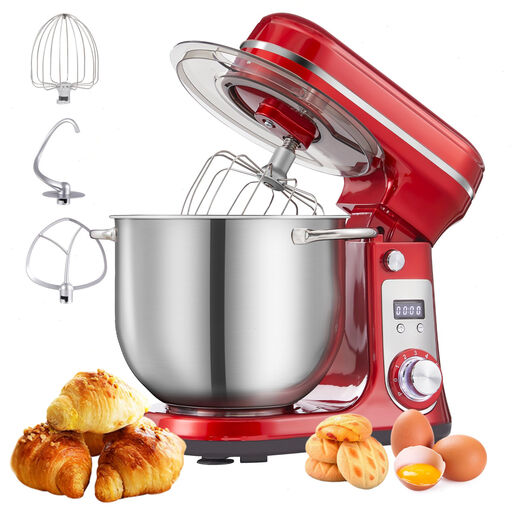
Specifications include a 5-L stainless steel bowl, 10 speeds and 600 W, plus a dough hook, mixing beater, whisk and splash guard.
 No image available
For anyone looking for a stand mixer with an explicitly listed kneading function for thick dough.
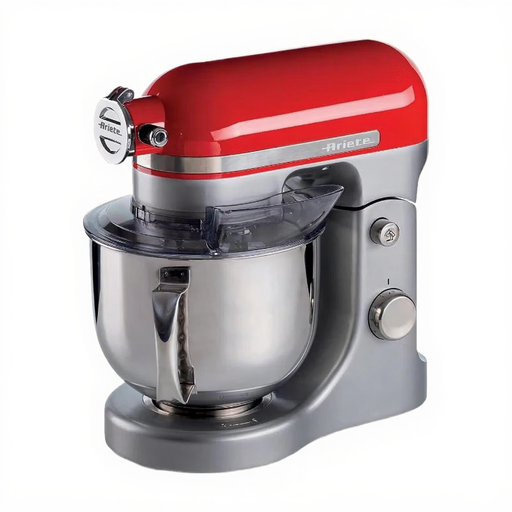
Product specifications list a 6-L bowl, 1200 W, LCD display and timer, plus six speeds and a pulse function.
 No image available
For anyone looking for a kneading machine with a dough hook, specifically listed for thick bread and pizza dough.
Specifications include 1600 watts, 11 speeds and a 5.5-litre capacity; the product name also lists three accessories for mixing, blending and whisking.
 No image available
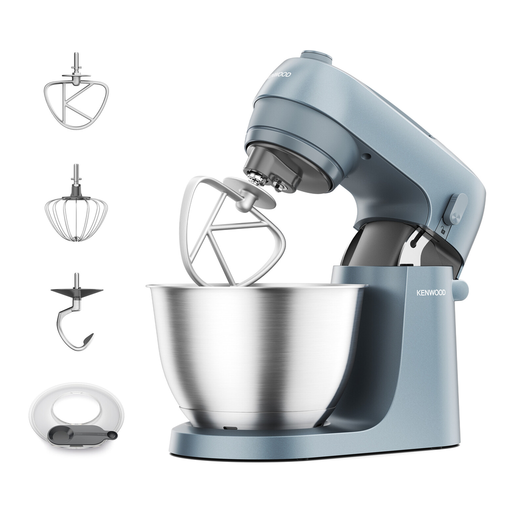
For anyone short on cupboard width and making relatively small batches; compare the dimensions and capacity with your available space and recipe separately.
Kenwood lists the Go as 33.5 × 18 × 30 cm, with a maximum of 0.5 kg of flour and 1.5 kg of bread dough, and a dough hook. The dough specification isn’t a dedicated bagel dough test.
 No image available
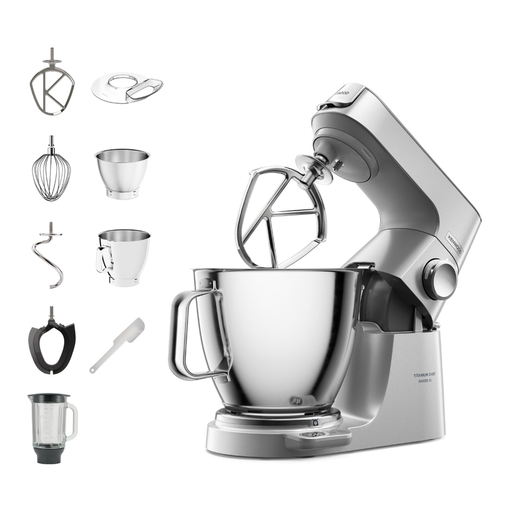
For anyone who wants to use several mixing tools and bowls as well as a dough hook; check that the appliance and accessories will fit in your chosen storage space.
Specifications list 7-L and 5-L bowls, an integrated scale and several mixing tools, including a dough hook. The listed appliance dimensions are 400 × 225 × 370 mm.
No. Compare the amount of flour and the total dough weight in your recipe separately with the specifications for the specific model. For example, Kenwood lists a maximum of 0.5 kg of flour and 1.5 kg of bread dough for the Go KZM35.000GY; Bosch gives the MUM58710 a maximum bowl flour capacity of 0.8 kg and a yeast dough capacity of up to 1.9 kg. Neither figure is a specific test with bagel dough.
No. A King Arthur Baking recipe calls for nine minutes of machine kneading, while KitchenAid recommends speed 2 for yeast dough in its mixers, with a total mixing and kneading time of 4–6 minutes. If you have a KitchenAid model, follow its manual and the manufacturer’s instructions rather than a longer general recipe time.
Check what’s included, fit the designated dough hook according to the manual for your specific model, and follow its quantity and speed instructions. Check the manual to see how the bowl and each tool can be cleaned; just because the bowl is suitable for a particular cleaning method doesn’t mean all the attachments are too.
No. If there’s a fault, your statutory rights are against the retailer; a manufacturer’s guarantee is voluntary and subject to its terms. The Verbraucherzentrale recommends treating these as separate rights.
The European Commission explains that, for products covered by the relevant EU rules, the CE marking is the manufacturer’s declaration of conformity, not a certificate from a central EU testing body. The German Federal Ministry for the Environment notes that electrical waste must not go in household rubbish and should be taken to an authorised collection point; retailers must accept returns where the relevant legal requirements apply.