Bakers working with stiff bagel dough
The key is whether your recipe quantity and stiff dough are within the limits stated for the specific model. Kenwood lists separate maximum quantities for flour and total dough weight for the Chef XL range.


Choose a stand mixer for bagel dough based on the flour weight and total weight of your recipe batch, as well as the manufacturer’s guidance for stiff dough. Bowl capacity alone isn’t enough. Kenwood gives specific maximum quantities for stiff yeast dough in its Chef XL range; general capacity figures from Bosch or Ankarsrum don’t automatically mean a mixer is suitable for every bagel recipe.
The key is whether your recipe quantity and stiff dough are within the limits stated for the specific model. Kenwood lists separate maximum quantities for flour and total dough weight for the Chef XL range.
If you’re making bagels for several people, plan your recipe quantities and the number of kneading cycles in advance. Ankarsrum gives a general capacity of up to 5 kg of dough, but you’ll still need to check this against your recipe.
For smaller batches, the mixer’s footprint and the right tool for the job matter too. Bosch lists dimensions of 330 × 320 × 380 mm for the MUMS6ZS13D, while Ankarsrum recommends different tools depending on the quantity of dough.
To compare mixers, weigh both the flour and the finished dough in your recipe batch. Then check the guidance for the specific model and for stiff dough.
| What matters | What to check before buying | Who this matters most to |
|---|---|---|
| Suitability for stiff bagel dough | Compare the flour and total dough weights with the model’s guidance for stiff dough. | If I’m kneading stiff bagel dough, I want to know whether my recipe batch is within the model’s limits; a large bowl alone won’t tell me. Around 36% of consumers prioritise suitability for stiff dough. |
| Batch size for a picnic | Work out how many recipe batches you’ll need for your planned number of bagels, then compare both weights with the manufacturer’s guidance. | If I’m baking for several picnic guests, I want to plan the quantity and number of kneading cycles in advance. Around 29% of consumers prioritise finding the right batch size. |
| Space and smaller batches | Check the mixer’s dimensions, the weight of your usual recipe and the recommended tool for smaller quantities of dough. | For smaller everyday batches, I don’t want to give up worktop space to a mixer whose capacity I rarely use. Around 21% of consumers focus mainly on the mixer’s footprint and how well it handles smaller quantities. |
| Other baking tasks | Check the included accessories and whether they’re compatible with your recipes for the specific version you’re considering. | If I also mix other doughs or whisk ingredients, as well as making bagel dough, the tools actually included matter. Around 14% of consumers see versatility as their top priority. |
Manufacturers may specify different limits for different types of dough. Bosch gives an example for cake batter, while Kenwood distinguishes between stiff and soft yeast dough for the Chef XL range.
Check the maximum quantity for stiff dough for the specific model, and compare both the flour and total dough weights in your recipe batch.
Choosing an unsuitable batch size may mean you need to knead the dough in more than one cycle.
IMTEST reported that the tested Kenwood Smart-Touch KHC40.080BK needed extra work when handling heavy bread dough. This finding relates to the model tested and isn’t a direct test of your bagel recipe.
Look at results for heavy dough separately from the overall rating, and compare them with the guidance for your recipe.
A high general dough capacity doesn’t tell you which tool is suitable for a small quantity. The mixer’s footprint may also matter if you won’t use it often.
Measure the space you have available and check which tool the manufacturer recommends for the quantities you usually make.
A large appliance can permanently take up worktop space you need for other tasks.
The Chef XL range may appeal if you want to compare stated quantities for stiff yeast dough with your recipe batch.
The Series 6 may appeal if you’re comparing larger bowls and, on certain models, a built-in scale.
The Assistant Original offers a different design if you’d like to choose between a roller and a dough hook.
The Artisan models listed here, with 4.8-l bowls, are worth comparing if you have other mixing and baking tasks in mind.
The stand mixers below list kneading functions or dough-related specifications. Compare the figures for each version with the flour and total dough weights in your bagel batch.
 No image available
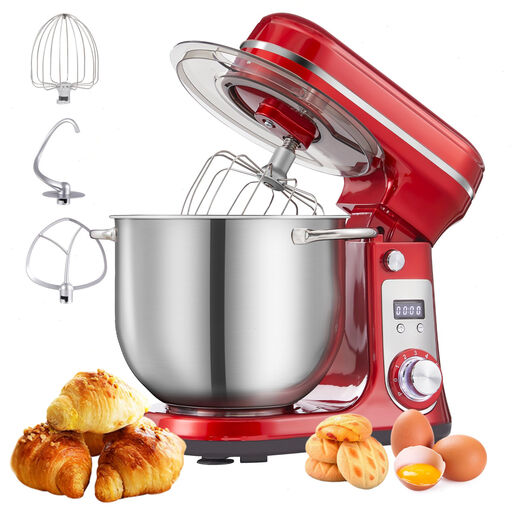
The product name describes this model as a dough mixer, and the description lists a dough hook.
5.5-l bowl; 11 speed settings.
 No image available
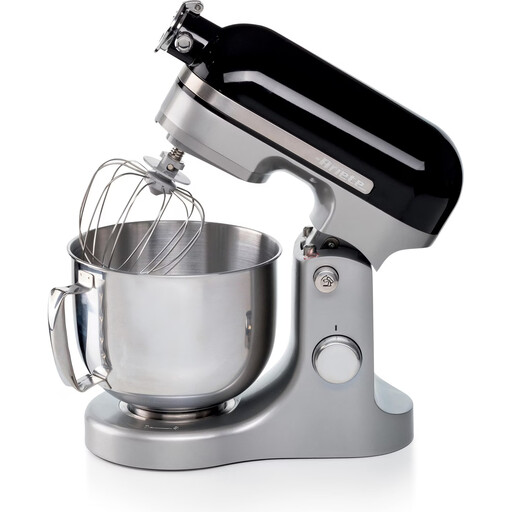
The product description lists kneading as well as other mixing and whisking tasks.
6-l bowl; 1200 W; six speeds and pulse function; LCD display and timer.
 No image available
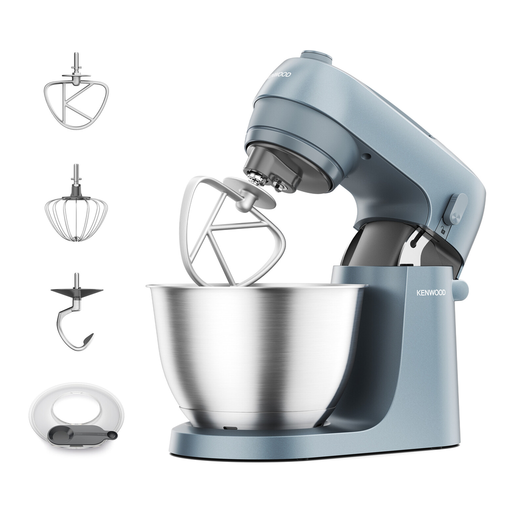
The stated dough capacity can be a useful point of comparison when planning a recipe batch; make sure you stay within the maximum for your version.
Maximum 1.4 kg of dough; 5.5-l stainless steel bowl; 11 speed settings; dough hook, flat beater and whisk.
 No image available
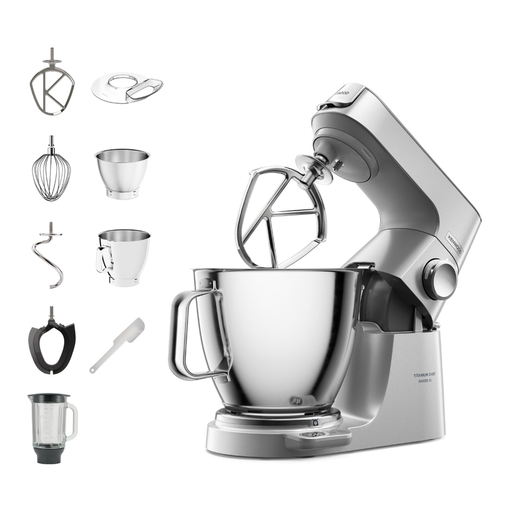
The stated maximum quantities can help you compare models for smaller recipe batches; check that they’re suitable for your bagel recipe.
4-l bowl; maximum 0.5 kg of flour or 1.5 kg of bread dough; six speeds; dough hook, K-beater and whisk.
 No image available
The listed features may appeal if you want to knead dough and weigh ingredients directly on the mixer.
7-l and 5-l bowls; built-in scale; dough hook and other mixing tools.
Weigh the flour and work out the total weight of the batch you’re planning to make. Compare both figures with the specifications for the specific model. For example, Kenwood gives separate maximum quantities for flour and total weight for stiff yeast dough in the Chef XL range. Bowl size alone isn’t enough.
Follow the instructions for your specific mixer rather than assuming a speed from one model will work for another. KitchenAid recommends speed 2 for yeast dough and sets limits on mixing and kneading times; Ankarsrum recommends different tools depending on the quantity of dough.
Perishable fillings that need to be kept chilled should stay cold while you’re out and about. Germany’s Federal Institute for Risk Assessment recommends keeping perishable foods at a fridge temperature of between 2 °C and 7 °C at most, and keeping them chilled during transport and outdoors. This applies to the filling, not your choice of mixer.
Your statutory rights are set out in law, while a guarantee is a voluntary offer with its own terms and conditions. Check the specific guarantee terms and don’t confuse them with your statutory rights.
No. For products covered by the relevant EU rules, the manufacturer uses the CE marking to declare that the product meets the applicable requirements. The European Union points out that there is no central EU body that issues a blanket certificate for this. The marking also says nothing about an independent test of the mixer’s kneading performance.