
Lieferung heute & morgen

Qualitätsgarantie

Willkommens-Angebote freischalten: KOSTENLOSE Lieferung | Bis zu 80 % RABATT | Kostenlose 30-Tage-JoyPlus-Testphase
App herunterladen
A stand mixer for baking and making pasta should handle several tasks reliably: kneading dough, mixing ingredients, whipping cream and – depending on the attachments – rolling out or shaping fresh pasta. In practice, disappointing purchases are often caused not by missing features, but by unclear information about attachments, capacity and compatibility.
A high wattage rating may sound impressive at first. However, it does not tell you on its own how well a machine handles firm bread or pizza dough. The motor type, gears, overheating protection and maximum permitted dough quantity all matter too. A stand mixer with a dough hook should therefore not be used regularly with more than the recommended quantity.
A stand mixer with a pasta attachment usually needs a compatible multifunction hub or a specially designed connection. For example, attachments for KitchenAid models are not approved for use with other brands. A separate pasta maker, on the other hand, works independently of your stand mixer and may be more practical for making certain pasta shapes.
A large bowl does not automatically mean you can use it to process large quantities of heavy dough. Liquid ingredients, cake batter and yeast dough all place different demands on a machine. Check the instructions and consider how much dough you actually want to make in each batch.
A stainless steel mixing bowl of around 5 litres may be enough for a small household. Families or anyone who regularly bakes bread and pizza may benefit from a 6-litre capacity. Stainless steel is easy to care for, food-safe and less likely to retain odours than more delicate materials.
The shape of the bowl matters too: the whisk should be able to reach smaller quantities, so ingredients do not keep sticking to the sides. A splash guard can make cleaning easier when whipping cream or mixing runny batters.
Several speed settings let you switch smoothly from slow kneading to fast whisking. A pulse function can be useful for short bursts of extra power. The following features are also worth considering for everyday use:
Always assess the stated motor power alongside these features. A stand mixer with a whisk needs different capabilities for whisking egg whites than a dough mixer does for firm wholemeal or pizza dough.
If you regularly make fresh pasta, start by deciding which type you want to make. A roller attachment produces sheets of dough that can then be cut into lasagne or tagliatelle. An extruder, by contrast, shapes pasta such as spaghetti, fusilli or macaroni using different dies.
An electric pasta maker may be a good option for smaller portions and straightforward operation. A manual 3-piece pasta machine requires more effort, but works independently of a stand mixer. For every attachment, check:
The selection below matches appliances and attachments to different needs. The details are based on the product information provided.

Why this product suits this profile: This 5-litre stand mixer with bowl handles everyday baking tasks and comes with a whisk, dough hook and beater.
The product details clearly list the included tools. The 10 speed settings, pulse function and overheating protection are also specified.
5-litre stainless steel bowl, 400-watt motor, tilting head and four suction cups.
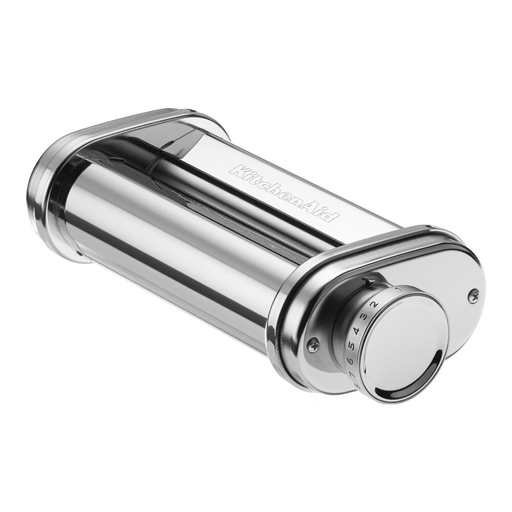
Why this product suits this profile: This roller attachment is designed for owners of a compatible KitchenAid stand mixer who want to make sheets of dough to a consistent width.
Compatibility is limited to KitchenAid stand mixers with a multifunction hub. The attachment should be cleaned with a brush; according to the product information, it must not be immersed in water or put in the dishwasher.
Stainless steel roller, 14 cm-wide pasta sheets and 8 adjustable settings.
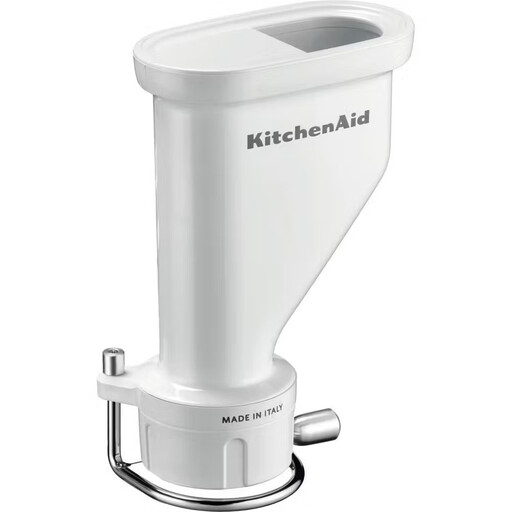
Why this product suits this profile: For compatible KitchenAid stand mixers, this extruder makes a range of shapes, including spaghetti, bucatini, rigatoni, fusilli, and large and small macaroni.
The package contents list six shaping dies. Use requires a compatible KitchenAid drive, so check your specific model before buying.
Six pasta shapes and an extrusion process for short pasta; clean the individual parts by hand.
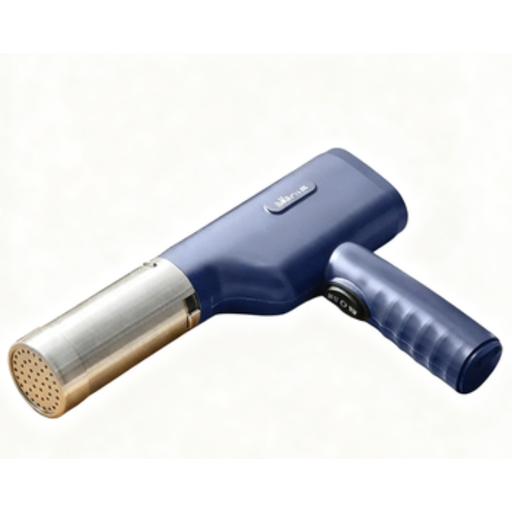
Why this product suits this profile: This compact pasta maker is battery-powered and designed to handle up to 200 g of dough per batch.
The maximum dough quantity and the five shaping dies are clearly specified. If the dough is too firm, the overload protection may interrupt the extrusion process.
1500-mAh battery, five shaping dies and removable stainless steel parts. The main unit must not be rinsed with water.
We’ve put together a complete, regularly updated list of products that fully meet these strict selection criteria and the safety regulations in force in the EU.
Yes, a dough hook can mix and knead pasta dough. However, you’ll need a compatible pasta attachment or a separate pasta maker to roll it out or shape it. Aim for a fairly firm dough consistency and do not exceed the recommended running time.
A 5-litre bowl may be large enough for many everyday baking tasks. If you regularly make larger quantities of bread, pizza or cake dough, a 6-litre bowl gives you more room to work. The maximum permitted dough quantity specified by the manufacturer remains the key factor.
Electricity costs depend on the machine’s power, how long you use it and your electricity tariff. Battery-powered models also need to be recharged from time to time. Portion size, actual running time and cleaning effort are therefore more important than the power consumption alone. They should both suit how often you plan to use the machine.