Occasional banana bread bakers
If you only bake a loaf now and then, consider whether hands-free mixing is worth the space a stand mixer takes up. Dr. Oetker’s recipe calls for hand mixer beaters.


You don’t necessarily need a stand mixer to make banana bread occasionally: Dr. Oetker’s recipe uses hand mixer beaters, while a stand mixer may be worthwhile if you want to mix hands-free or use it for other recipes too. Start by comparing the attachments, speed controls, footprint and cleaning requirements rather than focusing on bowl size alone. For the specific product listing, also check the model details and whether CE marking is required.
If you only bake a loaf now and then, consider whether hands-free mixing is worth the space a stand mixer takes up. Dr. Oetker’s recipe calls for hand mixer beaters.
If you need to put the appliance away after use, consider its dimensions, the clearance needed to fit the bowl and the storage space required for the attachments.
If you plan to use the mixer for other recipes too, weigh up the scales, attachments and other accessories against the storage space they’ll need.
A good fit if: You want to mix hands-free and put the appliance away after baking. Kenwood lists the dimensions of the Go KZM35.000GY as 33.5 × 18 × 30 cm.
Consider: Check there’s enough room to fit the bowl and that the controls are easy to use for short mixing steps. The dimensions alone don’t indicate a particular mixing result or noise level.
A good fit if: You regularly make other recipes and would genuinely use features such as integrated scales. Bosch lists this feature on the MUM5XW10.
Consider: Accessories need extra storage, and a timer won’t replace agreeing how to share the kitchen with others.
A good fit if: You rarely bake a single loaf of banana bread and don’t want to store another appliance. Dr. Oetker’s recipe uses hand mixer beaters.
Consider: You’ll need to hold and guide the mixer yourself; it won’t offer the hands-free mixing of a stand mixer.
| What matters | What to check when buying | Who it matters most to |
|---|---|---|
| Controlled mixing steps | Check the attachment and speed settings are suitable for your recipe. | If I want to mix the batter slowly at first, then briefly at a higher speed, I look at the attachments and controls; around 36% of consumers put control over mixing steps first. |
| Worktop space and storage | Check the appliance dimensions, clearance above it and space for accessories. | If I share a worktop and cupboards with others, I want to be able to store the appliance and its accessories neatly; around 29% of consumers prioritise the space available. |
| Cleaning and handing over | Check the cleaning instructions for the bowl and each attachment separately. | If someone else is using the kitchen after me, I want to clean the parts I’ve used and leave the space free promptly; around 21% of consumers pay particular attention to cleaning and handing over the kitchen. |
| Versatility | Check the features, accessories and stated dough capacity against the recipes you make. | If I want to use the mixer for other baking tasks too, practical features matter more to me than simply having lots of them; around 14% of consumers prioritise versatility. |
A general kitchen appliance test won’t necessarily tell you how a mixer performs during the short mixing steps in a banana bread recipe. Dr. Oetker’s recipe starts on a low speed and then calls for about a minute of mixing.
Assess the attachments and controls against your recipe rather than treating a general test result as a banana bread test.
Bowl capacity and the permitted processing quantity for a particular type of dough are two different things. Bosch lists both a 3.9 l bowl capacity and a separate maximum quantity for cake batter for the MUM5XW10.
Compare the quantity in your recipe with the manufacturer’s guidance for the relevant type of dough, rather than relying on the bowl’s litre capacity alone.
Bosch doesn’t list a selectable processing time for the MUM5XW10. By contrast, Severin says the KM 3898 has a countdown that stops when the set preparation time is up. Neither feature automatically sorts out who cleans the mixer or clears the space afterwards.
Check the timer function on the specific model, and continue to agree how to share use and cleaning with others in the kitchen.
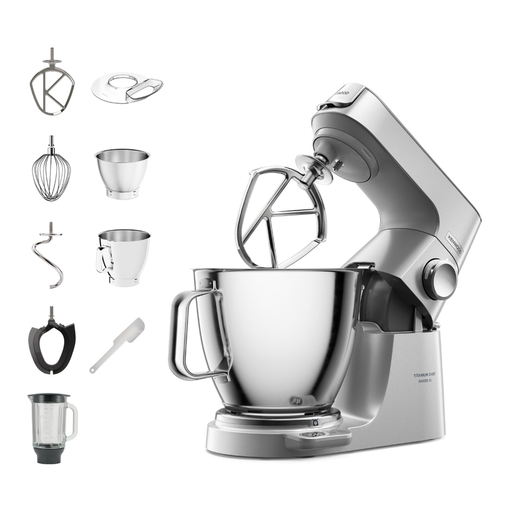
The Go KZM35.000GY is a compact range worth comparing; the Smart-Touch KHC40.080BK has a different set of features.
Bosch says the MUM5XW10 combines a whisk and integrated scales; the MUMS2AW01 has a different bowl and set of features.
The KM 3898 is worth comparing if you’d use scales and a countdown that stops the appliance.
The Artisan 5KSM125 is another range to compare if you’re looking for a flat beater and a tilting motor head.
This selection includes compact stand mixers and models with different attachments or extra features. Compare the specific model variant, and check the applicable EU product safety requirements and any required CE marking for electrical appliances. Where applicable, CE marking is a declaration made by the manufacturer, not a performance test. Your Europe, the European Union’s information website, has more details.
 No image available
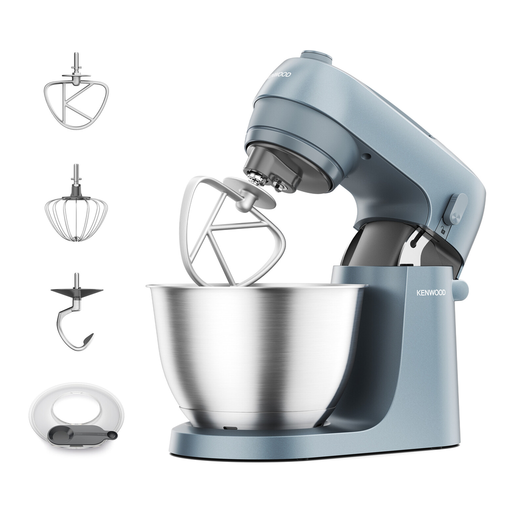
The compact dimensions may help when planning where to use and store the mixer; check that the controls suit the short mixing steps in your recipe.
4-l bowl, K-beater, balloon whisk, six speed settings and pulse function. Dimensions: 33.5 × 18 × 30 cm; weight: 6.3 kg. Kenwood describes some parts as dishwasher-safe.
 No image available
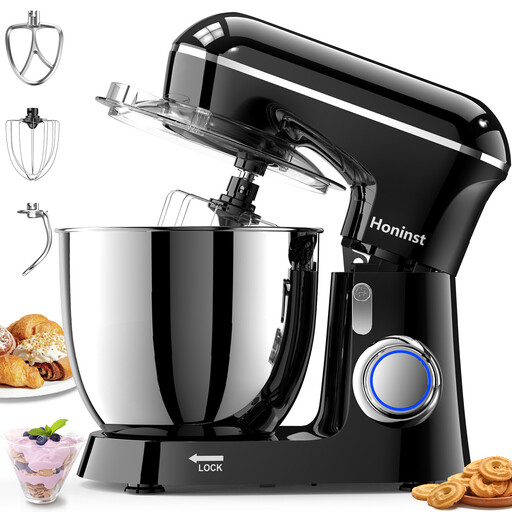
You can compare the ten speed settings and listed attachments with the mixing steps in your recipe.
6.5QT bowl, tilt head, ten speed settings, whisk and beater.
 No image available
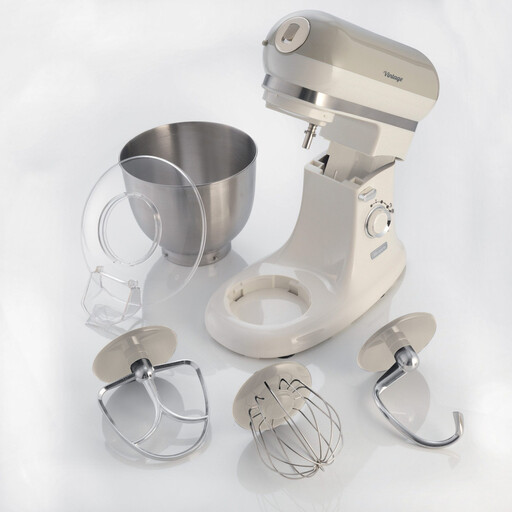
Bear the listed dimensions and weight in mind if you’ll need to put the mixer away after use.
5.5-l stainless steel bowl, seven speed settings and pulse function. Dimensions: 42.5 × 28.5 × 38.5 cm; weight: 6.2 kg. Dishwasher-safe accessories are listed.
 No image available
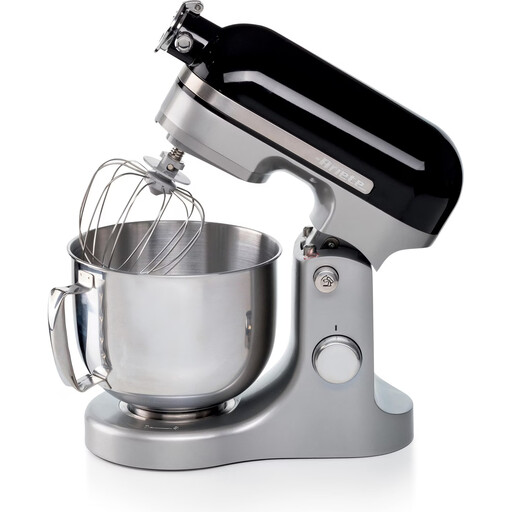
The listed flat beater and speed settings are worth checking for cake batter; remember to allow for storage space too.
5.5-l stainless steel bowl, eleven speed settings and flat beater. Stated dough capacity: 1.4 kg. Dimensions: 37.5 × 22 × 36.5 cm; weight: 6.95 kg. Dishwasher-safe parts are listed.
 No image available
Integrated scales and a range of attachments may be useful for other recipes; check that the size and weight will fit your storage space.
7-l and 5-l bowls, integrated scales, K-beater, Flexi-Beater and stepless speed control. Dimensions: 400 × 225 × 370 mm; weight: 11.5 kg.
Follow the recipe and the instructions for your specific appliance. Dr. Oetker’s banana bread recipe uses hand mixer beaters, starts briefly on a low speed and adds the walnuts afterwards. So, if you’re using a stand mixer, check whether it comes with a suitable whisk or flat beater. The recipe’s timing isn’t a general guide to how long to run other appliances.
No. You can’t assume that from information about removable parts. For the Go KZM35.000GY, Kenwood describes the bowl as dishwasher-safe; Bosch lists the bowl and attachments for the MUMS2AW01. Follow the relevant instructions for all other parts.
No. If a product is faulty, your statutory rights generally apply against the retailer; a warranty is an additional voluntary promise with its own terms. The Verbraucherzentrale explains the difference. Check the warranty terms before paying for additional cover.
Products sold in the EU must comply with the applicable product safety rules. CE marking is required where the relevant harmonised EU rules say it is. According to Your Europe, the CE mark is the manufacturer’s declaration of conformity, not an independent performance test. Check the exact product variant and any required marking on the specific listing.