
Lieferung heute & morgen

Qualitätsgarantie

Willkommens-Angebote freischalten: KOSTENLOSE Lieferung | Bis zu 80 % RABATT | Kostenlose 30-Tage-JoyPlus-Testphase
App herunterladen
A stand mixer with a bowl can take much of the effort out of kneading, mixing and whisking. But technical specifications such as wattage, capacity and ‘multifunctional’ are not always directly comparable. If you mainly make bread, pizza or yeasted dough, you’ll need different features from someone who mostly prepares cream, fillings and cake batter.
Before you buy, it’s worth taking a closer look at the actual features and any limitations that could affect everyday use.
Manufacturers specify motor power in different ways, for example as rated or peak power. Even an electric stand mixer with a high wattage may not be suitable for heavy dough if the permitted dough quantity is low or the operating time is limited.
It’s therefore important to check several specifications:
A dough mixer for bread and pizza should provide enough torque at low speed. The maximum bowl size alone tells you little about how much firm dough the machine can actually handle.
A stand mixer with a large stainless steel bowl has room for family-sized portions. However, the whisk or beater may not reach the bottom effectively when you’re making small quantities. If you prepare different amounts from one recipe to the next, a machine with a well-designed bowl or multiple bowls is worth considering.
For example, the Kenwood Titanium Chef Baker XL has a DuoBowl system with a 7-litre and a 5-litre bowl. This can make it easier to switch between larger and smaller recipes. The Kenwood Go, on the other hand, has a 4-litre bowl and takes up less worktop space.
A stand mixer with a dough hook, whisk and flat beater covers the main baking tasks. Extra attachments, such as a mincer or blender, broaden its uses, but also add to the cleaning, storage and purchase costs.
Before you buy, check:
A blender is designed for smoothies, soups, sauces and chopping soft or liquid ingredients. It won’t replace a dough mixer if you regularly make bread or pizza dough. The Philips 5000 Series Stand Mixer, for example, has a 2-litre jug, three speed settings and a pulse function. However, according to the product details, it is a blender rather than a traditional mixer for firm dough.
Stainless steel is easy to care for, temperature-resistant and taste-neutral, making it a practical choice for a stand mixer with a mixing bowl. Don’t just look at the total capacity; check the working quantity specified by the manufacturer. A 5- or 6-litre bowl is big enough for many households, while keen bakers may benefit from a 7-litre bowl or a second bowl.
Several speed settings let you adapt the mixer more precisely to your recipe. Low speeds are typically suitable for combining ingredients and kneading, while higher speeds are better for whisking egg whites or cream. A pulse function can be useful for short, controlled bursts.
A variable speed control, as specified for some Kenwood models, works differently from a dial with fixed speed settings. The important thing is to choose controls that suit the recipes you make.
A heavy housing, non-slip feet or suction cups can help stop the mixer sliding around on the worktop. This is particularly important when kneading firm dough. Place the machine on a dry, level and stable surface.
Also follow the safety instructions provided by the manufacturer:

Why it’s a good fit: The 5-litre stainless steel bowl, ten speed settings and three standard attachments cover the everyday baking tasks most households need to tackle.
Alongside the motor power, the product details specify overload and overheating protection, as well as a recommended limit for kneading time.
400-watt motor, pulse function, splash guard and four suction cups, according to the product description.

Why it’s a good fit: This model combines 1,200 watts of power, variable speed control, built-in scales and two bowl sizes.
The combination of 5- and 7-litre bowls helps overcome the drawback of a large bowl being awkward to use for smaller recipes.
EasyWeigh scales, DuoBowl system, K-beater, whisk, dough hook and Flexi beater.

Why it’s a good fit: As well as mixing and kneading, the product description lists mincer and blender attachments for extra kitchen tasks.
Its uses are clearly set out through the included attachments, rather than being described only in general terms as ‘multifunctional’.
6-quart bowl, up to 1,300 watts, eight speed settings and a safety cut-off when the head is raised, according to the product details.
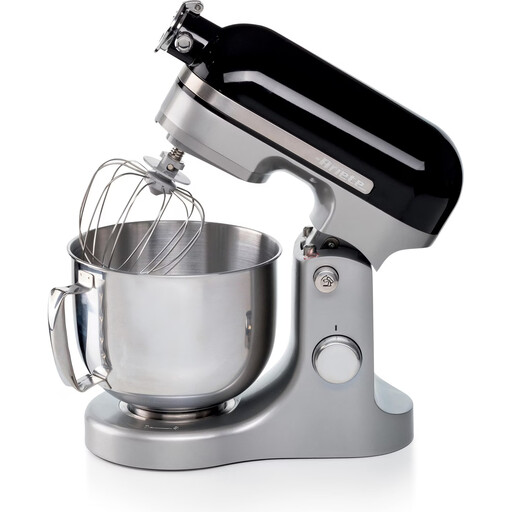
Why it’s a good fit: The 5.5-litre bowl and choice of eleven speed settings make it suitable for a range of tasks, including mixing, whisking and kneading.
The product details specify a maximum dough quantity of 1.40 kilograms. This makes it easier to judge whether the mixer is suitable for firm dough than wattage alone would.
1,600 watts, 3D planetary mixing system, dough hook, whisk, flat beater and dishwasher-safe parts, according to the product description.
We’ve put together a complete, regularly updated list of products that meet these strict selection criteria and the safety regulations in force in the EU.
For regular cake, pizza and bread recipes, 5 to 6 litres is often a practical size. The permitted working quantity is still the key factor. If you regularly prepare large amounts of dough or bake several items one after another, consider a 7-litre bowl or a DuoBowl system.
Its lifespan depends on the materials, maintenance, workload and correct use. Don’t exceed the maximum dough quantity, and stick to the recommended kneading time. If the motor overheats, let it cool down. Clean the attachments and housing as instructed.
Electricity use depends on the motor’s actual power, how long you use the mixer and the speed setting you choose. For a rough estimate, use: power in kilowatts × operating time in hours × electricity price per kilowatt-hour. Attachments, replacement parts and cleaning requirements can also affect running costs.