
Lieferung heute & morgen

Qualitätsgarantie

Willkommens-Angebote freischalten: KOSTENLOSE Lieferung | Bis zu 80 % RABATT | Kostenlose 30-Tage-JoyPlus-Testphase
App herunterladen
A stand mixer with a bowl can save you time when baking bread and cakes, as well as with everyday kitchen tasks. However, models vary considerably in bowl capacity, motor power, attachments, noise levels and safety features. A high wattage or a large capacity in litres alone tells you little about whether a machine is right for your household.
Before you buy, make sure you avoid these three common marketing pitfalls:
A 5-litre stand mixer is often enough for a smaller household. Families and anyone who regularly bakes bread, pizza or several cakes may benefit from a 6-litre stand mixer or a larger model. The key factor, however, is the recommended maximum dough quantity in the instruction manual.
A large bowl can actually be impractical for smaller quantities if the whisk can’t reach the ingredients properly. Check whether the manufacturer provides information on minimum quantities, maximum dough weight and continuous operating time.
A stand mixer for baking should include at least three attachments:
The shape of the attachment affects how ingredients are processed. A dough hook is designed for heavy doughs, while a whisk should be used at low to medium speed. Only use attachments approved by the manufacturer.
Multiple speed settings let you process ingredients gradually: use a low speed to combine flour, medium speeds for cake mixtures and higher speeds for whisking. A stand mixer with 10 speed settings gives you more precise control than a model with only a few settings. A pulse function may also be available for short bursts of power.
Also look for:
Treat noise levels as manufacturer specifications. Figures such as 60 dB or 75 dB are only useful for comparison if the measuring distance and method are the same.

Why this product suits this profile: This 5-litre model offers a compact set of essentials for cakes, bread, pizza and pasta. The tilting head makes it easier to change the bowl and attachments.
The specifications clearly state the bowl capacity, 10 speeds and pulse function. The manufacturer also notes that it has overload and overheating protection.
5-litre stainless steel bowl, 400-watt motor, 10 speeds plus pulse function, and a dough hook, whisk and beater.

Why this product suits this profile: This model is aimed at keen home bakers who want different bowl sizes, integrated weighing and a wide range of attachments in one appliance.
The DuoBowl setup, with 7- and 5-litre bowls, makes it clear that it can handle different recipe quantities. The integrated scales save you extra steps.
1,200-watt motor, variable speed control, 5- and 7-litre bowls, plus a K-beater, whisk, dough hook and Flexi beater.
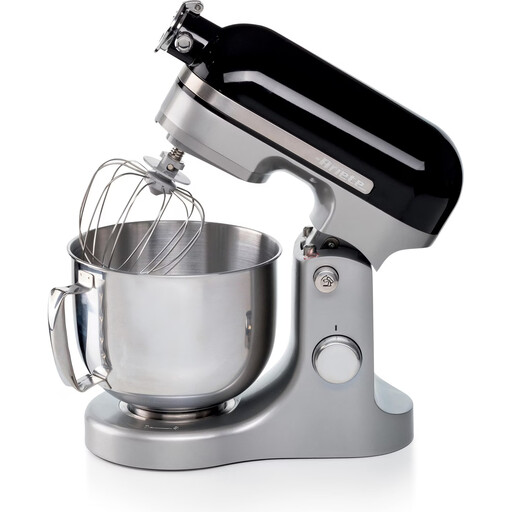
Why this product suits this profile: This stand mixer is designed for frequent kneading, mixing and whisking, and has a stated maximum dough capacity of 1,40 kg.
As well as the 5.5-litre bowl, the permitted dough quantity is clearly stated. This makes it easier to plan when making bread and pizza dough.
1,600 watts, 11 speed settings, 3D planetary mixing system, stainless steel bowl and dishwasher-safe parts, according to the product specifications.

Why this product suits this profile: The larger bowl and three standard attachments are suited to family-sized portions and a range of baking recipes at home.
The product description lists 10 speeds, a splash guard, suction cups and overheating protection. These are specific features you can check, rather than general claims about performance.
6.5-quart stainless steel bowl, 10 speeds, tilting mixer head, plus a dough hook, whisk and beater.
A blender usually has a tall jug with rotating blades. It’s suitable for smoothies, puréed soups, sauces and chopping. A stand mixer with a bowl, on the other hand, uses mixing attachments and is designed for dough, cream, egg whites and cake mixtures.
An electric food mixer with several attachments can cover some of both functions. Check carefully, though, whether a blender attachment is actually included. For a dough mixer for bread and pizza, a sturdy dough hook with a suitable dough capacity remains essential.
Energy consumption depends on the power rating, how long the appliance is used and the recipe. A higher-wattage appliance won’t necessarily use more electricity every time if it runs for less time. For household use, the instruction manual, recommended operating time and sufficient cooling breaks are therefore more important than a single wattage figure.
Clean the bowl and attachments after each use, and wipe the motor housing with a damp cloth only. Keep the housing, cable and plug out of water. Before changing attachments, cleaning the appliance or removing dough residue, switch it off and unplug it.
We’ve put together a complete, regularly updated list of products that meet these strict selection criteria and fully comply with the safety regulations in force in the EU.
A 5-litre bowl is often enough for occasional baking. Families and keen bakers may prefer a 6-litre model or a larger version. The key factor is the manufacturer’s stated maximum dough quantity, not just the bowl capacity.
Look for a suitable dough hook, a stable base, overload protection and clear information on the maximum dough quantity. Start heavy doughs at a low speed. Follow the operating time limits and cooling breaks given in the instruction manual.
Noise levels depend on the motor, housing, attachment, dough consistency and measuring conditions. Manufacturer figures such as 60 or 75 dB can provide a guide. A direct comparison is only useful if the measuring conditions are identical.