
Lieferung heute & morgen

Qualitätsgarantie

Willkommens-Angebote freischalten: KOSTENLOSE Lieferung | Bis zu 80 % RABATT | Kostenlose 30-Tage-JoyPlus-Testphase
App herunterladen
A stand mixer with a bowl can take on much of the hands-on work involved in making bread, pizza dough, cakes and desserts. However, models vary considerably in motor power, usable capacity, noise levels and accessories. A high wattage rating alone says little about whether a machine can reliably handle a firm yeast dough.
If you are looking to buy an electric stand mixer, you should also pay attention to specifications that are easily overlooked in product descriptions. These include the recommended rather than maximum bowl capacity, the actual dough quantity and the permitted operating time. The following selection assesses these points objectively and shows which appliance may suit which type of household.
Manufacturers often quote a peak power rating. For example, the monsga SM100 is listed with 1,000 watts Peak Power and 600 watts rated power. When assessing a stand mixer for kneading, the rated power is the more meaningful figure. The gearing, mixing system and the dough quantity recommended by the manufacturer also matter.
A higher number on the packaging therefore does not automatically guarantee greater durability. For heavy doughs, the operating instructions should be your main point of reference.
A 6-litre stand mixer offers plenty of room for larger portions. However, the bowl should not be filled to the brim. The monsga SM100 has a total capacity of 6.0 litres, while a recommended usable capacity of up to 5.0 litres is specified. When kneading, the permitted flour or dough quantity is also crucial.
Too much dough can put strain on the mixing mechanism, cause excessive vibration or trigger the overheating protection. Families should therefore check not only the number of litres, but also the capacity specifications for firm doughs.
A quiet stand mixer does not operate silently. Noise levels depend on the speed setting, dough consistency, surface and room acoustics. The available models, for example, specify under 75 dB for the monsga SM100, 68–72 dB within one metre for the AUCMA ASM1559 and under 60 dB for the Honinst model with 10 speed settings.
These figures are only meaningfully comparable when the measurement conditions are the same. For a flat or open-plan kitchen, non-slip feet and a firm, level surface can also help.
A stand mixer for baking should be suited to the recipes you plan to make. Mixing cake batter and whipping cream require different power reserves from making wholemeal bread or pizza dough. Look out for:
For appliances rated at 220–240 volts and 50–60 hertz, the electrical specifications are generally compatible with the German domestic power supply. Nevertheless, you should check the plug, operating instructions and conformity information before buying.
A stainless steel bowl is resistant to many common kitchen ingredients and easy to clean. Specifications such as 304 stainless steel or food-grade stainless steel describe the material, but do not replace the manufacturer’s care instructions.
A handle, splash guard and tilt-up motor head are practical features. A tilt-head design makes it easier to switch between the dough hook, whisk and flat beater. The bowl and accessories must be locked securely into place before every use. The motor unit must not be immersed in water.
A stand mixer with a dough hook is suitable for yeast, pizza and bread dough. The whisk is intended for cream, egg whites and light mixtures. A flat beater or mixing paddle handles cake batter, creams and softer mixtures.
A splash guard helps reduce flour dust and splashes. Dishwasher-safe attachments can make cleaning easier, provided the instructions expressly allow this. Do not use abrasive sponges or metal brushes on coated dough hooks or beaters.
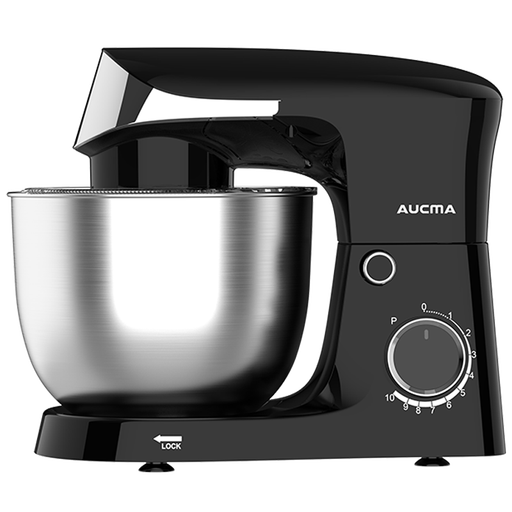
Why this product suits this profile: The 5-litre stainless steel bowl and ten speed settings with pulse function cover typical household tasks without requiring an especially large bowl.
The product data lists the motor, bowl size, speed settings, and overheating and overload protection separately. This makes it easier to assess the specification than by looking at a single wattage figure.
400-watt copper motor, ten speed settings plus pulse function, dough hook, whisk, flat beater and four suction cups.
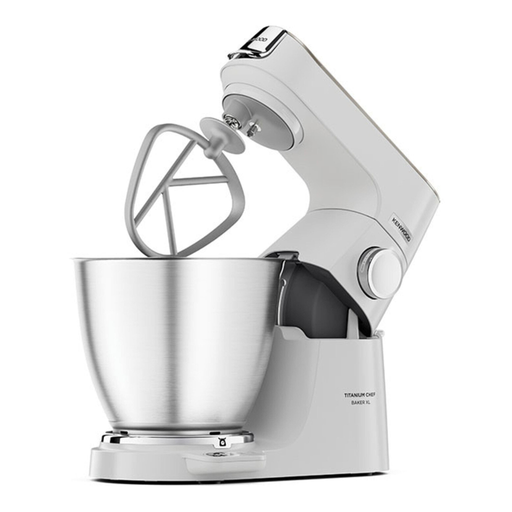
Why this product suits this profile: For households that bake frequently and in larger quantities, this model combines a 7-litre bowl with an integrated EasyWeigh scale and continuous speed control.
The specification clearly states the bowl size, motor power and supplied attachments. The integrated scale reduces the need for additional measuring containers, but does not replace observing the permitted filling capacity.
1,200-watt motor, 7-litre bowl, integrated scale and three attachments: dough hook, whisk and K-hook.
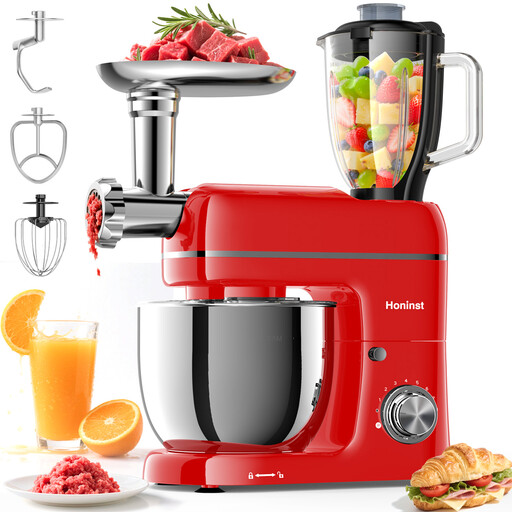
Why this product suits this profile: As well as kneading, mixing and whisking, it comes with a meat grinder and blender attachment. This could appeal to households looking to combine several appliances in one.
The additional functions are described as separate attachments. Before buying, check the space required, cleaning effort and operating times stated in the manual.
6.5-quart stainless steel bowl, eight speed settings plus pulse function, meat grinder and blender attachments, as well as a safety shut-off when the head is raised.
We have put together a complete, regularly updated list of products that fully meet these strict selection criteria and the safety regulations applicable in the EU.
Place the machine on a level, dry and stable work surface. Low to medium speeds are usually suitable for kneading, but the manufacturer’s specific instructions take precedence. Add ingredients gradually to avoid placing unnecessary strain on the motor.
Unplug the machine before changing attachments, raising the motor head or cleaning it. The bowl and attachments should only be placed in the dishwasher if this is expressly permitted. A damp cloth is sufficient for cleaning the motor unit.
When considering running costs, the rated power is more important than the advertised peak power. A machine with 600 watts of rated power theoretically uses more electricity over the same operating time than a 400-watt model. In practice, however, consumption is affected by operating time, speed and breaks. For occasional baking, short operating times matter more than a blanket wattage figure.
For a household, 5 to 6 litres is often sufficient when regularly preparing bread, cakes or pizza for several people. The key factor is the recommended usable capacity, not the total volume alone. A very large bowl can also be less practical for small quantities.
Look for a supplied dough hook, a stable base, overload protection and clear information about the maximum dough quantity. When kneading, use the low or medium speed setting and follow the operating time specified by the manufacturer.
Noise levels vary depending on the model and task. Under the measurement conditions stated for each appliance, the product specifications for the models mentioned range from under 60 dB to a maximum of around 75 dB. A firm surface and non-slip feet can reduce vibration and therefore the noise you perceive.