
Lieferung heute & morgen

Qualitätsgarantie

Willkommens-Angebote freischalten: KOSTENLOSE Lieferung | Bis zu 80 % RABATT | Kostenlose 30-Tage-JoyPlus-Testphase
App herunterladen
A stand mixer with bowl can save you a great deal of manual effort when mixing, whisking and kneading. However, appliances vary considerably in terms of motor power, usable capacity, attachments and cleaning. If you focus solely on wattage or large litre capacities, you may end up with a machine that does not suit the way you bake day to day.
This guide explains which specifications matter before you buy and which models are suitable for different households and uses.
A high maximum power rating may sound impressive at first. However, it does not on its own indicate how well a dough mixer can handle heavy bread or pizza dough. The gearbox design, recommended dough quantity and permitted operating time are also important.
Some appliances state a peak power rating alongside a lower rated power output. These figures should not be compared directly with the power ratings of other models. For heavy doughs, low-speed settings and a suitable dough hook are also essential.
A bowl with a capacity of 6 litres can be practical, but it must not be filled to the brim. Yeast dough needs room to rise. A bowl that is too large can also be impractical for small quantities if the whisk cannot reliably reach the ingredients.
You should therefore look at three specifications:
For typical baking tasks, the appliance should include at least a whisk, a flat beater or mixing paddle, and a dough hook. A splash guard makes it easier to work with flour and liquid ingredients. Additional attachments such as a mincer or blender attachment are only worthwhile if you will use them regularly.
Also check whether replacement parts are available and whether attachments are compatible only with certain models. A replacement dough hook will not automatically fit every stand mixer.
A finely adjustable speed is useful for cream, egg whites and cake batter. For bread and pizza dough, the appliance should be operated at a low to medium setting. Many models offer between six and eleven speed settings or an additional pulse function.
The manufacturer's power specification should always be read alongside the safety information. Overheating protection, automatic switch-off and a stated maximum operating time are practical criteria for regular use.
A stand mixer with a stainless steel bowl is resistant to many types of food and is usually easy to clean. Nevertheless, check whether the bowl is dishwasher-safe. For coated attachments, follow the manufacturer's care instructions, as harsh cleaning products or scouring pads can damage the surface.
The motor housing must never be immersed in water. Removable parts should be completely disconnected from the power supply before cleaning.
Kneading dough creates considerable force. Non-slip feet, suction cups or a heavy housing can prevent the machine from moving across the worktop. Dimensions are also important: a stand mixer with bowl needs a permanent place on the worktop and enough clearance above it for the motor head to open.
An electric hand mixer, on the other hand, needs less storage space and can be used with different bowls. It is particularly suitable for smaller quantities and occasional baking, although it must be held continuously while kneading.
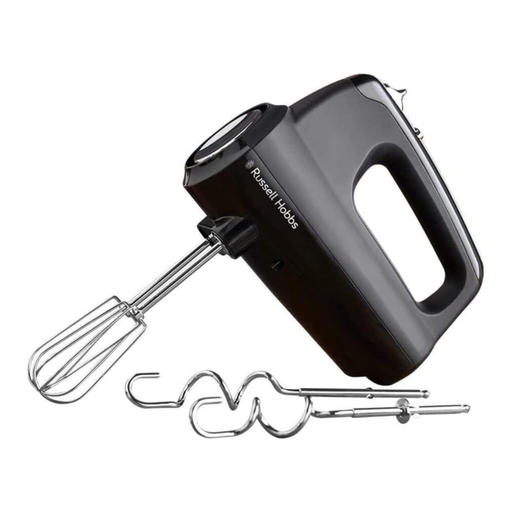
Why this product suits this profile: This compact hand mixer is suitable for occasional mixing, whisking and kneading, and can be stored neatly to save space.
The five speed settings and turbo function allow you to adjust the mixer for different mixtures. Whisks and dough hooks are included.
350 watts, five settings, dishwasher-safe attachments and an upright storage position.
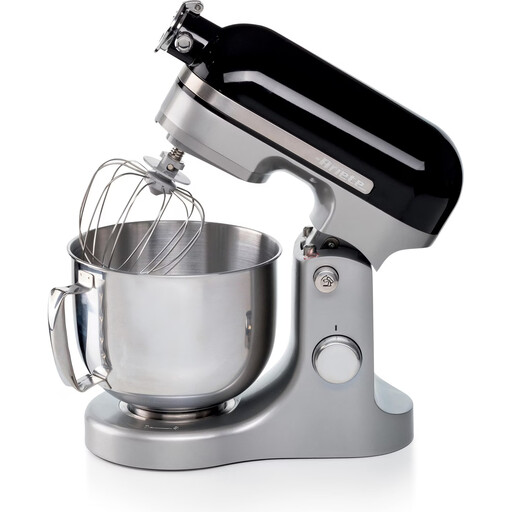
Why this product suits this profile: For households that regularly bake cakes, whip creams and process larger quantities of dough, this stand mixer offers a wide range of adjustment options.
The maximum dough capacity of 1.40 kg is stated separately from the bowl capacity of 5.5 litres. This makes it easier to assess the load during kneading.
1600 watts, 11 speed settings, 3D planetary system, stainless steel bowl and dishwasher-safe parts.

Why this product suits this profile: This model is aimed at households that want to use a mincer and blender attachment as well as bake.
The safety information states that the appliance switches off when the head is raised, as well as specifying a maximum continuous operating time of six minutes. This should be taken into account when planning frequent use.
1300 watts maximum power, 6-quart stainless steel bowl, eight settings plus pulse function, and additional attachments.
An electric hand mixer is usually the right choice if you have limited storage space, prepare small portions or only use the appliance occasionally. Models such as the SEVERIN HM 3820 and Kenwood QuickMix Go offer five speed settings, whisks and dough hooks.
A stationary stand mixer operates hands-free. This is practical when kneading for longer periods or preparing family-sized portions. However, it takes up more space, weighs more and requires more involved cleaning. If you regularly bake bread, you should check the maximum dough quantity and recommended kneading speed particularly carefully.
Replacement parts can extend the appliance's useful life. Individual dough hooks, for example, are available for compatible appliances. Always check compatibility using the model designation before buying.
We have put together a complete, regularly updated list of products that fully meet these strict selection criteria and the safety regulations applicable in the EU.
For smaller households, 4 to 5 litres is often sufficient. Families or people who regularly prepare bread and pizza dough may benefit from 5 to 6.5 litres. The recommended dough quantity remains the key factor, rather than the stated capacity alone.
Not automatically. Very firm or large quantities of dough put strain on the motor and gearbox. Use the dough hook at the low speed recommended by the manufacturer, and do not exceed either the maximum dough quantity or the operating time.
Consumption depends on the power rating, operating time and how the appliance is used. With the same operating time, a machine with a higher wattage will generally use more electrical energy than one with a lower rated power output. Short operating times, suitable quantities and the correct speed can reduce energy consumption in practice.