For baking several loaves in one batch, choose a stand mixer whose manufacturer specifies the maximum amount for the exact model and type of dough. Bowl capacity alone isn’t enough to go on. If you’re happy to make smaller batches, a more compact all-rounder could be a better fit. A larger machine only helps with planning if its stated dough capacity, how it works and the space it takes up suit your recipe and daily routine.
Which dough capacity matters for you?
Family bakers making large batches
You want to prepare several loaves in one go and need a stated dough capacity for the type of dough you’re making. Ankarsrum specifies up to 5 kg of dough for the Assistent Original model; this is the manufacturer’s own figure, not an independent comparison with other machines.
Bakers making firm bread dough
The maximum amount of firm dough matters more to you than the bowl size or a general maximum capacity. Kenwood gives separate figures for firm and soft yeast dough for the Chef XL; the higher figure for soft dough doesn’t apply to firm dough.
Occasional bakers short on space
You can divide the dough into smaller batches and weigh up kneading capacity against counter space and other kitchen tasks. Check the dimensions and the maximum amount specified for your recipe for the exact model.
What should you look for when buying?
First, note the amount of flour and the total weight of your recipe. Then compare these figures with the manufacturer’s limits for the right type of dough and exact model.
| What you need |
What to check before buying |
Who should pay particular attention? |
| Dough capacity per batch |
Compare your recipe’s weight with the figure for the exact model; distinguish between the amount of flour and the total weight of the dough. |
If I want to prepare several loaves for a family gathering in one batch, I need a capacity figure that explicitly covers my recipe. Around 36% of consumers say a large batch is their top priority. |
| Firm bread dough |
Check the limit for firm yeast dough in the manual, rather than relying on the figure for soft dough. Kenwood specifies a total weight of 2.4 kg for firm yeast dough and 5 kg for soft yeast dough with the Chef XL. |
For firm dough recipes, I want to know how much the machine can actually handle, rather than relying on a higher figure for soft dough. Around 29% of consumers prioritise this. |
| Space and batch size |
Check the machine’s dimensions against the available counter space and work out in advance whether you’ll need to knead several batches. |
If I only bake larger quantities occasionally, I can plan for smaller batches, but I still want the machine to fit easily into my everyday routine. Around 21% of consumers say saving space is particularly important. |
| Everyday use and care |
Check what’s included, the cleaning instructions for each part and the service options for the exact model. |
After the family gathering, I want to use the machine for other kitchen tasks too, and I don’t want to risk damaging it when cleaning. Around 14% of consumers prioritise this. |
Buying mistakes to avoid
-
Assuming bowl capacity equals the maximum dough weight
Bowl capacity describes the container; it doesn’t automatically tell you how much dough the machine can knead. Manufacturers may specify separate limits for flour, total dough weight and different types of dough.
Compare your recipe on a like-for-like weight basis with the figures for the exact model and type of dough.
If the maximum capacity isn’t enough for your recipe, you may need to knead several batches.
-
Applying the soft yeast dough limit to firm bread dough
Kenwood specifies a total weight of 5 kg for soft yeast dough with the Chef XL, but 2.4 kg for firm yeast dough. Kenwood warns that exceeding the stated filling quantities could damage the machine.
Check the entry for your recipe and model in the manual, rather than treating the highest published figure as a general limit.
-
Taking an overall rating as a verdict on kneading large batches of bread dough
IMTEST reported that the Kenwood Smart Touch KHC40.080BK needed additional work when handling heavy bread dough. For the Bosch MUMS6ZS13D, IMTEST noted that the dough hook didn’t reach all the residue around the edge of the bowl. These findings apply to the specific models tested.
Read test results for heavy bread dough separately from an overall rating, and also check that the batch size suits your recipe.
-
Confusing a guarantee with your statutory rights
Verbraucherzentrale distinguishes between your statutory rights against the seller and a voluntary guarantee, which comes with its own terms and conditions.
Keep the seller’s details and the guarantee terms, and check who to contact if something goes wrong.
Key brands at a glance
Bosch
MUM models come in different capacities and configurations; Series 6 is a separate, larger range.
- Bosch specifies a 3.9-l bowl and up to 1.9 kg of yeast dough for the MUM58200; a dough hook is included, according to Bosch.
- In its individual test, IMTEST found that the MUMS6ZS13D’s dough hook didn’t reach all the residue around the bowl when kneading heavy bread dough. This finding applies to this model.
Kenwood
The Smart Touch KHC40.080BK is a more compact option; capacity figures vary across Chef XL models.
- Kenwood specifies a maximum of 1.6 kg of bread dough and 800 g of flour for the Smart Touch KHC40.080BK. For the Chef XL, the manufacturer gives separate figures for firm and soft yeast dough.
- Kenwood specifies a total weight of 2.4 kg for firm yeast dough and 5 kg for soft yeast dough with the Chef XL. The higher figure doesn’t apply to firm dough. IMTEST reported that the Smart Touch needed additional work when handling heavy bread dough.
KitchenAid
Artisan models with a tilting head and larger bowl-lift models have different capacities.
- For certain 4.8-l Artisan models, KitchenAid specifies a maximum of 1 kg of flour; for certain 6.9-l bowl-lift models, it specifies 2.2 kg of flour.
- These figures refer to flour, not the total weight of the dough. KitchenAid recommends a particular speed and limits kneading times for its yeast dough recipes; check the instructions for your model.
Ankarsrum
The Assistent Original has a rotating 7-l bowl and is an option for larger batches.
- Ankarsrum specifies up to 5 kg of dough for the Assistent Original model.
- This is the manufacturer’s own figure, not an independently measured comparative advantage. Check that the rotating-bowl design suits the way you work with dough.
GRAEF
The MYestro is another option for larger quantities of firm yeast dough.
- GRAEF specifies a 7-l bowl and up to 3 kg of firm yeast dough for the MYestro.
- This capacity figure comes from the manufacturer. Check the exact limit for your recipe; manufacturer claims about kneading performance aren’t an independent comparative test.
Stand mixers for bread dough at Joybuy
The following machines are described as stand mixers or dough mixers and may be suitable for baking. However, bowl capacity doesn’t confirm a specific maximum amount of bread dough: before buying, check the manufacturer’s figure for your recipe and type of dough.
 No image available
HAUSWIRT M5 Max, 5.5 l
The stated bowl size and speed settings may help you narrow down your options; check the permitted kneading capacity for your recipe separately.
5.5-l bowl, 11 speed settings, 4.5-inch LED touchscreen.
View at Joybuy
 No image available
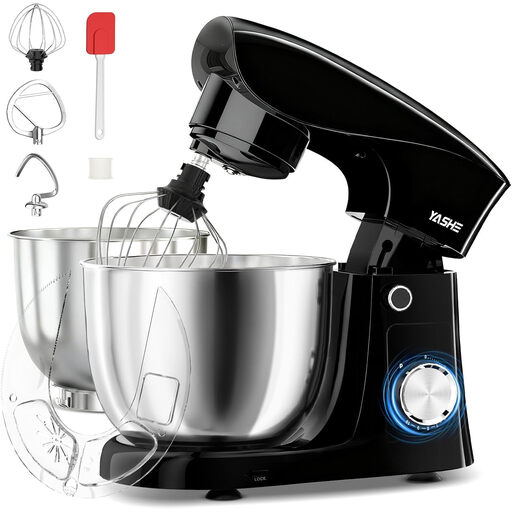
YASHE SM-2548 A, 4.5 l and 5 l
The dough hook listed may be useful when choosing a mixer for kneading; check with the manufacturer that its permitted dough capacity is right for your recipe.
Two stainless steel bowls, 4.5 l and 5 l, 10+ speed settings, tilting head and dough hook.
View at Joybuy
 No image available
Stand mixer with 5-l bowl
A dough hook is listed; check that the permitted kneading capacity and dough type match your recipe.
5-l stainless steel bowl, 10 speed settings, 600 W; includes a dough hook, beater, whisk and splash guard.
View at Joybuy
 No image available
Dough mixer with 4.5-l bowl, beige
A dough hook is listed; before you decide, check that the manufacturer’s limit is sufficient for your recipe and type of dough.
4.5-l stainless steel bowl, 1300 W, six speed settings and pulse function.
View at Joybuy
 No image available
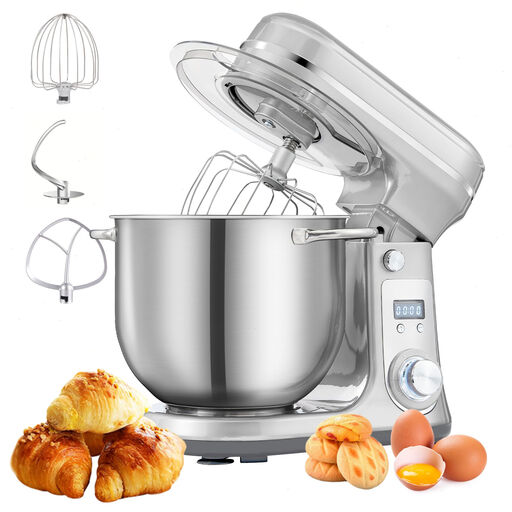
BioloMix BM601, 6 l
The product description lists firm bread dough as a suitable use. Check the permitted amount for your recipe with the manufacturer before deciding on your batch size.
6-l stainless steel bowl, 1200 W, six speed settings, pulse function, LCD display and timer.
View at Joybuy
Frequently asked questions about stand mixers for bread dough
Is a 7-l bowl automatically suitable for 7 kg of bread dough?
No. Litres measure the bowl’s capacity; what matters is the amount specified for the exact model and type of dough. Kenwood gives different limits for firm and soft yeast dough for the Chef XL.
How long should I knead bread dough, and at what speed?
Follow the manual for your model. KitchenAid recommends speed 2 for its yeast dough recipes and sets limits for mixing and kneading times; don’t assume the same instructions apply to other brands.
Are a guarantee and your statutory rights the same thing?
No. Your statutory rights are against the seller; a guarantee is an additional voluntary offer with its own terms and conditions. Verbraucherzentrale points out that they are based on different rights.
What should I check for product safety when buying in Germany?
Electrical and electronic products may need to carry the CE mark if relevant EU rules require it. In its market surveillance guidance, Bundesnetzagentur lists checks including marking, manufacturer details and German-language instructions with the required warnings. The CE mark is not a rating of kneading performance.
Can I return a stand mixer ordered online if it isn’t right for me?
Most goods ordered online can generally be returned within 14 days of receipt under the right to cancel. Verbraucherzentrale recommends checking the seller and return address. The right to cancel is separate from your rights if the product is faulty.


