Bakers with a fixed oven slot
You need to fit the kneading and the subsequent, recipe-dependent proving time around a baking slot shared with others.


The key is to make sure the yeast dough capacity stated for the specific model suits your recipe. If you’re making several loaves, a larger permitted batch may save you from having to knead the dough in multiple batches. Built-in scales and timers can make individual preparation steps easier, but they don’t replace proofing times tailored to your recipe. Plan the process around your shared oven slot, as The Perfect Loaf explains in its guide to dough fermentation.
You need to fit the kneading and the subsequent, recipe-dependent proving time around a baking slot shared with others.
You want to prepare several loaves for one oven slot, so you compare the permitted dough capacity rather than just the bowl size.
You need a machine that can handle the right batch size and that you can store and manage after kneading.
First, work out how much dough you need to knead in each batch, and plan proving separately from any convenience features. That way, you can check whether the machine suits your recipe and your shared oven slot.
| Buying priority | What to check before buying | Who it matters most to |
|---|---|---|
| Fitting around an oven slot | Plan bulk and final proving according to your recipe and the state of the dough. Check which steps a scale or timer actually makes easier. | If I need to coordinate a baking slot with other people, I want to plan the process around the recipe and the dough, not just the kneading time. Around 36% of consumers prioritise fitting their baking schedule around an oven slot. |
| Yeast dough capacity per batch | Compare the weight of your recipe with the yeast dough capacity explicitly stated for the exact model, not just the bowl capacity or a general dough figure. | If I’m preparing several loaves for a fixed baking slot, I want to check the stated yeast dough capacity per batch against the weight of my recipe. Around 29% of consumers put finding the right batch size first. |
| Kneading controls | Check whether a dough hook is included, and follow the speed and kneading-time recommendations for the specific model. | I want to understand how to operate the kneading controls; being able to weigh ingredients straight into the bowl would be an added bonus. Around 21% of consumers say kneading controls are their top priority. |
| Space and handling | Compare the machine’s dimensions and weight, and the worktop space it needs, with the space available where you plan to keep it. | If I share a kitchen, I need to be able to store and move the machine without losing sight of how much bread I plan to make. Around 14% of consumers prioritise storage space and ease of handling. |
Bosch states that the MUM5935B can handle 1.9 kg of yeast dough, while the general figure of 2.7 kg applies to a different type of dough. Bowl capacity and general dough capacity therefore aren’t reliable substitutes for a yeast dough capacity figure.
Compare the weight of your recipe directly with the yeast dough capacity stated for the exact model. If your batch is too large, you may need to fit multiple kneading sessions into your schedule before the shared oven slot.
A scale makes weighing easier, but it doesn’t take care of bulk or final proving. The Perfect Loaf explains that dough fermentation depends on the dough itself.
Plan your oven slot around the full recipe and the state of the dough. Use convenience features only for the steps they actually help with.
Ankarsrum states that the Assistent Original AKM6230 can handle up to 5 kg of dough and weighs 13 kg. A higher stated batch capacity may therefore come with a larger footprint and make the machine less easy to move.
Check the dimensions, weight and available worktop space where you plan to keep the machine before making batch capacity your deciding factor.
The MUM5935B is an example of a stand mixer where the stated yeast dough capacity is useful when planning batches.
The Titanium Chef Baker XL KVL85.004SI is aimed at buyers who want to weigh ingredients straight into the bowl.
The Assistent Original AKM6230 is worth considering if you’re weighing up larger batches against the space it takes up and its weight.
The Artisan 5KSM175PSEFL pairs a dough hook with accessories for other mixing tasks.
The Halo Pro offers a spiral mixer as an alternative for those who want a machine focused on dough.
This selection includes stand mixers with dough hooks for kneading bread dough, including models with built-in scales or a stated bread dough capacity. Bowl size alone doesn’t tell you how much yeast dough is suitable for your recipe.
 No image available
For anyone looking for a stand mixer with a dough hook; bowl size alone doesn’t determine the permitted yeast dough capacity.
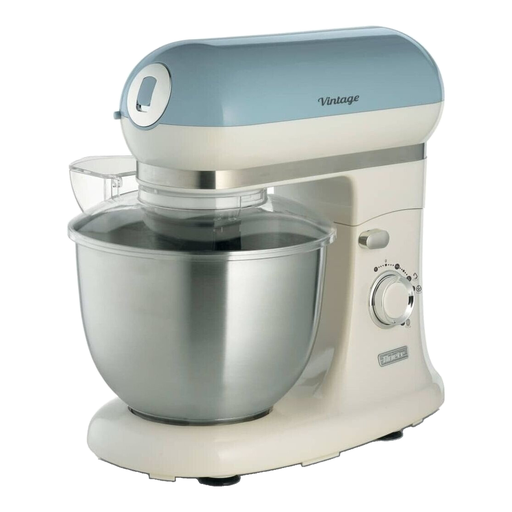 No image available
The product description lists a dough hook and says it can be used for bread and pizza dough; check the permitted dough capacity for your recipe.
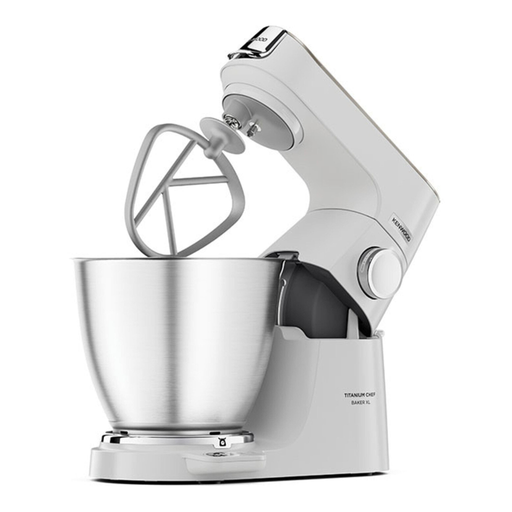 No image available
For anyone who wants to weigh ingredients straight into the bowl while preparing them; the scale doesn’t replace planning the proving time.
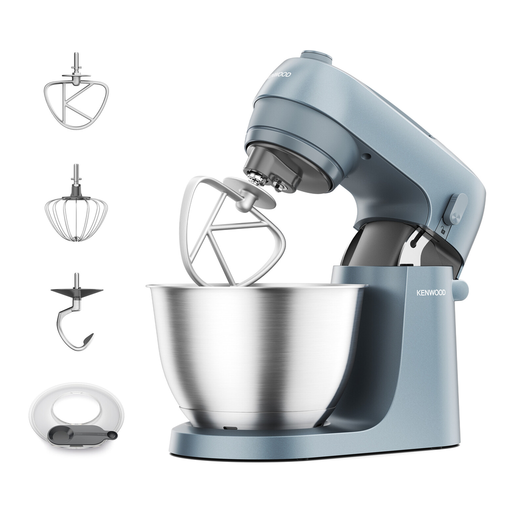 No image available
A single batch option if the 1.5 kg bread dough limit stated in the listing suits the quantity in your recipe.
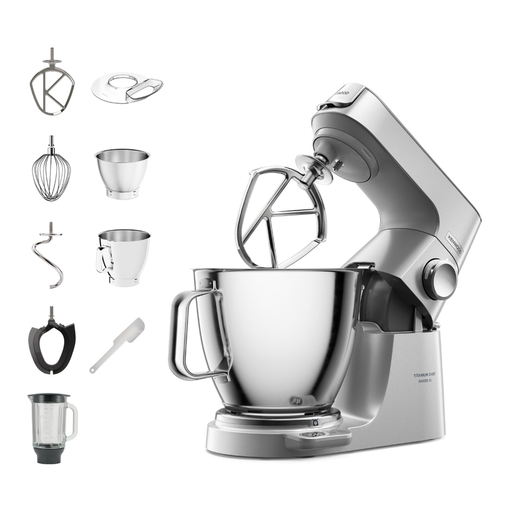 No image available
For anyone who wants to weigh ingredients straight into the bowl and use a dough hook; you’ll still need to plan proving around your recipe.
Not through kneading alone. Bulk and final proving are separate steps, and their duration depends on factors including the recipe and the dough itself. The Perfect Loaf explains that dough fermentation needs to be adjusted to the dough in question. So plan the recipe around the oven time available to you.
No. KitchenAid recommends speed 2 for yeast dough in its own stand mixers and provides its own timings. Don’t assume this manufacturer’s recommendation applies to other brands; always follow the instructions for the model you’ve chosen.
The German consumer advice centre distinguishes between the statutory warranty and an additional voluntary guarantee, which is subject to its own terms. Before paying for extra cover, check what rights already apply to your purchase.
No. EU guidance on CE marking explains that it is based on the manufacturer’s declaration that the relevant requirements have been met; it isn’t an approval from a central EU testing body. The German Federal Network Agency lists checks of markings and manufacturer information among its activities. Whether a specific product meets the requirements must be assessed individually.