Choose a stand mixer based on the amount your recipe actually makes, the right dough hook and the space you have available – not just the bowl capacity. A compact mixer may be suitable if your recipe falls within the limits specified for that particular model. If you regularly bake larger batches, extra capacity could be useful. Maximum quantities given by manufacturers do not show whether a mixer can handle a small batch or reliably knead a small, rich brioche dough.
Who is this guide for?
Bakers making small brioche portions
If you’re making individual portions for a lunchbox, the key question is whether the dough hook and bowl can reach the amount of dough you’re mixing. A German brioche recipe from KitchenAid explains how to work in softened butter a little at a time. Published maximum quantities don’t tell you whether a small batch is suitable.
Bakers with limited kitchen space
If your mixer will stay on the worktop or needs to be put away, check its dimensions and the space needed to use it, as well as whether it can handle the amount of dough you plan to make. Kenwood lists the Go KZM35.000GY as measuring 33.5 × 18 × 30 cm, with a 4 l bowl.
Bakers who batch bake
If you prepare several portions at once, the dough capacity you need is what matters – not just the bowl size or wattage. The specifications published for Bosch, Kenwood and Ankarsrum models cover different types of dough and different machines.
What should you look for when buying?
Start by checking your recipe quantity against the dough hook. Then consider the space you have for the mixer and room to use it. Finally, decide which convenience features you’ll actually use.
| What matters when buying |
What to check |
Who is it important to? |
| Dough quantity and kneading results |
Check that a dough hook is included, and compare your recipe quantity with the model-specific limits for flour and dough. Look out for guidance on small quantities. |
If I’m kneading a single lunchbox portion, the mixer needs to reach the amount of dough I’m actually making. Around 33% of consumers prioritise kneading the right-sized portion. |
| Space requirements |
Compare the mixer’s dimensions and weight, and the room needed to use it, with your worktop or storage space. |
If my kitchen has limited worktop space, I want to be able to store the mixer easily without losing sight of the amount of dough I need it to handle. Around 27% of consumers focus mainly on the space it takes up. |
| A straightforward workflow |
Check whether built-in scales and access to the bowl suit the way you work when adding ingredients gradually. |
If I make brioche regularly, I want to weigh ingredients easily and add them without hassle while kneading. Around 20% of consumers prioritise a straightforward workflow. |
| Features and long-term use |
Check what’s included, which tools you need and the specific warranty terms for the product you’re considering. |
If I mainly bake brioche, I want to choose based on the features I need and long-term usefulness, rather than functions I’ll rarely use. Around 20% of consumers prioritise features and service. |
Common pitfalls when buying
-
Assuming bowl capacity means a mixer can handle small quantities
The bowl’s capacity in litres and the maximum dough quantity won’t tell you whether the dough hook can properly reach a small portion of brioche dough.
Compare your recipe with the specifications for the exact model. For small batches, check whether the manufacturer recommends a minimum quantity.
-
Treating specifications for different types of dough as equivalent
Bosch lists different maximum quantities for cake mixture and yeast dough for the MUM58200. The higher figure for cake mixture is not the limit for yeast dough.
Note the dough type and unit alongside each capacity figure, and only compare figures that refer to the same type of dough.
-
Choosing extra features instead of the equipment you need
The accessories included and built-in features vary between the models reviewed. Scales, for example, are no substitute for a suitable dough hook.
First, check the bowl and dough hook supplied with the specific model. Then decide whether built-in scales would be useful for the way you bake.
Key brands at a glance
Bosch
The MUM58200 reviewed here combines a 3.9 l bowl with an included dough hook.
- Bosch states that this model can handle up to 1.9 kg of yeast dough.
- The separately listed maximum of 2.7 kg is for cake mixture, not yeast dough. The MUM58200 is not listed as having built-in scales.
Kenwood
The models reviewed range from the space-saving Go KZM35.000GY to the Titanium Chef Baker KVC65.001WH, with its larger bowl and built-in scales.
- Kenwood lists a 4 l bowl, dough hook and maximum quantities of 0.5 kg of flour and 1.5 kg of bread dough for the Go. For the Chef Baker, the manufacturer lists a 5 l bowl, a dough tool and built-in scales.
- These manufacturer specifications don’t show how well either model kneads a small portion of brioche dough.
KitchenAid
The Artisan 5KSM193 reviewed here has a tilt-head design, a 4.7 l bowl and an included stainless steel dough hook.
- A German brioche recipe from KitchenAid explains how to add butter gradually while kneading.
- The recipe and product specifications are manufacturer information. They don’t demonstrate an independent performance comparison or specify a minimum dough quantity.
Ankarsrum
The Assistent Original reviewed here has a rotating 7 l bowl and a stated capacity suited to larger quantities of dough.
- Ankarsrum states that this model can handle up to 5 kg of dough.
- The manufacturer lists the mixer’s weight as 13 kg. Its maximum capacity alone doesn’t show that it’s suitable for a single small lunchbox batch.
Stand mixers at Joybuy
This selection features stand mixers with a kneading function for brioche dough. Bowl sizes and stated dough capacities can help you compare a mixer with your recipe, but they don’t replace checking whether the specific model is suitable for small portions too.
 No image available
HAUSWIRT M5 Max stand mixer
The stated kneading function may be useful for brioche dough. Compare your recipe quantity with the specifications for this model.
Bowl: 5.5 l. 11 speed settings.
Joybuy
 No image available
Stand mixer with dough hook, 4.5 l
The listed dough hook and kneading function are suited to the task. Check whether the mixer can handle your small recipe quantity.
Bowl: 4.5 l. Power: 1,300 W. Speed settings: 6 + P.
Joybuy
 No image available
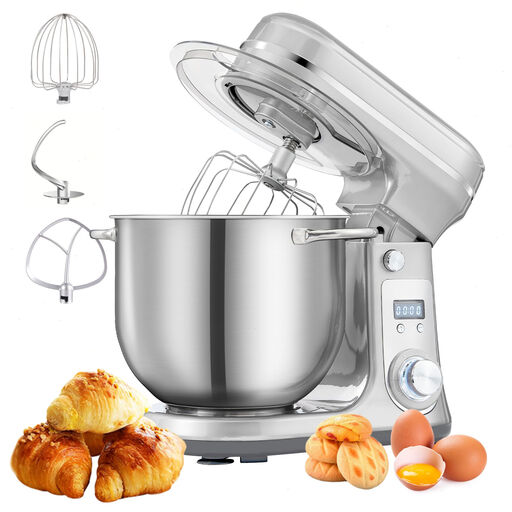
BioloMix BM601 stand mixer
The stated kneading function is relevant for brioche dough. Compare your recipe quantity with the specifications for this particular model.
Bowl: 6 l. Power: 1,200 W. Six speeds plus pulse function.
Joybuy
 No image available
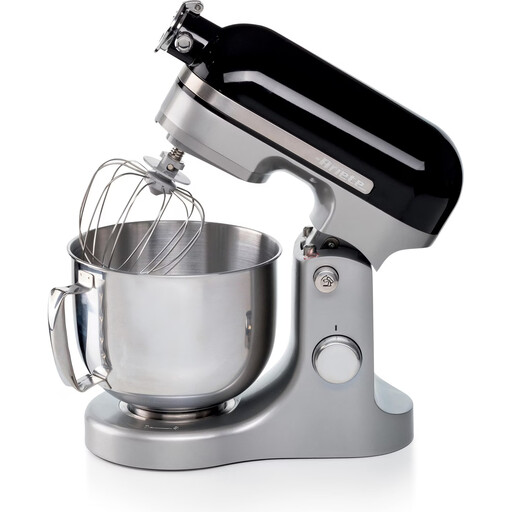
Ariete 1589 Moderna stand mixer
The listed dough hook and dough capacity give you a starting point for comparing the mixer with your recipe, but they don’t tell you whether it has a suitable minimum quantity.
Bowl: 5.5 l. 11 speed settings. Maximum dough capacity: 1.4 kg. A dough hook is listed as included.
Joybuy
 No image available
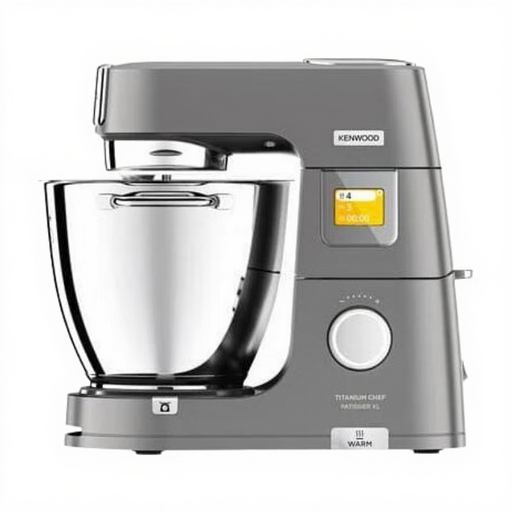
Kenwood Titanium Chef Patissier XL KWL90164SI
The stated kneading function may suit brioche dough. If you’re making a small lunchbox portion, pay particular attention to whether the bowl is suitable.
Bowls: 7 l and 5 l. Built-in scales and timer.
Joybuy
Frequently asked questions
How should I add butter when kneading brioche?
A German brioche recipe from KitchenAid starts by using the dough hook to bring the dough together, then gradually adding softened butter. Don’t assume the speed settings and timings will work for a different model; follow its instructions instead.
Is a 4 l bowl automatically suitable for a small lunchbox portion?
No. The 4 l figure for the Kenwood Go KZM35.000GY refers to the bowl’s capacity. Kenwood’s stated maximum quantities for flour and bread dough don’t specify a minimum quantity or show how well the model will knead your brioche recipe.
Can I compare maximum quantities for bread dough and yeast dough directly?
Only if the figures refer to the same type of dough and a comparable basis for measuring the quantity. For example, Bosch lists separate maximum quantities for cake mixture and yeast dough for the MUM58200. The cake mixture quantity is not a limit for yeast dough.
What requirements apply to a stand mixer and its dough tools?
Electrical appliances must comply with the relevant harmonised EU rules where these require CE marking. The European Union points out that the CE mark is not an independent EU approval of a product. Parts intended to come into contact with food must meet the requirements for food contact materials, including Regulation (EC) No 1935/2004. Check the information for the specific product rather than assuming it complies with all requirements.


