
Lieferung heute & morgen

Qualitätsgarantie

Willkommens-Angebote freischalten: KOSTENLOSE Lieferung | Bis zu 80 % RABATT | Kostenlose 30-Tage-JoyPlus-Testphase
App herunterladen
A high-performance stand mixer is a cornerstone investment for many hobby bakers and ambitious cooks. It promises to simplify kneading heavy bread dough, whipping cream, and combining ingredients. But the market is crowded, and many appliances fail to live up to their marketing promises. As your Joybuy Product Recommendation Officer, I'll help you identify the crucial features and make an informed choice based on facts, not hype.
Before you invest, you should know the most common pitfalls that often lead to disappointment and an unused appliance collecting dust in the corner of your kitchen.
To avoid a bad purchase, focus on these three objective criteria. They determine the longevity and functionality of your future stand mixer.
The heart of any stand mixer is the combination of its motor and gearbox. A planetary mixing action is the established standard here. This means the mixing tool not only rotates on its own axis but also moves in a circular path around the edge of the bowl. This ensures all ingredients at the bottom and sides of the bowl are incorporated and mixed evenly—essential for homogenous dough and lump-free batters. Look for mentions of all-metal gears, as they promise more efficient power transfer and a longer lifespan than plastic components.
The size of the mixing bowl should match your household and cooking habits.
A bowl made of stainless steel is the most practical choice: it's durable, hygienic, dishwasher-safe, and won't absorb odours or stains.
The basic set of attachments should always include a dough hook, a flat beater, and a whisk. Check the material of these tools carefully. For ambitious cooks, expandability can be a decisive criterion. Some models offer the option to connect additional accessories like a meat grinder, a pasta maker, or a blender attachment. Such a stand mixer with a meat grinder can replace several individual appliances, saving space and money.
Here are some models that represent a considered choice for specific user groups based on their technical specifications and feature sets.

Why This Fits Their Persona: Ideal for hobby bakers seeking a reliable machine for regular use without a premium budget. The 6-litre bowl is large enough for family-sized portions of bread or pizza dough.
This model bypasses the "wattage trap" with a 450W pure copper DC motor that delivers high torque at low speeds—ideal for tough dough. Strong suction cups on the base prevent the machine from "walking".
Large 6-litre capacity and a quiet, high-torque DC motor. The solid set of basic attachments covers all fundamental baking needs.

Why This Fits Their Persona: Perfect for cooks seeking maximum versatility. This appliance combines a powerful dough mixer with a meat grinder and a blender attachment, saving valuable countertop space.
Instead of relying on separate, potentially inferior appliances, this model offers an integrated solution. The 1300W motor provides ample power for all functions, from kneading to grinding, thus avoiding performance compromises.
High multifunctionality as a stand mixer with a meat grinder and blender. The large 6.2-litre bowl and powerful motor can handle demanding tasks.
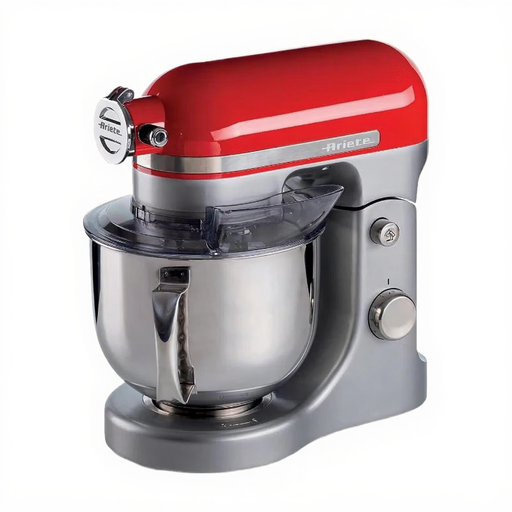
Why This Fits Their Persona: Designed for those who take bread baking seriously and need a machine with maximum kneading power. The high motor output and precise control are engineered for processing heavy doughs.
This model focuses on pure, unadulterated power. The 1600-watt motor, combined with the robust planetary mixing action, ensures that the power actually reaches the dough without the machine overheating or losing stability.
Very high motor power for demanding kneading tasks. The 11 speed settings allow for fine-tuning for different dough consistencies.
We've compiled a complete, up-to-date list of products that fully meet these strict selection criteria and safety regulations.
There's no one-size-fits-all answer, as the efficiency of the motor and gearbox is more important than raw wattage. A machine with a high-quality 400–500 watt direct current (DC) motor can often provide more power for kneading than a model with a 1200-watt alternating current (AC) motor. As a general guideline: for regular kneading of bread dough, a machine should have a robust gearbox and sufficient torque, which is often the case with models from 1000 watts (AC) or those with specialised DC motors.
A planetary mixing action is a mechanism where the mixing tool (e.g., the dough hook) rotates on its own axis while also travelling in a circular path around the edge of the bowl. This ensures an extremely thorough and even mixing of ingredients. For anyone who bakes regularly—especially doughs or delicate batters—a planetary mixing action is an indispensable feature for consistent results.
Always read the manufacturer's instructions. Generally, the motor housing should never be submerged in water but only wiped with a damp cloth. The stainless steel mixing bowl is usually dishwasher-safe. Caution is advised with accessories: parts made of solid stainless steel are typically dishwasher-safe, whereas coated aluminium parts should be washed by hand to avoid damaging the coating.