
Lieferung heute & morgen

Qualitätsgarantie

Willkommens-Angebote freischalten: KOSTENLOSE Lieferung | Bis zu 80 % RABATT | Kostenlose 30-Tage-JoyPlus-Testphase
App herunterladen
A stand mixer is a cornerstone appliance for boosting efficiency and precision in food preparation. It handles mechanically demanding tasks like kneading, mixing, and whipping, which leads to more consistent results and reduces manual effort. Selecting the right model depends on individual requirements for power, capacity, and functionality. This guide analyses the technical parameters relevant for making an informed decision.
The choice of a model should be based on an analysis of objective performance metrics. The following criteria are central to evaluating a mixer or dough mixer.
The specified wattage is an indicator of the motor's power consumption, but it is not the sole factor determining effectiveness. A professional-grade stand mixer often features a direct-drive motor, where power is transferred directly to the mixing attachment with minimal loss. Therefore, models with 300 to 500 watts and a direct-drive system can achieve comparable or even superior performance when processing heavy doughs compared to models with a 1000-watt belt-drive system. For the regular preparation of bread dough, a motor with high torque is crucial.
The planetary mixing action is an established industry standard. With this system, the mixing attachment rotates on its own axis while simultaneously moving along the edge of the bowl. This dual motion ensures that all ingredients are incorporated from the bottom and sides of the bowl and mixed homogeneously. The efficiency of this system is a benchmark for the quality of the mix.
The housing material affects the appliance's stability and durability. An all-metal body offers superior stability, especially at high speeds or when processing tough dough. It minimises vibrations and contributes to the machine's longevity. Stainless steel bowls are hygienic, robust, and dishwasher-safe.
The size of the mixing bowl, specified in litres, should be matched to your typical batch sizes. A 4.8-litre bowl is sufficient for most households, while larger quantities may require a capacity of 6 litres or more. Standard accessories typically include a wire whip for egg whites and cream, a flat beater (K-beater) for cake batter, and a dough hook for yeast and bread dough.
Modern appliances often offer advanced functionalities. An integrated scale allows for weighing ingredients directly in the bowl, which simplifies the workflow and reduces the number of utensils needed. A timer function or a stand mixer with a cooking function (e.g., for warming chocolate) significantly expands the range of applications and are hallmarks of high-end models.
Based on an analysis of technical specifications and practical utility, we present three models that cater to different user profiles.
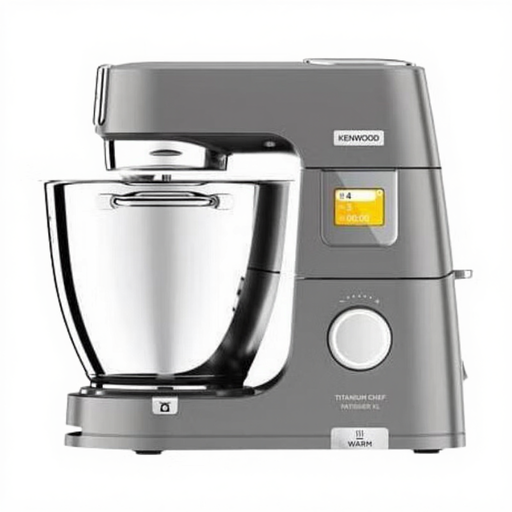
Why we recommend this product The Kenwood Titanium Chef Patissier XL is designed for users who need high performance and an advanced feature set. The 1400-watt motor effortlessly handles large quantities and heavy doughs. Its standout features are the integrated functions like the EasyWarm heating function and the precise scale that weighs directly in the bowl. With two mixing bowls (7 L and 5 L), it offers maximum flexibility.
Pros
Who it's for This model is aimed at ambitious home bakers and cooks who regularly process large batches and value precision and multifunctionality. The integrated features streamline the workflow, making the appliance a central hub in the kitchen.
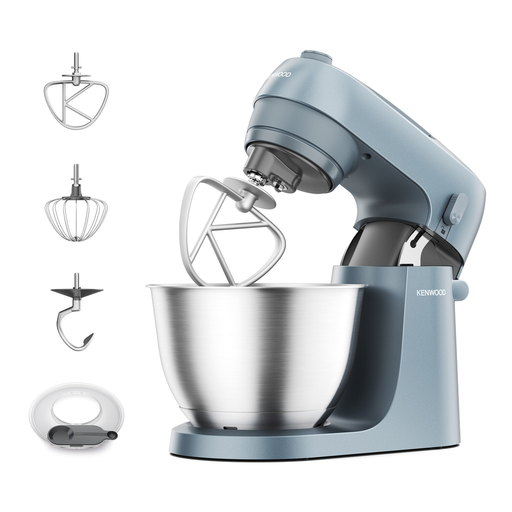
Why we recommend this product The Kenwood Go addresses the need for a powerful yet space-saving stand mixer. With a height of just 30 cm and a robust all-metal body, it combines a compact footprint with durability. The 800-watt motor and 4-litre bowl are sized for the most common baking and cooking applications in smaller households. The controls are conveniently located on the front.
Pros
Who it's for Ideal for users in urban apartments or with smaller kitchens who don't want to compromise on the quality and performance of an all-metal appliance. It's a great choice for beginners and home bakers looking for a reliable dough mixer for regular use.
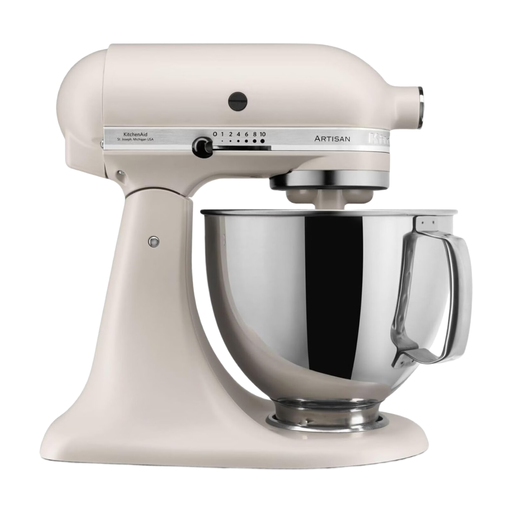
Why we recommend this product The KitchenAid stand mixer from the Artisan series is renowned for its durability and iconic design. The all-metal body and 300-watt direct-drive motor ensure efficient and quiet power transmission. The planetary mixing action guarantees a thorough incorporation of ingredients. With 10 speed settings and a 4.8-litre stainless steel bowl, it is a versatile machine, especially as a mixer for baking.
Pros
Who it's for This model appeals to design-conscious users and home bakers who rely on a trusted brand with high reliability and material quality. The ability to expand the machine with accessories for pasta, meat grinding, and more makes it a long-term investment.
For users seeking an integrated solution that goes beyond mixing and kneading, our Stand Mixer & Blender Combos category offers a selection of appliances that combine additional functions like blending or chopping in one device.
1. How many watts should a good stand mixer have? Wattage alone is not the deciding factor. A machine with 300 watts and a direct-drive motor can be more effective than one with 1000 watts and a belt-drive system. For heavy doughs, high torque is more important than high wattage. For most household applications, models between 800 and 1500 watts (for belt-drive) or from 300 watts (for direct-drive) provide a solid foundation.
2. What is the difference between a Kenwood and a KitchenAid stand mixer? Both brands produce high-quality appliances but differ in technical details. Kenwood stand mixers often offer higher motor power (wattage) and innovative additional features like integrated scales or cooking functions in their premium ranges. KitchenAid stand mixers are known for their efficient direct-drive motor, iconic design, and a very broad ecosystem of optional accessories that connect via a single attachment hub.