
Lieferung heute & morgen

Qualitätsgarantie

Willkommens-Angebote freischalten: KOSTENLOSE Lieferung | Bis zu 80 % RABATT | Kostenlose 30-Tage-JoyPlus-Testphase
App herunterladen
Choosing a new stand mixer can quickly become overwhelming. Manufacturers advertise high wattages and a vast array of accessories, but not every promise holds up to real-world kitchen scrutiny. As a Joybuy Product Recommendation Officer, I'll help you identify the crucial features and avoid marketing traps, ensuring you find an appliance that truly meets your needs.
Many purchasing decisions are based on features that have little practical relevance or even conceal disadvantages. Pay special attention to these three points:
To make an informed decision, you should focus on the technical fundamentals that determine the performance and longevity of a stand mixer.
Instead of just looking at the wattage, find out about the type of motor and gearbox. A powerful direct current (DC) motor often operates more quietly and efficiently than a conventional alternating current (AC) motor. A metal gearbox is a clear sign of quality, as it reliably transmits motor power and is more wear-resistant than plastic components. This is especially important if you plan to regularly knead heavy bread dough.
The mixing system is crucial for a homogeneous result. A planetary mixing system ensures that the mixing arm not only rotates on its own axis but also moves along the edge of the bowl. This captures all ingredients from the bottom and sides, mixing them evenly. A stainless steel mixing bowl is the standard choice for ambitious home bakers. Stainless steel is robust, hygienic, flavour-neutral, and easy to clean. It also allows for good control over the temperature of the ingredients (e.g., when whipping cream).
The basic equipment of a good dough mixer or stand mixer should include at least a dough hook, a flat beater, and a whisk. Pay attention to the material: dough hooks and beaters made of coated aluminium or stainless steel are more durable than simple plastic versions. Check if the accessories are dishwasher-safe to make cleaning easier. For versatile applications, there are also models that can be expanded with meat grinder or blender attachments.
Depending on your cooking and baking habits, a different appliance will suit you. Here are some recommendations tailored to specific use cases.
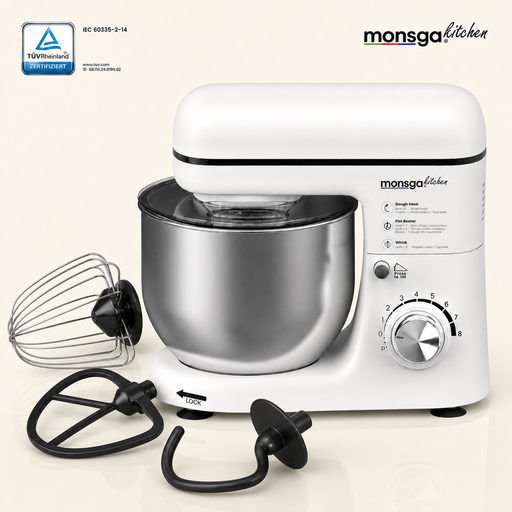
Why it's a match: Ideal for those who regularly prepare large batches of dough for baking bread or pizza. The combination of a 1000-watt motor, planetary mixing action, and a large 6-litre stainless steel bowl handles even demanding tasks.
Addresses the unstable construction pitfall with four silicone suction feet for a secure stance. The Teflon-coated dough hooks and beaters counter the subpar accessory pitfall, as they are non-stick and durable.
Large 6-litre capacity and high-quality, non-stick accessories for easy handling and cleaning.
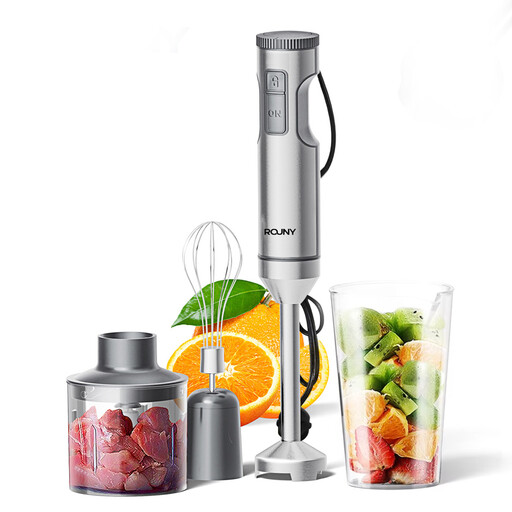
Why it's a match: Perfect for users who need a flexible tool for daily tasks like soups, sauces, or smoothies. This immersion blender is more than just a blender; it's a multifunctional set for mixing, chopping, and whisking.
Sidesteps the superfluous accessory trap by bundling four genuinely useful functions (blending wand, chopper, whisk, beaker) into one compact and affordable package.
4-in-1 functionality with stepless speed control and a powerful motor for its class (up to 1200W).
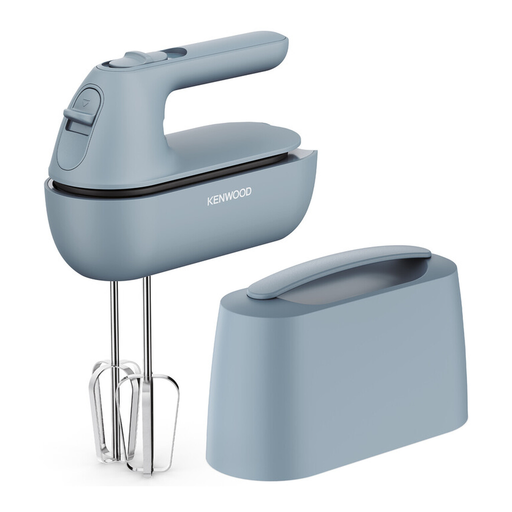
Why it's a match: For anyone who occasionally bakes cakes or whips cream and lacks space for a large machine. This hand mixer is compact, easy to use, and offers a clever storage solution.
Evades the wattage trap by focusing on practical functionality. The 350 watts are perfectly adequate for its intended tasks. The storage case solves the problem of lost accessories.
Integrated storage case for the mixer and accessories. The slow start speed prevents splatters and ensures a clean workspace.
We've compiled a full, up-to-date list of products that fully meet these strict selection criteria and UK/EU safety regulations.
Wattage alone is not a reliable indicator. For simple tasks like whipping cream or light batters, a hand mixer with 300–400 watts is sufficient. For a dough mixer that needs to regularly handle heavy yeast or bread dough, the quality of the motor and gearbox is more important. Models with a high-quality DC motor and metal gearbox can deliver excellent results with just 450–1000 watts, while basic AC motor units often require over 1200 watts and still reach their limits.
Although the terms are often used interchangeably, there are functional differences. A dough mixer (or classic stand mixer) is primarily designed for kneading dough and mixing batters using a planetary mixing system. A blender (or jug blender), on the other hand, is specialized for puréeing, crushing, and blending liquid or soft ingredients at high speeds, for example, for smoothies or soups. Some stand mixers offer a blender attachment as an accessory.