
Lieferung heute & morgen

Qualitätsgarantie

Willkommens-Angebote freischalten: KOSTENLOSE Lieferung | Bis zu 80 % RABATT | Kostenlose 30-Tage-JoyPlus-Testphase
App herunterladen
Choosing a new stand mixer can be a challenge given the vast array of models, features, and price points. Whether you want to knead heavy bread doughs, whip airy creams, or prep ingredients for an entire meal, your needs are as unique as your recipes. This guide is designed to help you understand the technical specifications and make an informed decision. We will introduce a selection of appliances for different needs and provide you with objective criteria to find the perfect model for your household.
To make the right choice, it's helpful to consider a few fundamental aspects. These criteria will help you identify the features that are most relevant to your cooking and baking habits.
The motor's power, measured in watts, is an indicator of the machine's strength. For occasional mixing of light batters, a machine with 800 to 1000 watts may be sufficient. However, if you plan to regularly work with heavy yeast or bread doughs, a more powerful dough mixer with 1200 watts or more is recommended. A strong motor not only ensures an even kneading result but also a longer lifespan for the appliance under heavy load.
The capacity of the mixing bowl determines the quantities you can process at once. For single or two-person households, a bowl with a volume of 3 to 4.5 liters is often enough. Larger families or ambitious home bakers who prepare for events will benefit from bowls of 5 liters or more.
Modern stand mixers are often more than just a mixing machine. A wide variety of accessories turns them into multifunctional assistants. The standard set usually includes a dough hook, a flat beater, and a whisk. However, many models can be expanded with, for example, a stand mixer with a meat grinder attachment, a blender attachment, an ice cream maker, or a pasta attachment. Before buying, consider which tasks the appliance should perform to choose a model with the right expansion options.
The dimensions of the appliance are a crucial factor, especially in smaller kitchens. A compact stand mixer is easier to store or can find a spot even on a crowded countertop. Also, pay attention to the material of the housing and the mixing tools. A metal housing is generally more robust and stable than one made of plastic.
Additional features can significantly streamline your workflow. A stand mixer with a built-in scale allows you to weigh ingredients directly in the bowl, saving time and extra dishes. An integrated timer helps to adhere precisely to kneading and mixing times.
Here we present three models that are suited for different user profiles due to their specific characteristics.
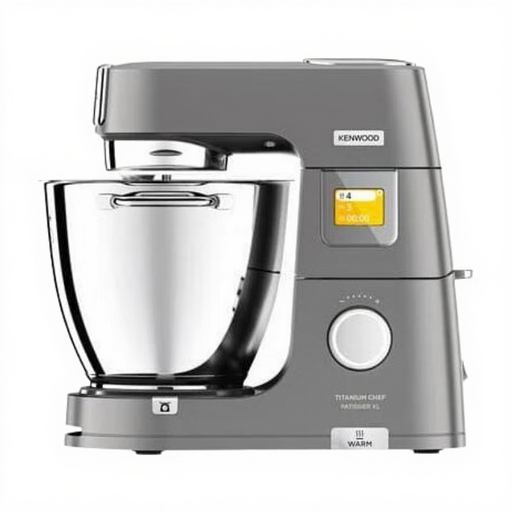
Why it stands out: This model from Kenwood is aimed at discerning users. It combines a very powerful motor with intelligent functions that offer precision and convenience in baking and cooking. The integrated scale and the heating function for melting chocolate or proofing dough directly in the bowl are features that optimize the workflow.
Pros:
Who it's for: For ambitious home bakers and cooks who regularly process large quantities and value precision, performance, and multifunctional capabilities.

Why it stands out: The HONINST stand mixer is designed as an all-in-one solution. It integrates the functions of a dough mixer, a meat grinder, and a blender into a single device. This makes it a space-saving and cost-effective option for households looking to cover a wide range of kitchen tasks.
Pros:
Who it's for: For beginners and budget-conscious users looking for a versatile appliance for daily use who don't want to purchase multiple separate devices.
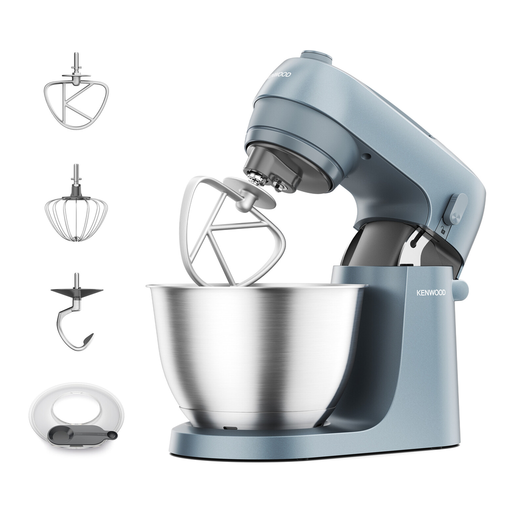
Why it stands out: The Kenwood Go is the answer to the demand for a powerful yet compact stand mixer. At just 30 cm tall, it fits easily under wall cabinets or in deeper drawers. Despite its small size, it features a robust metal housing and the proven Kenwood quality.
Pros:
Who it's for: For users in smaller apartments or kitchens who don't want to compromise on the performance and durability of a high-quality mixer.
This selection covers various user profiles but represents only a small fraction of the available market. If you are looking for more options, specific accessories, or different designs, it's worth taking a look at our broader range.
Discover our full range of stand mixers and blenders and find the appliance that perfectly matches your needs.
The terms are often used interchangeably, as most modern stand mixers perform both functions. Traditionally, a dough mixer is specialized for processing heavy doughs and is characterized by a particularly strong motor and a robust dough hook. A stand mixer is a more general term for an appliance that can mix, whip, and blend with various attachments. Today, a good stand mixer combines both.
The required wattage depends on the intended use. For light tasks like whipping cream or mixing cake batter, models with 800–1000 watts are often sufficient. For regular kneading of bread or pizza dough, at least 1200 watts are recommended to avoid overloading the motor and to achieve a consistent result.
If you frequently prepare heavy doughs, the following points are important: