
Lieferung heute & morgen

Qualitätsgarantie

Willkommens-Angebote freischalten: KOSTENLOSE Lieferung | Bis zu 80 % RABATT | Kostenlose 30-Tage-JoyPlus-Testphase
App herunterladen
A stand mixer is a central tool for increasing efficiency in food preparation. Its primary function is to automate manual, time-consuming tasks such as kneading, mixing, and whipping. This leads to more consistent results, especially when processing doughs or making creams. Selecting a suitable model depends on specific technical requirements and the intended use case.
The decision to purchase a stand mixer should be based on an analysis of objective performance metrics. The following parameters are crucial for the appliance's functionality and longevity.
Motor power, specified in watts, is an indicator of the appliance's ability to handle tough mixtures like heavy yeast or bread doughs.
A direct drive system transfers power from the motor to the mixing tool with less loss than a belt drive, often operating more efficiently at a lower wattage.
The planetary mixing action is an established industry standard. With this system, the mixing tool rotates on its own axis while also moving along the edge of the bowl. This ensures a complete and even incorporation of ingredients, eliminating the need for manual scraping.
The size of the mixing bowl, measured in litres, should be matched to the quantities you typically process. For an average household, capacities between 4 and 5 litres are often sufficient. Large families or ambitious home bakers will benefit from bowls of 6 litres or more. Stainless steel is the preferred material as it is robust, food-safe, odourless, tasteless, and easy to clean.
The practical utility of a stand mixer is largely determined by the included and optional accessories. Standard equipment typically includes:
Additional features such as an integrated scale, a timer, or ports for other attachments (e.g., a meat grinder, pasta maker, or blender attachment) significantly expand the range of applications, transforming the appliance into a multifunctional kitchen assistant.
The following models have been selected based on their technical specifications and feature sets.
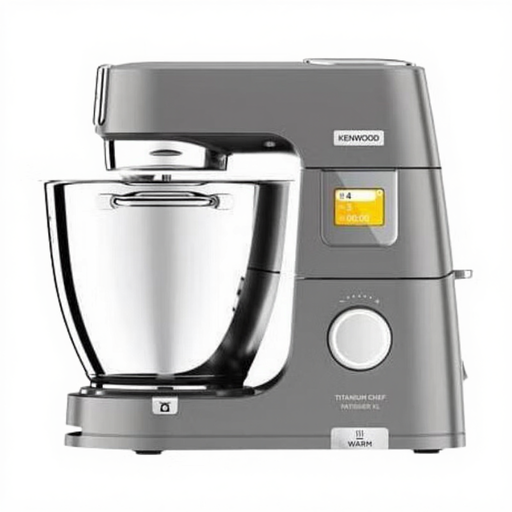
Why we recommend this product The Kenwood Titanium Chef Patissier XL is designed for demanding tasks. Its 1400-watt motor delivers the power needed for heavy doughs. A key feature is the EasyWarm mixing bowl, which allows for proofing dough or melting chocolate directly in the appliance. The integrated scale and timer offer maximum process control.
Pros
Who it's for This model is aimed at ambitious home bakers and cooks who process large quantities and value precision and multifunctional capabilities.
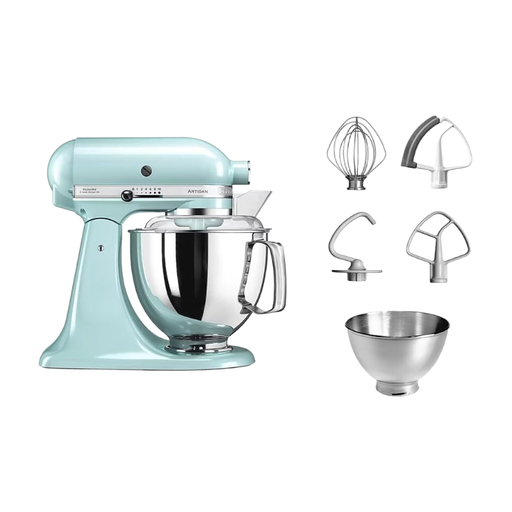
Why we recommend this product The KitchenAid Artisan is renowned for its robust all-metal construction and longevity. The 300-watt motor with direct drive ensures efficient power transmission and reliably handles doughs made with up to 1 kg of flour. Its planetary mixing action guarantees thorough ingredient incorporation.
Pros
Who it's for Ideal for design-conscious users and home bakers seeking a proven, durable appliance for classic baking and cooking applications, who also appreciate the option for future functional expansion.
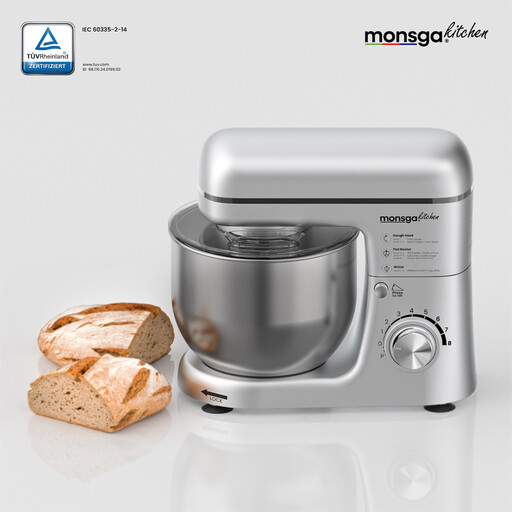
Why we recommend this product The Monsga SM100 offers a combination of solid performance and a large capacity. With a 1000-watt motor and a 6.0-litre stainless steel bowl, it is designed to meet the needs of families. According to the manufacturer, the appliance operates at under 75 decibels, making it comparatively quiet.
Pros
Who it's for A suitable choice for budget-conscious buyers, families, and baking novices who need a powerful and spacious stand mixer for regular use.
The products featured here cover a wide spectrum of requirements. If you are looking for alternative specifications, specialised accessories, or other models, you will find a more comprehensive selection in our main category.
Discover more Mixers & Stand Mixers here.
1. How many watts should a good stand mixer have? The required wattage depends on the intended use. For light tasks like whipping cream, around 300-500 watts is sufficient. For regularly kneading heavy bread doughs, models with 1000 watts or more are recommended, as they can handle the strain continuously without overheating.
2. What is the difference between a dough kneader and a mixer? Historically, these were separate appliances. A dough kneader or dough machine was specifically optimised for heavy doughs, while a mixer was used for lighter mixtures. Modern stand mixers combine both functions through interchangeable tools like dough hooks and whisks, making them universally applicable.
3. Can you also grind meat with a stand mixer? Yes, provided the model has a corresponding low-speed port and a suitable meat grinder attachment. Models like the Kenwood Titanium Chef Patissier XL already include this attachment, while for others like the KitchenAid Artisan, it is available as an optional accessory.