
Lieferung heute & morgen

Qualitätsgarantie

Willkommens-Angebote freischalten: KOSTENLOSE Lieferung | Bis zu 80 % RABATT | Kostenlose 30-Tage-JoyPlus-Testphase
App herunterladen
A new stand mixer can make food preparation significantly easier, from light cake batters to heavy bread dough. But the market is filled with models whose marketing promises often create more confusion than clarity. As a Joybuy Product Recommendation Officer, I'll help you identify the essential features and avoid common purchasing traps, so you can find an appliance that truly fits your needs.
Many purchasing decisions are based on advertising claims that have little practical relevance. Pay attention to these three points to avoid a poor investment.
To make the right choice, you should focus on objective criteria that determine the practical use and longevity of an appliance.
The heart of any stand mixer is the combination of its motor and gearbox. While a hand mixer is sufficient for simple tasks like whipping cream, more demanding jobs like kneading yeast dough require a robust dough mixer. Look for models with a planetary mixing action. This means the mixing tool not only rotates on its own axis but also moves along the edge of the bowl. This ensures all ingredients are evenly incorporated and processed without you having to intervene manually. A direct-drive motor or an all-metal gearbox are also indicators of durable and efficient power transmission.
A kitchen appliance with a bowl should be, above all, practical and durable. Stainless steel mixing bowls are the preferred choice as they are robust, odour- and taste-neutral, and easy to clean. Plastic bowls can discolour and absorb odours over time. The capacity is also crucial:
The quality of the standard attachments—whisk, flat beater, and dough hook—is critical. Look for solid versions made of stainless steel or coated metal. Simple wire hooks can bend when working with heavy dough. A mixer for baking should also be easy to use. A tilt-head motor makes it much easier to insert the bowl and change the tools.
Instead of naming a single "ideal" appliance, we present models tailored to specific use cases.

Why this model is a great fit: This appliance offers the fundamental functions of a full-fledged stand mixer at an accessible price. It's a solid choice for anyone wanting to try baking with a dough machine without making a large initial investment.
The model focuses on core functions (mixing, kneading, whipping) and avoids costly, often unused extras. The suction-cup feet on the bottom address the stability problem common in entry-level models.
The 5-litre stainless steel bowl offers ample capacity for common family recipes. 10 speed settings allow for precise control over the mixing process.

Why this model is a great fit: For cooks who want to do more than just bake. This appliance integrates a stand mixer, a meat grinder, and a blender, saving space and money compared to buying three separate devices.
The multifunctionality here is practical and well-designed. The attachments offer real value for users who regularly grind, blend, and knead, turning them into useful tools instead of dust collectors.
Consolidates multiple kitchen tasks into one appliance. The motor, with a power of up to 1300 watts (according to the manufacturer), is designed to handle a wide variety of ingredients.
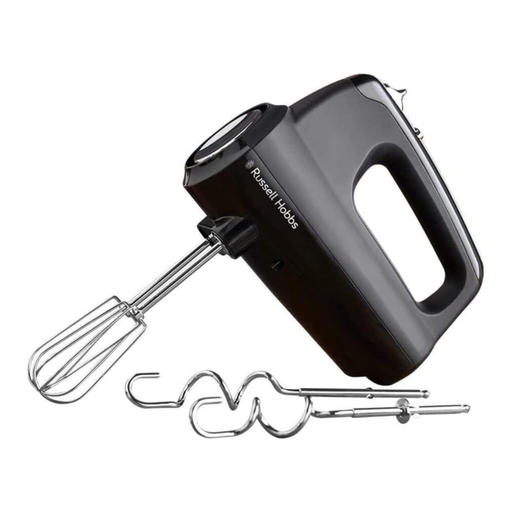
Why this model is a great fit: Not everyone needs a large stand mixer. For quick tasks like whipping egg whites, mixing pancake batter, or kneading smaller quantities of dough, a powerful hand mixer is often the more practical choice. It's ready to use in seconds and saves space.
This device is a specialist, not an overloaded jack-of-all-trades. It avoids the wattage trap by offering 350 watts, a perfectly sufficient power level for its intended purpose, which is enough for most everyday mixing and kneading tasks.
Compact and upright-standing design for easy storage. The turbo function provides an extra power boost when needed for tougher doughs or rapid whipping.
We have compiled a complete, up-to-date list of products that fully meet these strict selection criteria and German safety regulations.
1. How many watts should a good stand mixer have? For a hand mixer or immersion blender, 300–500 watts is sufficient for most tasks. For a stand mixer with a bowl that also needs to knead heavy dough, models with 800–1500 watts are common. However, more important than the pure wattage is the quality of the motor (e.g., DC motors for high torque at low speeds) and a robust metal gearbox.
2. What is the difference between a hand mixer and a stand mixer? A hand mixer is a compact, flexible handheld mixer for smaller, quick tasks. You have to hold the device during operation. A stand mixer is a stationary appliance with an integrated bowl and a more powerful motor. It works independently, freeing up your hands for other tasks, and is designed for larger quantities and heavy doughs.
3. How do I properly clean my stand mixer and its accessories? Always read the manufacturer's instructions. Most stainless steel mixing bowls and stainless steel attachments are dishwasher-safe. Coated dough hooks or flat beaters should often be washed by hand to protect the coating. The motor housing should never be immersed in water; instead, wipe it with a damp cloth.