
Lieferung heute & morgen

Qualitätsgarantie

Willkommens-Angebote freischalten: KOSTENLOSE Lieferung | Bis zu 80 % RABATT | Kostenlose 30-Tage-JoyPlus-Testphase
App herunterladen
Choosing a stand mixer is a decision driven by technical specifications and your individual needs. Whether you need a powerful dough mixer for heavy bread doughs, a versatile mixer for light and airy creams, or a multifunctional appliance for daily food preparation, performance and features are the decisive criteria. This article analyses the key characteristics to consider when selecting a stand mixer for baking and cooking.
The functionality of a modern dough mixer is defined by the interplay of its motor, mixing system, and accessories. An informed decision is based on a thorough analysis of these core components.
The stated wattage is an indicator of the motor's performance. It is important to distinguish between the rated power and the maximum power consumption. For processing heavy doughs, as is common with a dough kneading machine, a motor with high and consistent power transfer is essential.
A planetary mixing action is now standard on many models. This means the mixing tool rotates on its own axis while also moving along the edge of the bowl. This principle ensures a homogeneous mixture, as all areas within the bowl are reached.
The size of the stand mixer with bowl should match your household's needs. For occasional baking or small households, capacities around 4 litres may be sufficient. If you regularly process large quantities of dough or ingredients, you should consider models with 5.5 litres or more. Stainless steel bowls are popular due to their durability, hygiene, and ease of cleaning.
Standard accessories typically include a dough hook, a flat beater, and a whisk. These cover the basic functions of kneading, mixing, and whipping. Many appliances can be expanded with optional accessories, such as a meat grinder, a pasta maker attachment, or a blender attachment. A stand mixer with a scale offers the advantage of weighing ingredients directly in the bowl, which simplifies the workflow and reduces mess.
A substantial weight and a metal housing can increase the appliance's stability, especially at high speeds or when processing dense doughs. Non-slip feet or suction cups also contribute to its stability during operation.
The following models represent a selection that covers a range of different user needs. Our analysis focuses on the technical specifications and their resulting practical benefits.
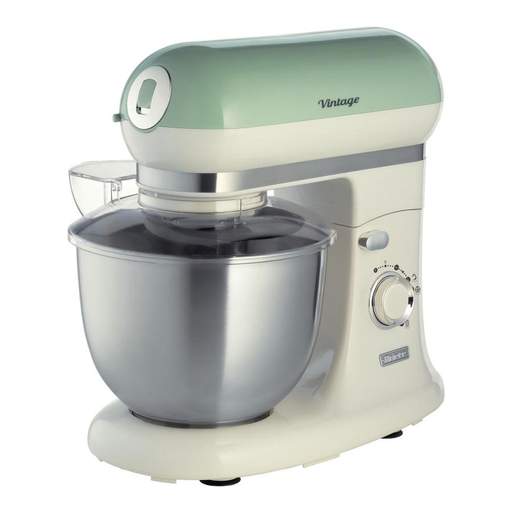
Why We Recommend It The Ariete Vintage 8804 combines a retro-style design with a powerful motor that, according to the manufacturer, reaches a peak power of up to 2400W (1200W rated power). The planetary mixing action and seven speed settings plus a pulse function allow for precise control for a wide variety of preparations. The 5.5-litre stainless steel bowl offers ample capacity for larger batches.
Pros
Best For This model is ideal for users who bake and cook regularly, value high performance for demanding doughs, and also want an aesthetically pleasing design for their kitchen.
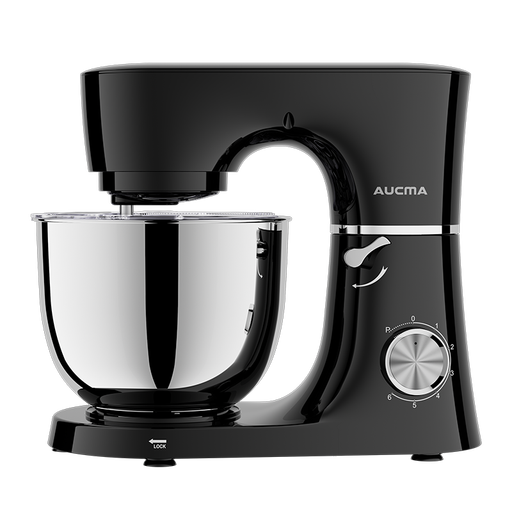
Why We Recommend It The AUCMA stand mixer is equipped with a 450-watt pure copper DC motor. According to the manufacturer, this type of motor is characterized by quieter operation (≤72 dB) and high torque at low speeds. The large 6-litre stainless steel bowl is designed for processing large quantities. Stability features like four suction cups on the base and a vibration absorption design ensure it remains securely in place.
Pros
Best For This appliance is an excellent option for users who need an extra-large bowl capacity and prefer low-noise operation. Its high stability makes it a solid choice for the regular preparation of doughs and other mixtures.
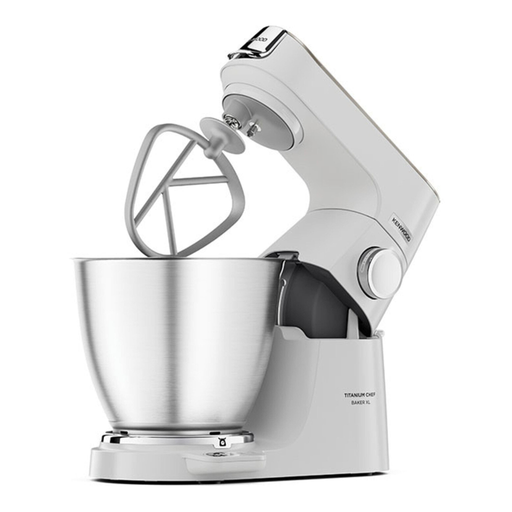
Why We Recommend It The Kenwood Titanium Chef Baker XL stands out with its integrated EasyWeigh scale, which allows you to weigh ingredients directly in the bowl. The 1200-watt ChefMotor offers variable speed control for maximum precision. With a 7-litre stainless steel bowl, this model is designed for very large quantities. Another key feature is its expandability, with over 25 optional accessories available.
Pros
Best For This model is aimed at ambitious home bakers and cooking enthusiasts who appreciate the high precision offered by the integrated scale and are looking for a versatile, expandable platform for a wide range of culinary tasks.
The products featured here offer a glimpse into the available features and performance classes. For a more comprehensive overview of different models and brands tailored to various needs, explore our Kitchen Stand Mixers category.
1. What is the difference between a stand mixer and a dough mixer? A dough mixer or dough kneading machine is primarily optimised for preparing heavy doughs and often features an especially powerful motor and a spiral dough hook. A stand mixer is a more versatile appliance that, with different attachments (whisk, flat beater), can also be used for whipping cream, mixing batters, or, depending on the accessories, for many other tasks like blending or grinding.
2. How many watts should a good stand mixer have? Wattage alone is not always the full story. The actual power transfer to the mixing tool is more important. For light to medium tasks like mixing cake batter or whipping egg whites, models with 300 to 500 watts are often sufficient. For regular kneading of heavy bread or yeast doughs, a rated power of 1000 watts or more is recommended to ensure consistent performance without overheating.
3. What does planetary mixing action mean in a stand mixer? A planetary mixing action describes the movement mechanics of the mixing tool. The tool (e.g., the dough hook) rotates on its own axis while the arm it's attached to also travels along the inner edge of the bowl. This dual-rotation movement ensures that ingredients are incorporated from all sides of the bowl and thoroughly combined into a homogeneous mixture.