Batch bakers making several batches
If you’re preparing several cheesecakes or portions, choose your bowl size and the number of mixing rounds to suit the quantities in your recipes.


Start by choosing a suitable beater and a speed setting you can control, then check the full recipe quantity against the specifications for the specific model. If you want to keep steps separate, a second bowl may be more useful than one larger bowl; however, a manufacturer’s limit for cake batter is not a confirmed maximum quantity for cheesecake filling.
If you’re preparing several cheesecakes or portions, choose your bowl size and the number of mixing rounds to suit the quantities in your recipes.
If you want to prepare ingredients or successive mixtures in separate bowls, it’s particularly important to check exactly what’s included.
If you mix smaller batches one after another, you can weigh up the appliance’s dimensions and cleaning requirements against the benefits of extra features.
A good fit if: Your recipe quantity can be mixed in successive batches.
The trade-off: You may need to transfer and clean the mixture between batches; a limit for cake batter doesn’t confirm a corresponding quantity for cheesecake filling.
A good fit if: You want to keep ingredients or mixtures separate without having to wash the bowl straight away.
The trade-off: A second bowl doesn’t increase the permitted quantity for a single mixing round.
A good fit if: You want to weigh ingredients directly on the machine and plan larger baking sessions.
The trade-off: Check the space required, the weight and exactly which bowl comes with the machine. Resolve any conflicting size information before buying.
| Buying priority | What to check before buying | Who is it important to? |
|---|---|---|
| Recipe quantity and batches | Plan the full quantity of ingredients for each round and compare it with the specifications for the specific model and mixture. | When I’m preparing a batch in advance, I want to know how many rounds my recipe will take. Around 33% of consumers focus on batch size and recipe quantity. |
| Beater and mixing control | Check which beater is included in the package you’ve chosen and whether you can start at a low speed. | When I want to mix cream cheese evenly, the beater and a controlled start are essential. Around 27% of consumers put these features first. |
| Bowls and workflow | Check the number and sizes of the included bowls and, if you want one, whether there’s a built-in scale. Use the full model designation to make sure you have the right details. | When I’m preparing ingredients separately or want to weigh them directly on the machine, the workflow matters to me. Around 20% of consumers prioritise separate steps or weighing ingredients directly. |
| Space and effort | Compare the appliance’s dimensions and weight with the space you have for using and storing it, and take the included accessories into account. | When I only mix smaller quantities occasionally, I want to keep the space required and the accessories manageable. Around 20% of consumers focus on space, ease of use and effort. |
Specifications for bowl sizes or other types of dough don’t automatically apply to cream cheese filling.
Plan the quantity for each recipe and check the specifications for the specific model and mixture.
Making several smaller batches may mean extra mixing and cleaning.
Different versions may come with different bowls and beaters. The manufacturer also gives conflicting information about the bowl sizes for the Kenwood KVL85.004SI.
Check the full model designation and what’s included in the specific listing you’re considering.
If a bowl or beater you need isn’t included, you’ll have to plan that step of the process differently.
The German Federal Institute for Risk Assessment warns of salmonella risks from uncooked eggs in cream-based desserts. The consumer advice centre explains that some dairy products can change in consistency after defrosting.
Choose your stand mixer separately from decisions about the recipe, safe preparation and whether the finished filling is suitable for freezing.
The MUM58200 may suit successive batches if its 3,9-l bowl and included patisserie set work for your recipe and baking routine.
The specific Artisan version 5KSM175PSEFL may suit separate steps if you want two bowls and several beaters.
The Titanium Chef Baker XL KVL85.004SI may suit larger baking sessions, with adjustable speed and the ability to weigh ingredients directly in the bowl.
The Joybuy products below include stand mixers with one or two bowls, for separate steps or individual batches. The bowl sizes listed can help you plan, but they don’t confirm a maximum quantity for cheesecake filling.
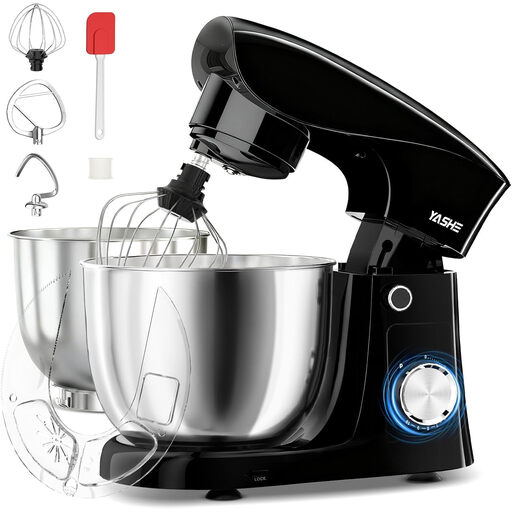 No image available
The two bowls may be useful for separate steps; check their sizes against your recipe quantity.
Two stainless steel bowls, 4,5 l and 5 l; more than 10 speeds; tilting motor head; dough hook.
 No image available
A single bowl may work well for batches made one after another; check the recipe quantity for each round.
5-l stainless steel bowl; 10 speeds; 600 W; dough hook, mixing beater, whisk and splash guard.
 No image available
The bowl size gives you a guide for planning individual batches, but it doesn’t confirm a maximum quantity for cheesecake filling.
4,5-l stainless steel bowl; 1300 W; six speed settings plus pulse function.
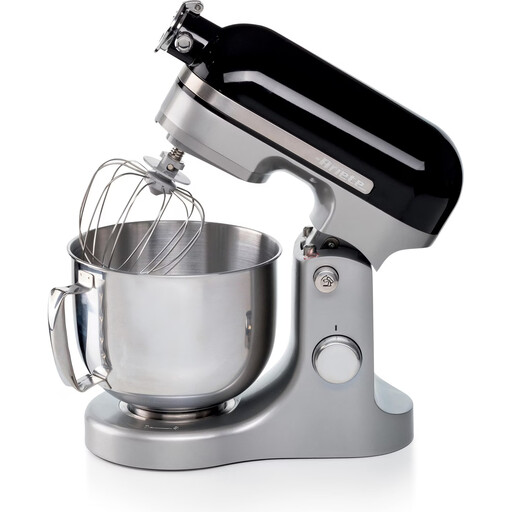 No image available
The flat beater named in the product title may be useful if you’re looking for this type of tool for your mixture.
5,5-l stainless steel bowl; 11 speed settings; flat beater, dough hook and whisk.
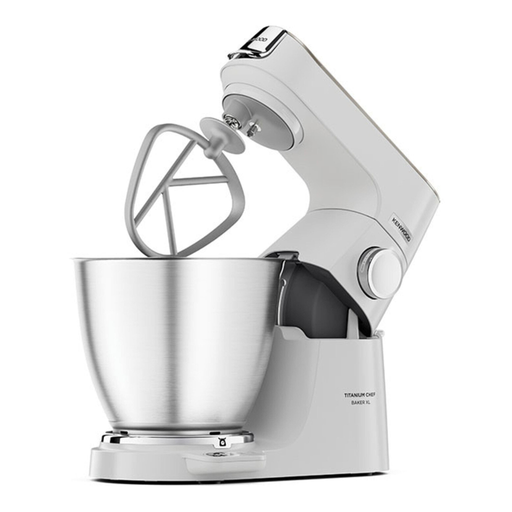 No image available
The built-in scale can make preparation easier if you want to weigh ingredients directly on the machine.
7-l mixing bowl; built-in scale; 1200 W; three-piece patisserie set.
KitchenAid’s New York cheesecake recipe starts with a flat beater, and the mixture is scraped down from the sides of the bowl several times. Check whether your chosen package includes a suitable beater; the recipe instructions won’t necessarily apply to every recipe or model.
Freezing isn’t a substitute for safe preparation. The German Federal Institute for Risk Assessment warns of salmonella risks from uncooked eggs in cream-based desserts. The German Federal Centre for Nutrition recommends using defrosted egg mixture in thoroughly cooked dishes; this doesn’t confirm the shelf life or quality of ready-mixed cheesecake filling. Follow a suitable recipe for preparation and defrosting, and keep perishable ingredients sufficiently chilled.
The German Federal Centre for Nutrition gives cakes and fully cooked dishes as examples of foods that can be frozen, and recommends using suitable containers and labelling them. The consumer advice centre notes that some dairy products can separate and become grainy after defrosting. Check whether your specific cheesecake recipe is suitable for freezing rather than assuming its consistency will remain unchanged.