Baking group making several trays
You want to mix the dough in one go if possible, so you need a stated dough capacity that suits your recipe.


First, decide how much dough you want to prepare for your baking session, then compare that amount with the model’s stated capacity for yeast dough or bread dough. Bowl capacity and wattage alone won’t tell you whether a machine is right for your recipe. If you’re making several trays, the key things to check are a suitable dough capacity, a dough hook and controls designed for the job.
You want to mix the dough in one go if possible, so you need a stated dough capacity that suits your recipe.
You make focaccia and other types of dough, and want to make good use of the dough hook, suitable speed settings and, where available, a built-in scale.
You want to use the machine outside your baking sessions too, and weigh up cleaning, accessories and the space it takes up.
First compare your planned recipe quantity with the stated capacity for the relevant type of dough on the specific model. Then weigh up the controls, cleaning and features against what you actually need.
| Consideration | What to check before buying | Who it matters most to |
|---|---|---|
| Capacity for the combined recipe quantity | Compare the dough weight and, where relevant, the amount of flour with the stated capacity for that type of dough. | If you’re baking several trays together, you’ll want the planned quantity to fit in one batch if possible. Around 33% of consumers are likely to consider capacity their top buying priority. |
| Suitable handling of focaccia dough | Check the dough hook, the model-specific speed settings and any guidance on dough quantities. | If you make focaccia using different recipes, you’ll want to adjust the kneading process to suit each dough. Around 27% of consumers are likely to prioritise this. |
| Cleaning and space requirements | Check the dimensions and which parts of the specific model are explicitly approved for dishwasher use. | If storage space is limited after baking together, easy cleaning and suitable appliance dimensions matter. Around 20% of consumers are likely to put cleaning and storage space first. |
| Features in relation to your needs | Check what’s included, which attachments you actually need and whether compatible accessories are available separately. | If you only bake occasionally, you won’t want to pay for features or accessories you’re unlikely to use in everyday life. Around 20% of consumers are likely to prioritise the balance between features and effort. |
The Bosch MUM58720 has different maximum quantities: Bosch Home Appliances states a capacity of up to 2.7 kg of cake mix and 1.9 kg of yeast dough. For focaccia, the figure for the type of dough you plan to make is the one that matters.
Compare your recipe quantity with the limit explicitly stated for yeast dough on the exact model.
If the quantity is too large for one batch, you may need to make several batches to fill multiple trays.
A higher electrical power rating doesn’t, by itself, prove that a machine will knead your focaccia dough better. IMTEST points out that wattage alone doesn’t describe kneading performance.
Instead, check the permitted dough quantity, the dough hook, the operating instructions and relevant hands-on tests.
What’s included and the bowls supplied can vary between versions. Kenwood lists two bowls for the KVC85.004SI, but you can’t assume the same applies to other model numbers.
Check the full model number, the parts included and accessory compatibility against the specific listing.
A bowl or extra tool bought separately will take up additional storage space.
The MUM58720 has a specific stated capacity for yeast dough; Series 6 models offer different features and a larger bowl.
The Smart-Touch KHC40.080BK and Titanium Chef Baker KVC85.004SI differ in their stated dough capacities and features.
The Artisan 5KSM125 is a stand mixer that comes with a dough hook for focaccia and other baking tasks.
The Assistent Original AKM6230 uses a rotating bowl and is designed for larger quantities of dough.
This selection includes stand mixers and dough mixers with a dough hook or an explicitly stated kneading function. Compare the listed capacities only where they’re specified for the model in question.
 No image available
The dough hook is designed for preparing dough; the product name states that the bowl has a capacity of 5 l.
Also listed are 10 speeds, 600 W, a mixing beater, a whisk and a splash guard.
 No image available
The product description lists a dough hook and a kneading function for preparing dough.
Features include a 4.5-l stainless steel bowl, 1.300 W, six speeds and a pulse function.
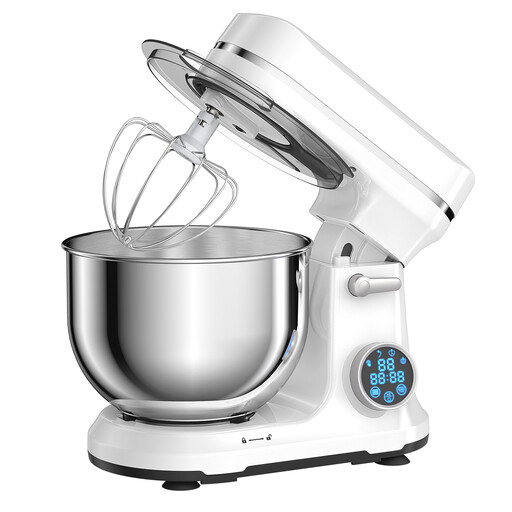 No image available
The product name lists a dough hook for preparing dough.
The stated power rating is 1.200 W.
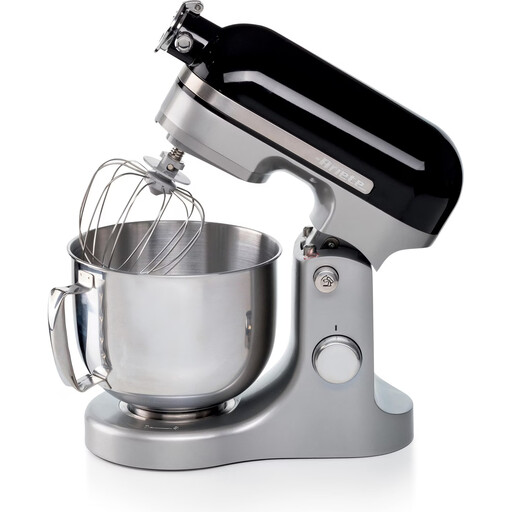 No image available
This model has a stated dough capacity of 1.4 kg; the product name lists a dough hook.
Also listed are a 5.5-l bowl, 11 speeds and 1.600 W.
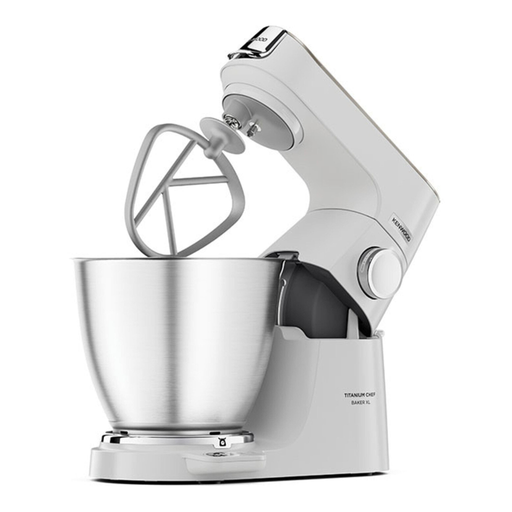 No image available
The dough hook is designed for preparing dough; this model is described as having an integrated scale.
Features include a 7-l mixing bowl and 1.200 W.
Add up the quantities in your recipe and compare the dough weight and, where relevant, the amount of flour with the figures for the exact model and type of dough. Bosch Home Appliances, for example, states a capacity of up to 1.9 kg of yeast dough for the MUM58720. The stated capacity for cake mix isn’t the same thing.
No. Your choice of machine doesn’t determine a universally suitable kneading time. A focaccia recipe published by KitchenAid uses 500 g of flour, kneads for four minutes with the dough hook on speed 2, then kneads by hand for one minute. Other recipes and machines may have different instructions.
Only put parts in the dishwasher if the manufacturer explicitly approves them for the specific model. Kenwood lists the bowl and dough hook, among other parts, as dishwasher-safe for the Smart-Touch KHC40.080BK. This doesn’t tell you anything about other models or optional attachments.
Electrical appliances are subject to the applicable EU product safety regulations. CE marking is required where the relevant harmonised EU legislation requires it. The European Commission classifies materials intended to come into contact with food under EU food contact materials rules. Check the information for the specific variant.
In Germany, statutory rights for faulty goods apply against the seller; a guarantee is a voluntary promise with its own terms and conditions. The Verbraucherzentrale (German consumer advice centre) therefore recommends checking who is selling the product and what the guarantee terms are, as well as reading any claims about the guarantee itself.