Who might find a stand mixer useful?

Hosts making several trays

If you’re planning a larger batch of focaccia for a bring-and-share, check whether the recipe fits within one permitted batch or whether you’ll need to make it in stages. Bosch and Kenwood list maximum yeasted dough capacities for specific models.

Regular dough makers

If you want to keep using the mixer for baking after the get-together, check the limits for each type of dough, the tools included and the operating instructions. KitchenAid and Wilfa provide this information for certain models.

Occasional focaccia bakers

If you’re only baking for one occasion, you could try a recipe that uses mixing and folding before buying an appliance. King Arthur Baking describes a focaccia method that develops most of the dough’s strength through folding.

What should you look for?

No new purchase: mix and fold

A good fit if: you only bake occasionally for a get-together and have time for resting and folding.

The trade-off: The recipe quantity and timings need to suit your tray and the occasion.

Compact planetary mixer

A good fit if: you knead manageable batches and want to use the appliance for other baking tasks too.

The trade-off: Maximum capacities vary by model and may be given as flour weight or finished dough weight.

Larger stand mixer

A good fit if: you regularly prepare several trays and plan to make batches often.

The trade-off: The permitted quantity for the specific type of dough is what matters; bowl capacity alone isn’t enough.

Mixer with a rotating bowl

A good fit if: you often make larger batches of dough and prefer a different kneading mechanism.

The trade-off: The manufacturer’s details about the bowl and maximum capacity don’t prove that it makes better focaccia dough.

Priority What to check when buying Who is this important to?
Dough quantity and batch size Calculate the flour quantity and finished dough weight separately, then compare them with the model’s limits for the relevant type of dough. If I’m preparing several trays, I want to know whether one permitted batch will be enough or whether I’ll need to split it. Around 36% of consumers put dough quantity and the number of batches first.
Sticky focaccia dough Check whether a dough tool suitable for the recipe is included and which kneading speed the manufacturer recommends. If I want to adapt how I work the dough to my focaccia recipe, I look at the tool and instructions rather than choosing an arbitrary kneading setting. Around 29% of consumers prioritise getting the dough preparation right.
Other uses, space and cleaning Check the dimensions, which tools are included rather than merely available as options, and the cleaning instructions for the exact model. If the mixer is going to be used regularly after the party, its uses and the space it takes up in my kitchen need to work for me. Around 21% of consumers focus mainly on everyday use and storage space.
Buying for one occasion Before ordering, consider whether a folding recipe or an appliance you already own will do the job, and whether you’re likely to make dough regularly in future. If I’d be buying the appliance mainly for this one evening, I first look for an option that doesn’t involve buying anything new. Around 14% of consumers mainly want to avoid a one-off purchase.

Common buying mistakes

  • Assuming bowl capacity equals the permitted dough quantity

    Manufacturers sometimes give maximum capacities by flour weight and sometimes by finished dough weight, and the limits can vary by type of dough. If you only check the bowl capacity, you could miss the limit for the dough you’re making.

    Compare your recipe with the stated capacity on the same basis and for the relevant type of dough. If needed, divide it into several batches.

    You may need to knead several batches; don’t exceed the manufacturer’s stated limit.

  • Using the same kneading speed or time for every appliance

    Focaccia recipes use different mixing and kneading methods. KitchenAid gives specific time and speed instructions for yeasted dough.

    Read your chosen recipe alongside your appliance’s instructions rather than copying settings from another brand.

  • Automatically buying a mixer for a single evening

    Some focaccia methods develop most of the dough’s strength through folding, so there’s no need for intensive machine kneading.

    First check whether a suitable recipe or an appliance you already own will do the job, and whether you plan to make dough regularly in future.

    An appliance you rarely use takes up storage space and needs cleaning after baking.

  • Confusing a manufacturer’s guarantee with your statutory rights

    Your statutory rights against the seller and a voluntary manufacturer’s guarantee are separate claims with different terms and conditions.

    Before buying, make a note of who you’re buying from and the terms of any voluntary guarantee. If something is faulty, first check your rights against the seller.

Brands and models to consider

Bosch

The MUM58200 is a more compact planetary mixer for manageable batches.

  • Bosch lists a 3.9-l bowl and a capacity of up to 1.9 kg of yeasted dough for this model.
  • The flour and dough quantities for your recipe need to fall within the model’s limits; these figures don’t apply to all MUM models.

Kenwood

The Chef XL KVL4100S is an option for bakers looking for a larger bowl and more options for attachments.

  • Kenwood lists a 6.7-l bowl and a maximum of 2.42 kg of bread dough for the KVL4100S.
  • Kenwood also gives different limits for firm and soft yeasted dough. Check the maximum for the type of dough in your recipe.

KitchenAid

The Artisan 5KSM175PS combines a 4.7-l main bowl with several tools for baking.

  • KitchenAid lists a maximum of 1 kg of flour for the corresponding Artisan model range.
  • KitchenAid recommends speed 2 for kneading yeasted dough. The flour limit alone doesn’t tell you whether every recipe quantity will fit into one batch.

Ankarsrum

The Assistent Original AKM6230 has a different design and is an option for making larger batches of dough regularly.

  • According to Ankarsrum, the 7-l bowl rotates; the manufacturer lists a capacity of up to 5 kg of dough.
  • The manufacturer’s capacity and design don’t prove that it produces better results than other kneading systems.

Wilfa

According to the manufacturer, the Probaker V2 KM1BS-70 is designed for different quantities of dough.

  • Wilfa lists a system with a moving hook and bowl, a 7-l capacity and a maximum of 5 kg of dough.
  • The capacity figure isn’t an independent comparison of focaccia results. Also check the guarantee terms for the exact model.

Joybuy products for dough and baking

The products below include stand mixers and dough mixers for beating or kneading. For a one-off occasion, using a suitable folding recipe without buying anything new is another option. Before buying, also check the voltage and the EU conformity information that applies to the exact model.

HAUSWIRT M5 Max stand mixer with 5.5-l bowl

HAUSWIRT M5 Max stand mixer, 5.5 l

The dough hook listed is relevant for doughs that are worked with this type of tool.

The product details list a 5.5-l bowl, 11 speeds and a 4.5-inch LED touchscreen.

Check the permitted dough quantity for your recipe and the exact model.

View at Joybuy

Stand mixer with 5-l stainless steel bowl and dough hook

Stand mixer with 5-l stainless steel bowl

The dough hook is one of the listed accessories for preparing dough.

The details list a 5-l stainless steel bowl, 10 speeds, a dough hook, beater, whisk and splash guard.

Check that the permitted dough quantity is suitable for your recipe.

View at Joybuy

Dough mixer with 4.5-l stainless steel bowl

Dough mixer with 4.5-l stainless steel bowl

The product details list a dough hook and dough kneading; check the permitted quantity for your focaccia recipe.

Listed features include a 4.5-l stainless steel bowl, 6 speeds plus a pulse function and 1300 W.

View at Joybuy
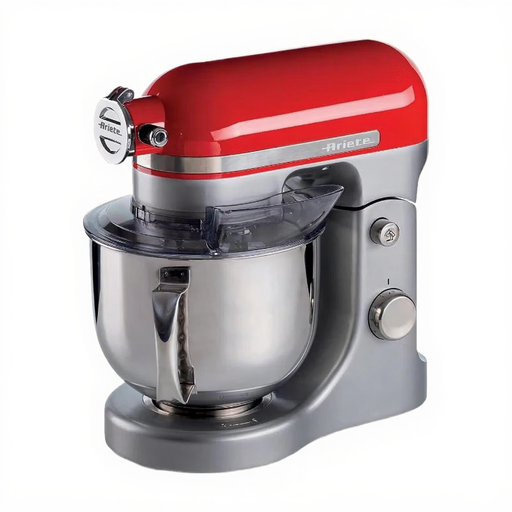
Ariete 1589 Moderna stand mixer

Ariete 1589 Moderna stand mixer, 5.5 l

This model is listed with a maximum dough capacity of 1.40 kg; make sure your recipe quantity is within that limit.

The product details list a 5.5-l bowl, 11 speeds, 1600 W, a dough hook, flat beater, whisk and splash guard.

View at Joybuy
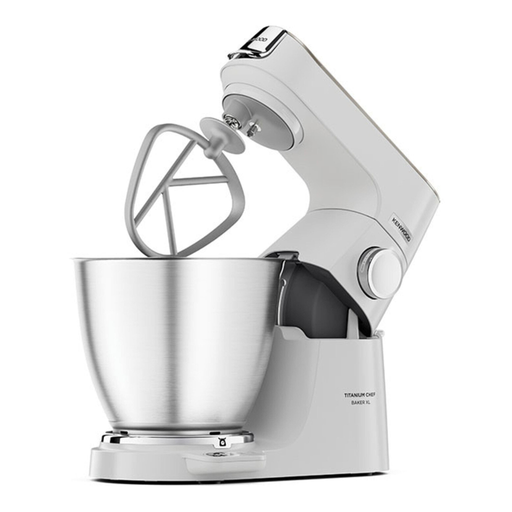
Kenwood Titanium Chef Baker XL KVL65.001WH with 7-l bowl

Kenwood Titanium Chef Baker XL KVL65.001WH, 7 l

A dough hook is listed as an included accessory; check the maximum capacity for the type of dough in your recipe.

The details list a 7-l bowl, 1200 W, built-in scales and a three-piece patisserie set with a dough hook, K-beater and whisk.

View at Joybuy

Frequently asked questions

Does focaccia dough need to be kneaded in a mixer?

No, not for every recipe. A focaccia recipe from King Arthur Baking develops most of the dough’s strength through folding. Follow the method and quantities in the recipe you’re using.

Can I fill the bowl to the brim with yeasted dough?

No. Bowl capacity and the permitted dough quantity are different things. Bosch lists a capacity of up to 1.9 kg of yeasted dough for the MUM58200; Kenwood’s Chef and Chef XL FAQ gives different limits depending on the type of dough. Don’t exceed the maximum stated for your model and type of dough.

Which speed should I use for yeasted dough in a KitchenAid?

KitchenAid recommends speed 2 for yeasted dough. For bread dough, the manufacturer advises kneading for no more than two minutes at this speed, with a total mixing and kneading time of four to six minutes. This is KitchenAid’s guidance, not a general setting for other mixers.

What applies in Germany if an appliance is faulty or you buy online?

If an item is faulty, statutory rights against the seller are separate from a voluntary manufacturer’s guarantee. Online purchases generally come with a 14-day right to cancel; according to the Verbraucherzentrale, you must notify the seller you have a contract with that you wish to cancel.

Which safety marking matters for a mains-powered stand mixer?

The EU Low Voltage Directive covers electrical equipment within the voltage ranges it specifies, including household appliances. According to the European Commission, CE marking is only required for products covered by relevant harmonised EU rules that require it. Check the voltage and the conformity information that applies to the exact model; the CE mark isn’t an independent product test.