
Lieferung heute & morgen

Qualitätsgarantie

Willkommens-Angebote freischalten: KOSTENLOSE Lieferung | Bis zu 80 % RABATT | Kostenlose 30-Tage-JoyPlus-Testphase
App herunterladen
A high-performance stand mixer can make food preparation significantly easier, especially when it comes to baking. However, the market is crowded, and many models fail to live up to their advertising promises. As your Joybuy Product Recommendation Officer, I'll help you identify the crucial features and make an informed decision based on facts, not marketing hype.
Before you invest, you should be aware of the three most common problems that only become apparent after the purchase.
To avoid the problems mentioned above, focus on the following technical specifications.
Instead of looking at wattage alone, you should pay attention to the design of the motor and gearbox. A robust copper motor and an all-metal gearbox are indicators of durability and efficient power transfer. This combination ensures that the machine delivers enough power (torque) for tough doughs even at low speeds, without overheating. An electric mixer with these features is a reliable kneading machine for regular use.
The mixing bowl should be made of food-grade stainless steel (SUS304). This material is hygienic, rust-proof, non-reactive, and easy to clean. The volume is also crucial:
A planetary mixing action is the standard for high-quality appliances today. This means the mixing tool rotates on its own axis while simultaneously moving along the edge of the bowl. This ensures all ingredients are evenly incorporated and mixed. The standard accessories for a stand mixer for baking include:
Ensure that these accessories are made from solid stainless steel or durable die-cast aluminum and are ideally dishwasher-safe.
Here are some models tailored to specific needs that meet the quality criteria discussed.
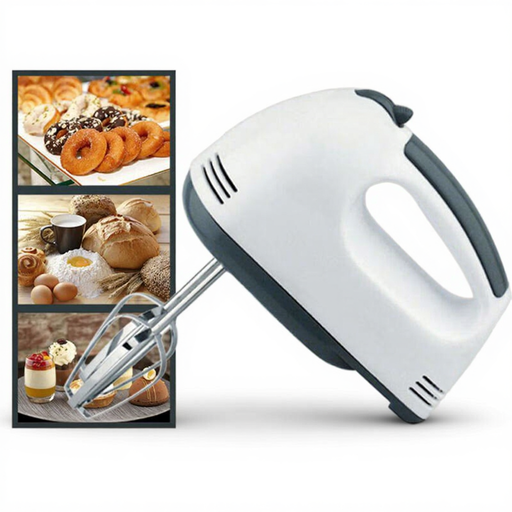
Why This Fits Their Persona: Ideal for users seeking a space-saving and straightforward solution for basic tasks like whipping cream or mixing cake batter. A hand mixer is a pragmatic first purchase before investing in a large machine.
This appliance doesn't pretend to be a high-performance kneading machine. It focuses on its core competency as a mixer, thus avoiding the pitfall of exaggerated performance claims. The 180 watts are appropriate for its intended tasks (mixing, whipping).
Compact design for easy storage. Includes dough hooks and whisks for versatile basic applications. The detachable parts are dishwasher-safe.

Why This Fits Their Persona: For anyone who bakes regularly and needs a reliable dough machine for bread, pizza, and cakes. The large bowl and solid motor are designed to handle larger quantities and heavy doughs.
This model addresses the stability problem with strong suction cups on the base that prevent the machine from "walking." The 450W pure copper DC motor is designed for torque and durability, not just a high wattage number.
Large 6-litre stainless steel bowl. The all-metal gear and ball bearing construction ensures stable and relatively quiet operation (under 72 dB according to the manufacturer).

Why This Fits Their Persona: Perfect for users looking for a versatile appliance that goes beyond baking. This multi-functional kitchen machine combines a stand mixer with a meat grinder and a blender attachment, saving space and money on separate devices.
Instead of relying solely on a high wattage rating, this model demonstrates its power through specific use cases (meat grinder, blender). The focus is on the versatility and practical benefits of the various attachments, which sets more realistic expectations.
Combines multiple kitchen appliances in one. The 1300-watt motor provides sufficient power for the various functions. The large 6.2-litre (6.5 QT) bowl is also suitable for demanding baking projects.
We have compiled a complete, up-to-date list of products that fully meet these strict selection criteria and German safety regulations.
Wattage alone is not a definitive measure. For light tasks like mixing batter or whipping cream, models with 300 to 500 watts are often sufficient. For regular kneading of heavy bread or pizza dough, a combination of a motor with at least 1000 watts and a robust all-metal gearbox is recommended, as torque is the decisive factor here.
In a planetary mixing system, the mixing tool (e.g., the dough hook) rotates on its own axis while simultaneously circling the bowl. This ensures that all ingredients, from the edge to the center, are captured and mixed evenly, leading to more homogeneous results and minimizing the need for manual scraping.
The motor housing must never be submerged in water. However, the stainless steel mixing bowl and most stainless steel or die-cast aluminum attachments are generally dishwasher-safe. Always check the manufacturer's specific instructions, as coated parts often require hand washing to protect the coating.