Bakers making larger batches of cake batter
If you’re baking a large cake or several batches for a get-together, compare your recipe quantity with the maximum cake or batter capacity stated for the specific model.


Choose a stand mixer based on the quantity of cake batter in your recipe and the right beater; bowl capacity alone doesn’t tell you how much batter the machine can handle. If you’ll be doing several tasks, a second bowl or built-in scales may be useful, while a hand mixer you already own could be enough for occasional baking. For mains-powered appliances in Germany, the EU describes CE marking as a manufacturer’s declaration, not an independent quality mark, so check the information for the specific appliance.
If you’re baking a large cake or several batches for a get-together, compare your recipe quantity with the maximum cake or batter capacity stated for the specific model.
If you want to weigh ingredients and get other steps ready without constantly switching appliances and bowls, a built-in scale or second bowl could be useful.
If you only bake lemon cake now and then, consider whether a freestanding machine will take up permanent space and whether the mixer you already own will do the job.
First check the recipe quantity, then the beater you’ll need and any additional tasks you plan to do. You can then weigh up the space required and cleaning against the benefits of any extra features.
| What matters when buying | What to check | Who it matters most to |
|---|---|---|
| Batter quantity | Compare the recipe quantity in kg with the stated cake or batter capacity of the exact model. | When I’m making a larger batch for a get-together, I’d like it to fit into one go if possible. Around 29 % of consumers prioritise having enough capacity for their batter. |
| Beater and preparation | Check the beater or flat beater and, where applicable, the scales and second bowl for the exact model. | When we’re preparing together, I want to weigh ingredients or start on the next step while the batter is mixing. Around 29 % of consumers prioritise hands-free mixing and suitable beaters. |
| Space | Measure the footprint and height, and decide where you’ll store it. If you’ll use it infrequently, also consider the mixer you already own. | If I’m only using the machine for lemon cake now and then, I want to know whether it will fit permanently on the worktop or can be stored away easily. Around 21 % of consumers say worktop and storage space are their top concern. |
| Cleaning and service | Check the care instructions for each individual part and the compatibility of any extra beaters you may need. | After baking together, I want to know which parts need to be cleaned separately and what service is available if there’s a fault. Around 21 % of consumers give the greatest weight to cleaning and service. |
Bowl size and maximum cake batter capacity are different specifications. Bosch, Kenwood and Severin each state their own batter limits for their respective models.
Compare your recipe quantity with the cake or batter capacity stated by the manufacturer for the specific model.
Kenwood says that Chef attachments aren’t compatible with the Go KZM35. Accessories from another range won’t necessarily fit.
Before buying, check the exact model number and whether the accessory is approved for use with it.
If you need a particular beater, you may have to buy a separate accessory that’s compatible with your model.
Care instructions can vary from one part to another. Kenwood recommends putting the Go bowl in the dishwasher, but hand-washing the specified beaters.
Follow the care instructions for the bowl and each beater individually.
The MUM58200 is an option for cake batter if the stated capacity suits the quantity in your recipe.
The Go KZM35.000GY and Chef Baker KVC85.004SI suit different space and preparation needs.
The Artisan 5KSM175PS could be a good fit if you’d like a second bowl and a choice of beaters as well as a cake batter beater.
The KM 3898 is another option if you’re looking for built-in scales and a timer.
The following Joybuy products are worth considering as stand mixers for preparing cake batter together. Compare the recipe quantity, suitable beaters and what’s actually included with each variant.
 No image available
It’s worth considering for mixing together if the stated bowl size and controls suit the way you work.
The product title lists a 5.5-l bowl, a 4.5-inch LED touchscreen and 11 speed settings.
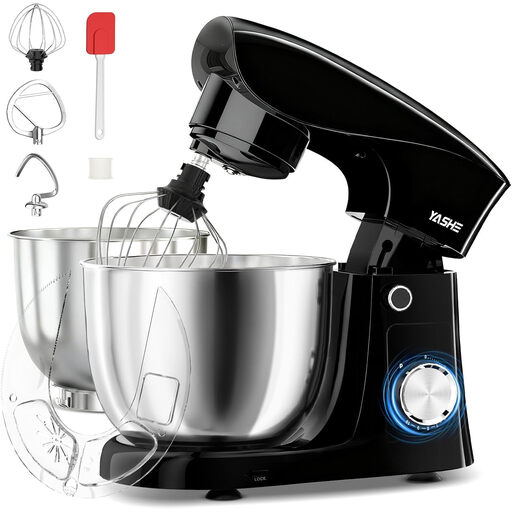 No image available
The two bowls could be useful for preparing ingredients in stages; check whether the exact variant includes the beater you need.
The product title lists 1,500 W, two stainless steel bowls with capacities of 4.5 l and 5 l, 10+ speeds, a tilting head and a dough hook.
 No image available
A feed opening in the splash guard can be handy when adding ingredients as you mix.
The product title lists a 5-l stainless steel bowl, 10 speeds, 600 W, a dough hook, mixing beater, whisk and splash guard.
 No image available
Before buying, check whether the exact variant includes the beaters needed for cake batter.
The product title lists a 4.5-l stainless steel bowl, 1,300 W and speed setting 6+P.
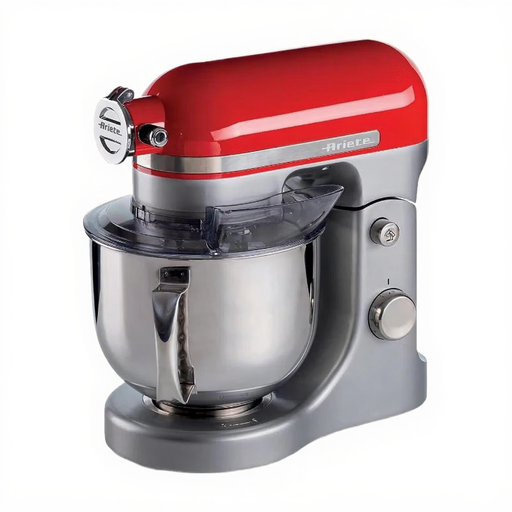 No image available
For lemon cake batter, check whether the included beater is recommended for this type of mixture in the instructions.
The product title lists 1,600 W, 11 speeds, a 5.5-l bowl and three accessories for mixing, blending and whisking. The stated 1.4 kg capacity refers to dough and doesn’t confirm the cake batter capacity.
Check which stirring or flat beater is recommended for your model. KitchenAid describes its flat beater as suitable for cake batter; the manufacturer’s advice to start on a low speed doesn’t automatically apply to appliances from other brands.
Switch off the appliance and unplug it before cleaning. Follow the instructions for each part: Kenwood describes the Go bowl as dishwasher-safe, but recommends hand-washing the specified beaters.
No. If an item is faulty, your statutory rights are against the seller; a guarantee is an additional voluntary offer with its own terms and conditions. The Verbraucherzentrale (German consumer advice centre) makes this distinction too.
The EU describes CE marking as the manufacturer’s declaration that the product meets relevant requirements, not as an independent quality mark. The Bundesnetzagentur also lists product identification and manufacturer information as points to check. According to EU guidance, old electrical appliances should go to separate collection rather than general waste.