What should you look for?
If you’re cooking for several guests, first decide how much dough you’ll need and which steps you want to carry out. You can then assess which tools and other features are suitable, as well as how much space you’ll need.
Mix and knead, then roll out pasta by hand
A good fit if: You mainly want help with mixing and kneading, and only roll out dough occasionally.
Worth noting: Rolling and cutting are still done by hand. The quantity and suitability for firm pasta dough depend on the recipe and model.
A mixer with a separately checked pasta attachment
A good fit if: You regularly make sheets of pasta or ribbon pasta and would like help rolling it out.
Worth noting: The attachment and connection must be compatible with your specific mixer; a roller won’t necessarily cut the pasta too.
Use a mixer you already own or do it by hand
A good fit if: Your pasta evening is a one-off and you can do the work by hand or in several smaller batches.
Worth noting: This may mean more hands-on work. In KitchenAid’s method, the dough is briefly kneaded by hand after being kneaded in the mixer.
| Buying criterion |
What to look for |
Who should consider it? |
| Amount of dough per batch |
Note the quantity in your recipe and check the instructions for the specific model and type of dough you plan to make. Don’t assume that stated limits for bread or yeast dough also apply to pasta dough. |
If you want to make enough for several guests in one batch, you need a suitable capacity, not just a large bowl; around 36% of consumers prioritise batch size. |
| Steps involved and accessories |
Check whether a flat beater and dough hook are included, as well as the connection and function of any pasta attachment you want. |
If you regularly roll or cut pasta as well as kneading the dough, look for a setup that suits those steps; around 29% of consumers prioritise these pasta-making tasks. |
| Use beyond pasta |
Check which tools and features are actually included, and what other tasks you’ll use them for regularly. |
If you’re also planning to use the mixer for other doughs or dishes, everyday practicality matters; around 21% of consumers prioritise versatility. |
| Counter space and occasional use |
Compare the appliance dimensions and the space needed to use it; also consider doing the work by hand or making smaller batches. |
If you only make pasta occasionally and have limited space, weigh up the benefits of an appliance against storage and effort; around 14% of consumers prioritise this consideration. |
Stand mixers at Joybuy
The products below are stand mixers for mixing and kneading. If you also want to roll or cut pasta, check separately whether a compatible pasta attachment is included or available for the specific mixer.
 No image available
Stand mixer with 5-l stainless steel bowl
May be suitable for mixing and kneading pasta dough if the quantity in your recipe is within the limits in the model instructions.
5-l stainless steel bowl; 10 speeds; 600 W; dough hook, mixing hook, whisk and splash guard.
View at Joybuy
 No image available
Dough Mixer with 4,5-l stainless steel bowl
The dough hook and beater are relevant for mixing and kneading; check the suitability of the mixer against your recipe and the model instructions.
4,5-l stainless steel bowl; 1300 W; speed settings 6+P; dough hook, beater and whisk.
View at Joybuy
 No image available
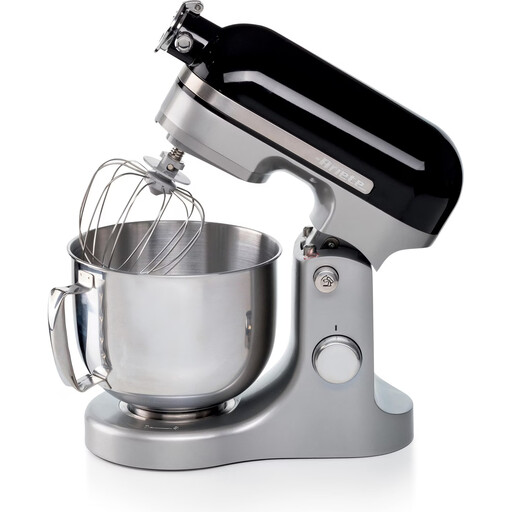
Ariete 1589 Moderna
A flat beater and dough hook are listed for the mixing and kneading tasks mentioned. The stated dough capacity isn’t a confirmed limit for firm pasta dough.
5,5-l bowl; 1600 W; 11 speed settings; stated dough capacity 1,4 kg; flat beater, dough hook and splash guard.
View at Joybuy
 No image available
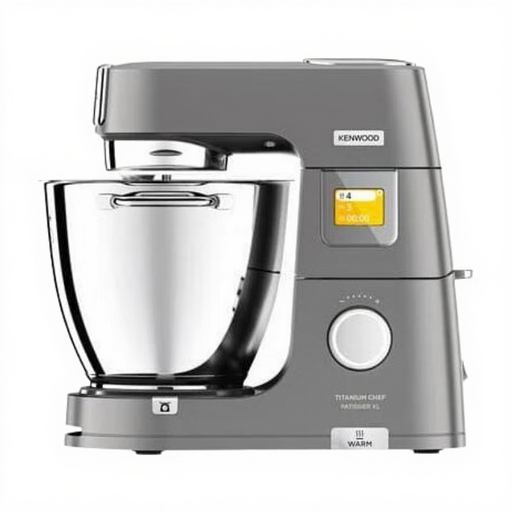
Kenwood Titanium Chef Patissier XL KWL90164SI
The listed dough hook may be suitable for kneading; check your recipe against the guidance for this specific model.
7-l and 5-l bowls; built-in scales and timer; dough hook.
View at Joybuy
 No image available
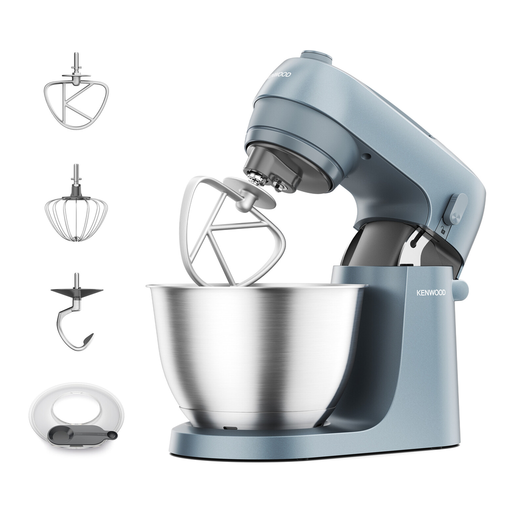
Kenwood Go KZM35000GY
A dough hook is listed for kneading. Check the quantity in your recipe against the model instructions.
4-l bowl; 6 speeds and pulse function; dough hook; stated height 30 cm.
View at Joybuy
Frequently asked questions
Do I need a pasta roller just to mix pasta dough?
No. A roller is for rolling out the dough afterwards. For its method, KitchenAid first recommends using the flat beater and then the dough hook; you can then roll out the dough by hand or with a roller.
What should I do with pasta dough after machine-kneading?
KitchenAid’s instructions say to knead the dough by hand for another 1–2 minutes, then leave it covered to rest for 10–15 minutes before rolling it out. These are instructions for the method described, not a universal setting for every mixer or recipe.
How can I tell if a mixer can make enough pasta dough for several guests?
Compare the ingredient quantities in your recipe with the specifications and instructions for the specific model. A bowl size or a manufacturer’s limit for bread or yeast dough doesn’t, on its own, confirm that the mixer can handle firm pasta dough.
What should I bear in mind when making egg pasta and taking it to dinner?
The German Federal Institute for Risk Assessment highlights the potential presence of pathogens in raw eggs and the importance of careful kitchen hygiene. Perishable foods should be stored and transported at a sufficiently cool temperature. What you need to do depends on whether you’re bringing raw dough, cooked pasta or a finished dish.
Is the CE marking an independent quality mark?
No. According to information from the European Union, the CE marking indicates that the manufacturer declares the product meets the relevant EU requirements; it isn’t an independent quality mark. The marking alone doesn’t mean that a specific product listing has been checked.


