For pasta makers with limited worktop space
If you want to take the dough out of the machine, portion it and roll it out alongside the mixer, you’ll need more space than the footprint of the appliance alone.


If you want to roll out pasta dough on a limited worktop, first check the appliance dimensions and allow extra space to access the bowl and roll out the dough. Then look for a dough hook and guidance on the types of dough the machine can handle. Capacity figures for bread or yeast dough do not automatically tell you how much pasta dough an appliance can process. A pasta attachment is only a suitable choice if it’s compatible with the exact model and you have room to use and store it.
If you want to take the dough out of the machine, portion it and roll it out alongside the mixer, you’ll need more space than the footprint of the appliance alone.
If you want to use a machine to shape pasta sheets or ribbons, check that the attachment fits your exact model and consider where you’ll use and store it.
If you want to use the mixer for other doughs too, compare the tools supplied and the manufacturer’s guidance for each type of dough.
A good fit if: saving worktop space is a priority and you don’t need a motorised pasta attachment. Kenwood Germany lists the Go KZM35.000GY as measuring 33,5 × 18 × 30 cm and supplied with a dough hook.
Bear in mind: you’ll still need to allow space to access the bowl and roll out the dough afterwards.
A good fit if: you’d like to use a compatible pasta attachment. Bosch describes its PastaPassion set as suitable for Series 4 appliances.
Bear in mind: the attachment, dough waiting to be rolled out and the emerging pasta sheet all need extra worktop and storage space. Check model compatibility and what’s included.
A good fit if: a smaller appliance and access from above suit the way you work. KitchenAid offers a Mini version with a 3,3-l bowl.
Bear in mind: you’ll need clearance above the mixer to tilt the head, especially if you’re placing it beneath wall units.
| What matters | What to check when buying | Who will find this especially important? |
|---|---|---|
| Appliance and worktop space | Consider the width, depth and height of the exact model, as well as the space needed to access the bowl and roll out the dough. | If I need to portion and roll out the dough next to the mixer, the total worktop space matters to me, not just the space taken up by the appliance. Around 31% of consumers put available space first. |
| Mixing and kneading | Check which tools are included and what the instructions say about firm doughs; don’t assume capacity figures for other types of dough apply. | If I want the ingredients for my pasta dough recipe to come together properly, I want to compare the tools and instructions for the specific appliance. Around 31% of consumers put dough preparation first. |
| Pasta rollers and compatibility | Check the model number, compatible attachment and what’s included; allow space for the pasta sheet. | If I want to roll out pasta dough by machine, I need an attachment that fits my mixer exactly. Around 25% of consumers prioritise the option to roll out or shape dough with a pasta attachment. |
| Versatility and care | Check which tools are included and the care instructions for each one. | If I want to use the mixer for different recipes, I check which tools come with it and how to clean them. Around 13% of consumers put versatility and care first. |
Figures for bread, yeast or cake batter don’t tell you how much firm pasta dough an appliance can process.
Follow the instructions for the exact model and type of dough specified; don’t convert litres into kilograms of pasta dough.
Kenwood says that existing Chef attachments won’t fit the Go range.
Before buying, compare the full model number with the accessory’s compatibility information.
An incompatible attachment could mean extra hassle arranging a replacement or return.
A tilt-head mixer needs room to move when opened, and you’ll also need a clear worktop for rolling out the dough.
Plan for using the appliance, removing the bowl and rolling out the dough as one continuous workflow.
The Go range is a compact appliance option, while the Chef range uses a different family of accessories.
Some Series 4 models can be paired with a pasta attachment described by the manufacturer.
The Mini, with its tilt-head design and 3,3-l bowl, is a smaller alternative.
These appliances may suit shoppers looking for a mixer with a specified dough hook for mixing and kneading. If you have limited worktop space, compare the product dimensions with the room you’ll need to access the bowl and roll out the dough afterwards.
 No image available
For shoppers looking for a mixer with a specified dough hook and a larger bowl.
5-litre stainless steel bowl, 10 speeds and 600 W; product details list a dough hook, beater, whisk and splash guard.
 No image available
For shoppers looking for a dough hook and tilt-head design to suit their baking and cooking.
4,5-litre stainless steel bowl, 1300 W and six speeds; the description lists a dough hook, whisk and beater.
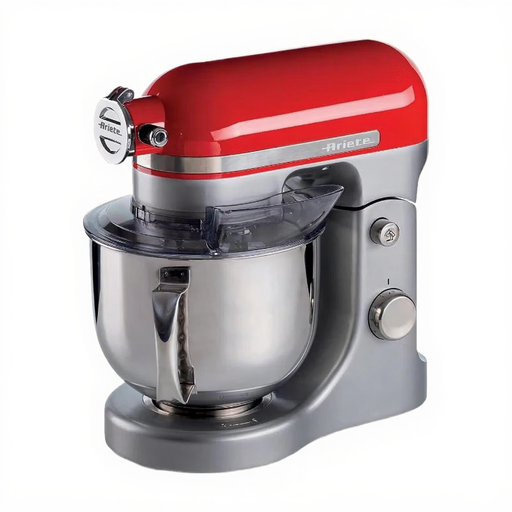 No image available
For shoppers looking for a mixer with a dough hook for dough and other mixing tasks.
5,5-litre bowl, 11 speeds and three tools; the product description lists dimensions of 37,5 × 22 × 36,5 cm.
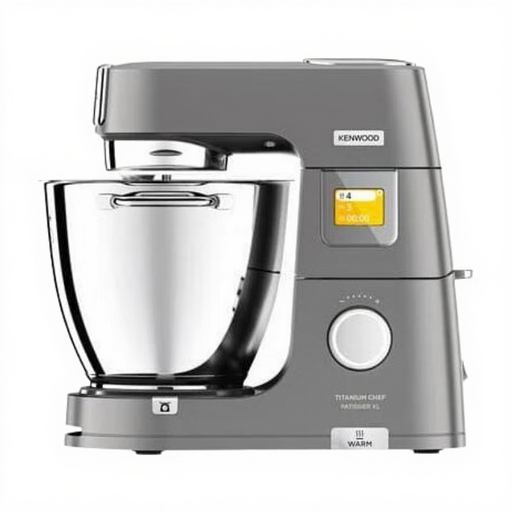 No image available
For shoppers looking for a stand mixer for mixing and kneading, with two bowl sizes to choose from.
The product description lists a 7-litre and a 5-litre bowl, built-in scales and a timer.
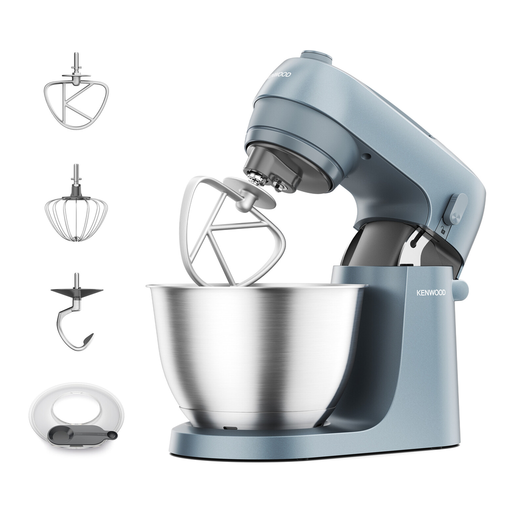 No image available
For shoppers looking for a compact footprint and a dough hook; remember to allow extra space for rolling out the dough.
Dimensions: 33,5 × 18 × 30 cm; 4-litre bowl and dough hook. The description lists six speeds and a pulse function.
Not necessarily. For the method described, KitchenAid recommends using the flat beater to combine the ingredients first, then the dough hook, followed by another 1–2 minutes of kneading by hand. This is the manufacturer’s guidance for that method, not a general rule for every mixer.
No. According to Kenwood, existing Chef attachments won’t fit the Go. Before buying an attachment, check compatibility against the full model number.
Kenwood recommends switching off the appliance and unplugging it first. According to Kenwood, the bowl is dishwasher-safe, while the dough tool should be washed by hand. Follow the care instructions for the specific accessory.
Products sold in the EU must meet the product safety rules that apply to them. For products covered by regulations requiring CE marking, the manufacturer uses the mark to declare that the product complies; it is not an independent quality seal. Your Europe, the European Union’s information portal, explains this distinction. Check the markings and product information for the specific item you’re considering.