What should you look for when buying?
Work out the quantity of dough you need per batch, then check that the dough type, controls and space requirements suit your class.
| What matters when buying |
What to check |
Who is this important to? |
| Quantity of dough per batch |
Compare the amount of flour in your recipe and the expected total dough weight with the specifications for the relevant dough type and exact model. |
If I want to prepare as much dough as possible for the group in one go, I need a suitable capacity that’s explicitly stated. Around 36% of consumers put batch size first. |
| Kneading suitability |
Check the dough hook, instructions, permitted dough quantity, speed and operating time. |
If I want to make sure the machine is suitable for the yeast dough I have in mind according to its instructions, I check the specifications for that exact model. Around 29% of consumers prioritise kneading suitability. |
| Workflow and cleaning |
Compare the scales, timer, what’s included and the cleaning instructions for the exact variant. |
If I weigh ingredients repeatedly and organise several batches during a class, I look for features that make these steps easier. Around 21% of consumers put a smooth-running class first. |
| Space and other uses |
Compare the machine’s dimensions, weight and included attachments with the space available and your other baking needs. |
If I want to use and store the machine regularly after the class, the right dimensions and attachments I’ll actually use matter to me. Around 14% of consumers prioritise space requirements and all-round use. |
Joybuy picks for smaller batches
The following Joybuy picks are stand mixers that may be suitable for kneading dough in portions during a class. Before planning your batches, check the permitted quantity of pizza dough and the instructions for the specific model.
 No image available
HAUSWIRT M5 Max stand mixer, 5.5 l
The dough-mixing function listed in the product name makes this a model worth considering, but check its permitted pizza dough capacity before your class.
5.5-l bowl, 11 speeds and 4.5-inch LED touchscreen.
View at Joybuy
 No image available
Stand mixer with 5-l stainless steel bowl, 600 W
The listed dough hook makes this a possible option for a class using separate batches of dough. Check the permitted quantity for your recipe.
10 speeds; the product name lists a dough hook, mixing beater and whisk.
View at Joybuy
 No image available
HAUSWIRT M5 High-End Smart stand mixer
This model is listed as a dough mixer and may suit making dough in portions. Check your recipe quantity against the machine’s instructions.
5.5-l bowl, 11 speeds and 5 pre-set programmes.
View at Joybuy
 No image available
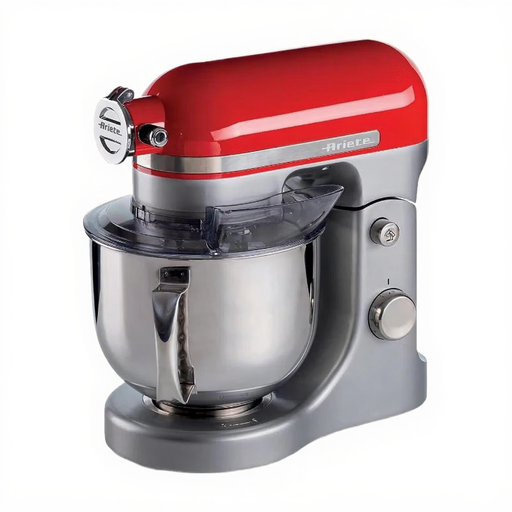
Ariete 1589 Moderna Planetaria, 1,600 watts
The product name describes this as a kneading machine. Before you buy, check that the permitted quantity suits your pizza dough and planned class batches.
5.5-l bowl, 11 speeds and 3 attachments for mixing, blending and whisking.
View at Joybuy
 No image available
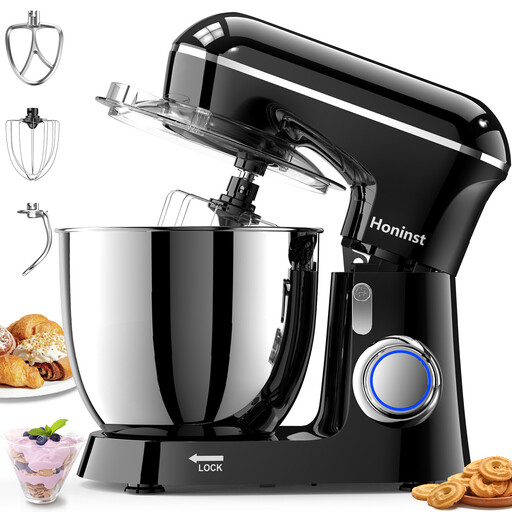
Honinst tilt-head stand mixer, 6.5QT
The listed dough hook makes this a model worth considering for your class, subject to the instructions and permitted dough quantity.
10 speeds; includes a dough hook, whisk and beater. According to the product information, it’s intended for domestic use only, so check whether that’s suitable for your class.
View at Joybuy
Frequently asked questions
Is a 5.5-l bowl big enough for all the dough for my class?
You can’t tell from bowl capacity alone. For the KM 3898, which has a 5.5-l bowl, Severin lists a capacity of up to 1.5 kg of yeast dough. Bosch gives a separate flour limit for the MUMS6ZS13D, which also has a 5.5-l bowl. Compare your recipe with the specifications for the exact model and relevant dough type.
How long and at what speed should I knead pizza dough?
Follow the instructions for your exact machine and the guidance for your recipe. KitchenAid recommends speed 2 for yeast dough, but gives different timings in its general kneading instructions and its own pizza recipe. So there’s no single timing that applies to every machine and dough.
What should I consider after kneading a particularly large batch?
Make sure you have enough containers and space for the dough to prove. Ankarsrum notes that a 5 kg batch made with the Assistent Original must be divided between at least two bowls to prove.
Are the manufacturer’s guarantee, your statutory rights and the online cancellation period the same thing?
No. When you buy as a consumer, your statutory rights are against the seller; a manufacturer’s guarantee is a separate, voluntary offer with its own terms. Online purchases generally come with a right to cancel, usually within 14 days. Check the terms that apply to your specific purchase.
Which product markings are relevant when buying in Germany?
Electrical appliances may be subject to CE requirements. According to the European Union, the manufacturer uses the CE marking to declare that the product complies with the relevant product rules. It isn’t an independent quality mark. EU rules on materials that come into contact with food also apply to relevant parts. Check the markings and usage information for the specific appliance.


