What should you look for when buying?
First, check that you have enough room for the mixer and space to use it. Then check the specific model's dough limits against your recipe.
| Buying priority |
What to check |
Who is it important to? |
| Worktop space and room to use the mixer |
Check the appliance dimensions against the space available; allow room to remove the bowl and move a tilting head. |
If I want to fit the mixer on a small worktop and still add ingredients easily, the space around it matters. Around 26% of consumers put worktop space and room to use the mixer first. |
| Handling potato bread dough |
Check the dough hook, as well as the kneading setting and running time for the specific model. Don't assume a general wattage figure tells you how it will handle your recipe. |
If my potato bread dough is soft and sticky, I want to know which kneading settings are recommended for the particular mixer. A potato bread recipe from Sheepy’s Bakery describes this type of dough; around 26% of consumers prioritise how well a mixer handles potato bread dough. |
| Maximum batch size |
Check the flour quantity and total dough weight in your recipe separately, and compare them only with the relevant limits given by the manufacturer. |
If I want to knead my usual batch in one go, the recipe quantity needs to be within the model's limit. Around 21% of consumers make batch size their top buying priority. |
| Preparation and cleaning |
Check which features and tools you need, and follow the cleaning instructions for the bowl and attachments. |
If I want to weigh ingredients directly into the bowl and avoid cleaning too many parts after kneading, the day-to-day routine matters. Around 16% of consumers prioritise preparation and cleaning. |
| Initial cost and accessories |
Check what is included and whether any attachments you need are compatible with the complete model number. |
If I want to keep using accessories I already own or avoid buying extra attachments, compatibility matters. Around 11% of consumers prioritise the initial cost and potential need for accessories. |
Manufacturer figures are not directly comparable. On its product page, Kenwood gives the Go a maximum bread dough capacity of 1,5 kg and separately lists 0,5 kg of flour as a capacity figure. The Go FAQ says it can handle up to 800 g of flour for bread at settings 1–2, with a kneading time of five minutes and a break of at least 15 minutes between heavy loads. These figures refer to different things, so check with Kenwood before making a larger batch.
Joybuy products for kneading dough
Joybuy options for kneading bread and yeast dough. Check the worktop space and clearance available at your chosen location.
 No image available
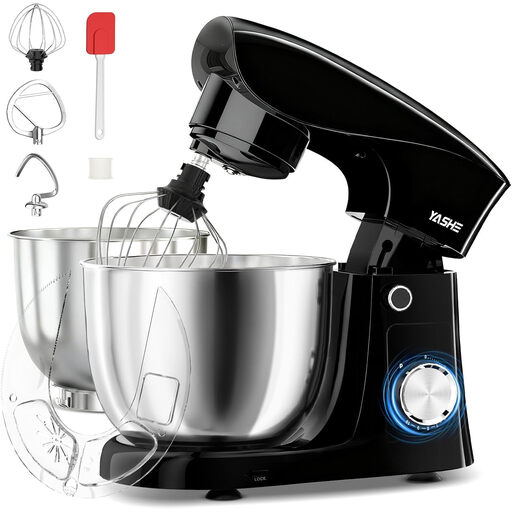
YASHE SM-2548 A stand mixer, 1500 W
The listed dough hook meets one of the requirements to look for when making bread dough. Check the overall dimensions against your available worktop space.
Two stainless steel bowls, with capacities of 4,5 l and 5 l, more than 10 speed settings and a tilting head according to the product name.
View at Joybuy
 No image available
Stand mixer with a 5-l stainless steel bowl
The product name lists a dough hook. Check that the mixer and bowl will fit in the space you have available.
5-l stainless steel bowl, 10 speed settings and 600 W according to the product name. A dough hook, beater, whisk and splash guard are also listed.
View at Joybuy
 No image available
Dough mixer with a 4,5-l stainless steel bowl, beige
The product name describes a dough mixer. Compare its dimensions and the clearance needed for the tilting head with the space you have available.
4,5-l stainless steel bowl, 1300 W and six speed settings with pulse function according to the product name.
View at Joybuy
 No image available
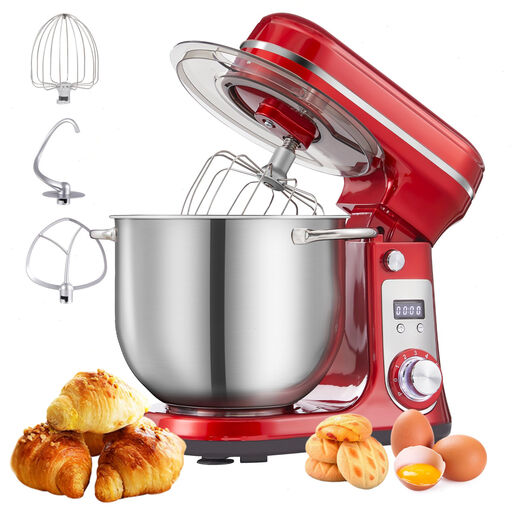
BioloMix BM601, red
The product name describes a stand mixer. Before choosing it, check that you have enough worktop space for this particular model.
6-l bowl, 1200 W, LCD screen, timer and six speed settings with pulse function according to the product name.
View at Joybuy
 No image available
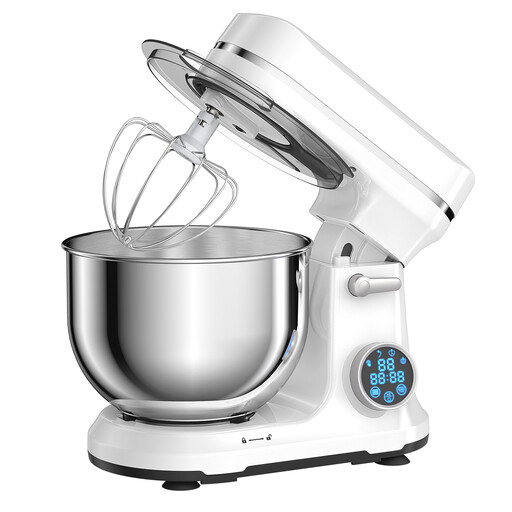
BioloMix BM602E, white
The product name lists bread dough as a use. Before buying, check the worktop space and the dough limit that suits your recipe.
5-l bowl, 1200 W, planetary mixing system and 11 adjustable speeds according to the product name.
View at Joybuy
Frequently asked questions
Is a four- or five-litre bowl big enough for my potato bread dough?
Bowl capacity alone isn't enough to tell. Compare the weights and flour quantity in your recipe with the relevant manufacturer figure for bread or yeast dough for the exact model. Kenwood and Severin list dough limits as well as bowl capacity.
What should I bear in mind when setting up and kneading with the Kenwood Go?
Allow room to use the mixer as well as space for its overall dimensions. Kenwood's Go FAQ specifies up to 800 g of flour for bread at settings 1–2, with a kneading time of five minutes and a break of at least 15 minutes between heavy loads. These conditions apply to the Go, not to other appliances.
Can I put all the parts of the Kenwood Go in the dishwasher?
According to Kenwood's manufacturer FAQ, the bowl is dishwasher-safe; the beater, whisk and dough tool should be washed by hand. Switch off the mixer and unplug it before cleaning.
What does the CE marking on a stand mixer in Germany mean?
According to information from the European Union, products must carry a CE marking when the relevant harmonised EU rules apply to them. It is the manufacturer's declaration of conformity, not independent evidence of kneading performance. This does not make any claim about the conformity of a specific version on sale.


