For seeded roll dough, compare the maximum quantity specified for yeast or bread dough for the exact model with the weight of your batch. Don’t rely on bowl capacity or wattage alone. For example, Bosch lists up to 1.9 kg of yeast dough for the MUM5XW40, while Kenwood gives a maximum of 2.56 kg of bread dough for the Titanium Chef Baker XL KVL85.704SI. As the manufacturers specify different types of dough, these figures aren’t directly comparable. If you’ve already weighed your ingredients, a suitable dough hook, easy loading and straightforward cleaning may matter more than an integrated scale.
Who these machines are suited to
Regular roll bakers making larger batches
You prepare several portions at once, so compare the weight of your recipe with the manufacturer’s figure for yeast or bread dough for the specific model. Bosch, Kenwood and Ankarsrum specify different dough quantities for different models.
Bakers who prepare ingredients in advance
You weigh your ingredients beforehand and want to add and knead them easily. An integrated scale isn’t necessarily essential for this workflow.
Occasional bakers with limited kitchen space
You tend to knead smaller quantities and want to weigh up the appliance dimensions and bowl size against the space available. The machines considered here range from more compact Bosch Serie 2 models to larger appliances.
What to consider when buying
First, compare the quantity in your recipe with the relevant dough capacity for the model. Then check that the workflow, cleaning and footprint suit your kitchen.
| Consideration |
What to check when buying |
Who it matters most to |
| Dough quantity and type |
Compare the weight of your batch with the manufacturer’s limit for the relevant type of dough. Check the dough hook and any guidance on heavy dough. |
If I want to knead my prepared quantity in one go, choosing a model with the right dough capacity is essential. Around 40% of consumers put capacity for their batch first. |
| Ingredients prepared in advance |
Check the loading access, splash guard and included dough hook for the exact model. Only prioritise a scale if you actually want to weigh ingredients with it. |
If my ingredients are already ready, I want to add and knead them without unnecessary extra work. Around 30% of consumers prioritise a straightforward workflow. |
| Cleaning and accessories |
Check the cleaning instructions for the bowl and dough hook. Review what’s included and the terms of any optional guarantee, and distinguish these from your statutory rights. |
If I want to keep tidying up after baking to a minimum and only store the parts I need, the actual contents of the box matter. Around 20% of consumers value easy cleaning and a manageable number of accessories above all. |
| Worktop space |
Check the appliance dimensions and allow room to raise the head at the intended spot. Don’t use bowl capacity as a measure of the permitted dough quantity. |
If my kitchen has little free worktop space and I tend to knead smaller batches, the appliance needs to fit where I plan to put it. Around 10% of consumers prioritise footprint. |
Common buying mistakes
-
Taking bowl capacity or the maximum for cake batter as the yeast dough capacity
Manufacturers sometimes specify different maximum quantities for cake batter and yeast dough for the same model. These figures aren’t interchangeable.
Weigh your planned batch and compare it with the figure for the relevant type of dough for the full model name. If your batch exceeds the stated limit, you may need to split it across several kneading cycles.
-
Using a general test ranking as proof that a model can handle heavy dough
In its comparison on 5 November 2026, IMTEST ranked the Kenwood Smart-Touch KHC40.080BK first, while also reporting that heavy bread dough needed some extra work. The ranking alone therefore doesn’t tell you whether the model is right for your seeded roll dough.
Consider the reported finding separately from the overall score, and also check the dough capacity for the specific model.
-
Automatically paying extra for features and accessories
A scale or additional accessories won’t necessarily offer a practical benefit if you’ve already weighed your ingredients. More parts can also mean extra storage and cleaning.
Prioritise the right dough hook, your batch size and the way you actually work. Choose additional features only if you’re likely to use them.
Brands to consider
Bosch
The Serie 2 is an option for smaller batches, the MUM 5 for medium quantities and the Serie 6 for larger bowls. The right dough quantity depends on the particular model and type of dough.
- Bosch lists up to 1.7 kg of yeast dough for the MUMS2AW01 and up to 1.9 kg for the MUM5XW40. The MUM5XW40 has an integrated scale; the MUMS2AW01 doesn’t.
- The manufacturer’s figures specify model limits and aren’t a substitute for an independent kneading test. For the MUM5XW40, 2.7 kg is the figure for cake batter, not yeast dough.
Kenwood
The range includes machines with programmes and versatile mixing functions, as well as models with a stated bread dough capacity.
- Kenwood lists a maximum of 2.56 kg of bread dough and two bowls for the Titanium Chef Baker XL KVL85.704SI.
- IMTEST reported that heavy bread dough needed extra work with the Smart-Touch KHC40.080BK. This finding relates to the model tested, not all Kenwood machines.
Ankarsrum
The Assistent Original is an option for regularly making larger quantities of dough, with a system that uses a rotating bowl.
- Ankarsrum lists a capacity of up to 5 kg of dough per batch for the Assistent Original.
- The manufacturer’s figure doesn’t prove independent superiority or mean that every recipe can be processed at this quantity.
Wilfa
The ProBaker range is designed for dough, with equipment and features varying between the KM1, KM2 and KM4 models.
- Wilfa lists a 7-l bowl and a capacity of up to 5 kg of dough for the KM1 series. According to the manufacturer, the KM2 series also has a timer and a stainless steel dough hook.
- These capacity and equipment details come from the manufacturer. Check the model name and what’s included for the specific version.
KitchenAid
The Artisan 5KSM175 is an option if you want to do other mixing jobs as well as kneading, and would find extra bowls useful.
- KitchenAid lists a 4.7-l bowl, a 3-l bowl and a dough hook for the version researched.
- Bowl capacity alone doesn’t tell you the maximum yeast dough quantity. Check the details for the specific model and recipe.
Joybuy products
The Joybuy products below are described as suitable for kneading prepared ingredients or making smaller to larger batches of dough. Compare the details and what’s included for the specific model with your recipe and the space available.
 No image available
HAUSWIRT M5 Max, 5.5 l, touchscreen and 11 speed settings
The model name identifies it as a dough mixer with 11 speed settings.
It’s listed with a 5.5-l bowl and a 4.5-inch touchscreen.
Joybuy
 No image available
Stand mixer with 5-l stainless steel bowl and 10 speed settings
The product name lists a dough hook for kneading dough.
It’s also listed with 600 W, a beater, a whisk and a splash guard.
Joybuy
 No image available
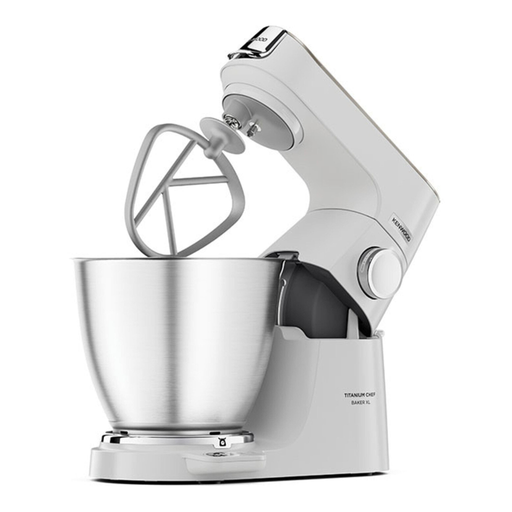
Kenwood Titanium Chef Baker XL KVL65.001WH
The integrated scale may suit a workflow where ingredients are weighed directly into the bowl or an accessory.
The product name lists a 7-l bowl, 1200 W and a three-piece patisserie set.
Joybuy
 No image available
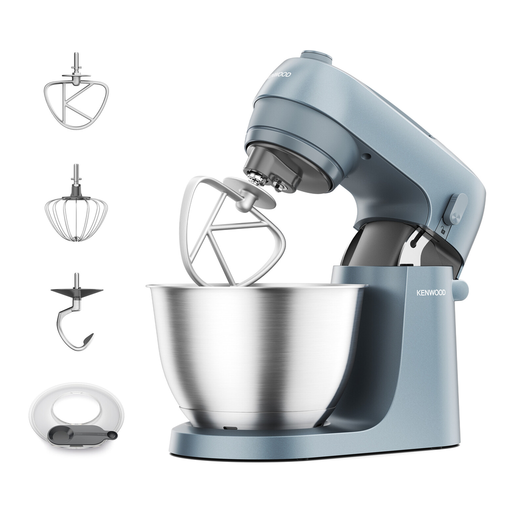
Kenwood Go KZM35000GY, blue
This model is described as a compact stand mixer for smaller batches and limited space.
Joybuy
 No image available
BEAR Intelligent Dough Maker HMJ-A50N1, 5 l, up to 2.5 kg of dough
The product name describes kneading and proving as part of an automated process.
It’s listed as handling up to 2.5 kg of dough. The stated flour quantity of around 400 to 1,600 g refers to the flour, not the total weight of the dough.
Joybuy
Frequently asked questions
Can I tell how much seeded roll dough will fit from the bowl size?
No. Compare the weight of your batch with the quantity specifically listed for yeast or bread dough for the exact model. For example, Bosch lists up to 1.9 kg of yeast dough and 2.7 kg of cake batter for the MUM5XW40. These figures apply to different types of dough and aren’t interchangeable.
How do I set up a new stand mixer safely?
Set up the machine as described in its instruction manual, check what’s included and clean the parts specified before first use. The instructions for your particular model are the ones to follow; the Bosch manual for MUMS6 appliances covers setup, tools, initial cleaning, operation and care, among other things.
Are a guarantee and statutory consumer rights the same thing?
No. The Verbraucherzentrale distinguishes statutory consumer rights, which apply when you have a problem with a product and are dealt with by the seller, from an additional voluntary guarantee with its own terms. Check exactly which parts and situations are covered by any guarantee on offer.
What should I look out for when it comes to product safety and food-contact parts?
According to information from Your Europe, EU rules may require electrical appliances to carry a CE marking. This is a declaration by the manufacturer, not an independent quality mark. Bowls and tools intended to come into contact with food are food-contact materials. Check the labelling and manufacturer’s information for the specific product, rather than assuming it complies based on a product photo.


