Bakers with limited worktop space
If you have limited width or space beneath a wall cabinet, the mixer’s dimensions and the room needed to operate it matter. You also need to be able to handle the bowl and accessories where you plan to keep it.


When choosing a stand mixer for vanilla frosting, start with the space you have available and a mixing attachment suited to your recipe – not just the bowl size. Check that you can remove the bowl and operate the mixer where you plan to keep it. KitchenAid uses a flat beater in one buttercream recipe; this is a specific example, not a guarantee for every recipe or mixer.
If you have limited width or space beneath a wall cabinet, the mixer’s dimensions and the room needed to operate it matter. You also need to be able to handle the bowl and accessories where you plan to keep it.
If you make buttercream regularly, check which mixing attachment comes with the exact set you’re considering and how easy it is to access the bowl.
For small batches of frosting, consider the recipe quantity and how it will mix, as well as the mixer’s dimensions. The bowl’s stated capacity alone won’t tell you whether it can handle a small quantity effectively.
First, measure the space you have, including room to operate the mixer and remove the bowl. Then compare the mixing attachment and bowl capacity with the recipes you usually make.
| What to consider | What to look for | Who should consider it? |
|---|---|---|
| Footprint and clearance | Measure the width, depth and height; also check which way the mixer opens and whether there’s room to remove the bowl. | If my worktop is narrow, the mixer needs to fit along with the space required to operate it and remove the bowl. Around 36% of consumers put footprint and clearance first. |
| Mixing attachment | Check what’s included with the exact model variant and whether the attachment is suitable for your recipe. | If I make frosting regularly, I want a suitable attachment to hand. Around 29% of consumers prioritise having the right mixing attachment. |
| Bowl and recipe quantity | Compare the stated capacity with your recipe; for small quantities, don’t assume the mixer is suitable based on the litre capacity alone. | If I’m making just a small batch, the bowl should suit the quantities I usually make. Around 21% of consumers base their choice primarily on portion size. |
| Cleaning and ease of use | Check the cleaning instructions and the parts included with the specific model. | If I only use the mixer occasionally, I want cleaning and storage to be straightforward day to day. Around 14% of consumers focus mainly on the effort involved and what comes afterwards. |
Bowl capacity, the mixer’s dimensions when closed and the clearance needed to open it are three different considerations. A mixer might fit on your worktop but still be awkward to use there.
Measure the space and check which way the motor head and bowl move.
If you can’t operate the mixer where you plan to keep it, you may need to find another place to use or store it.
Power ratings aren’t comparative measurements of frosting texture or how well a mixer handles small quantities.
Start by comparing the mixing attachment, the quantities you usually make and the space required; treat power ratings as manufacturer information.
A warranty is a voluntary offer with its own terms and conditions. Your statutory rights have a different basis and are with the retailer.
Check the terms of any additional warranty separately from your statutory rights. The German consumer advice centre clearly distinguishes between warranties and statutory rights.
The Series 2 MUMS2EW00 is one option to compare if the dimensions and cleaning guidance for this exact model matter to you.
The Kenwood Go KZM35.000GY may suit a particularly narrow space, provided its dimensions and front-facing controls work where you plan to put it.
The Mini 5KSM3311X is a 3,3-l option with a tilting motor head.
The Bella Mini 10037980 is a 4-l stand mixer for which Klarstein lists a flat beater for creams.
The following Joybuy products are listed as kitchen or stand mixers. For vanilla frosting, check the mixing attachment, the quantities you usually make and the dimensions of the specific model.
 No image available
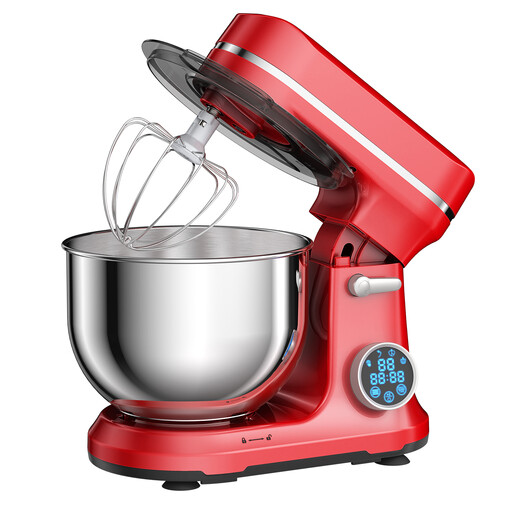
The listed planetary mixing system may be a useful feature to consider; check whether the accessories are suitable for your frosting recipe.
5 L; planetary mixing system; 11 speed settings; 1200 W; OLED touchscreen.
 No image available
The product title specifies a 3-l container and two speeds. Before buying, check whether it comes with a mixing attachment suitable for your frosting recipe.
3 L; two speeds; 4-blade 304 stainless steel blade; LED timer.
 No image available
The product description lists a programme for whipping cream. This doesn’t automatically mean it’s suitable for every quantity of frosting.
5,5 L; 11 speed settings; five preset programmes; LED touchscreen.
 No image available
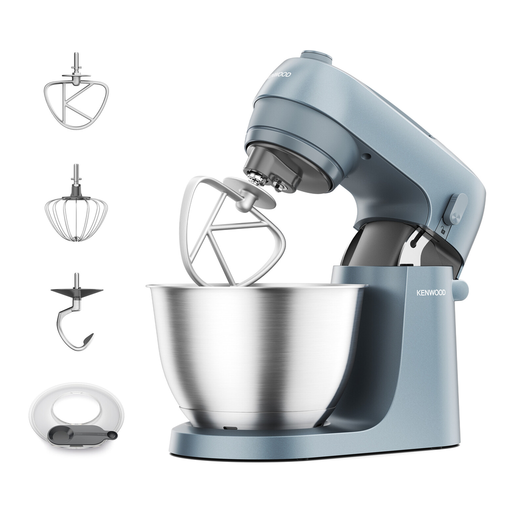
The dimensions may help you check whether it will fit on a narrow worktop. Also check how you’ll operate the mixer and remove the bowl where you plan to put it.
33,5 × 18 × 30 cm; front-facing controls; K-beater, whisk and dough hook. Check the specific product details to confirm the bowl capacity.
Start by checking your recipe and what’s included with the mixer. KitchenAid uses a flat beater in one buttercream recipe, while Klarstein lists the Bella Mini’s flat beater for creams. This doesn’t mean there’s one setting that works for every type of frosting.
Not necessarily. On mixers with a tilting motor head, you’ll need to move the head back to access the bowl. So measure the space you’ll need to operate the mixer and remove the bowl, too.
No. The stated capacity alone doesn’t tell you whether the mixer will handle a small quantity effectively. Compare your recipe with the manufacturer’s guidance for the specific model and check which mixing attachment is included.
Switch the mixer off and unplug it. Kenwood recommends checking and, if necessary, adjusting the clearance for affected attachments. Follow the instructions for your exact model only.
No. Your statutory rights are against the retailer, while a warranty is a voluntary offer with its own terms and conditions. The German consumer advice centre clearly distinguishes between these two types of protection.