
Lieferung heute & morgen

Qualitätsgarantie

Willkommens-Angebote freischalten: KOSTENLOSE Lieferung | Bis zu 80 % RABATT | Kostenlose 30-Tage-JoyPlus-Testphase
App herunterladen
Purchasing a new hob is a major decision for any kitchen. A standalone 60 cm induction hob is at the top of many wish lists, promising fast, safe, and energy-efficient cooking. However, the market is flooded with tempting offers and technical jargon that often confuse more than they clarify. Before you make a decision you might later regret, it's crucial to understand the common pitfalls that frequently lead to dissatisfaction.
As your Joybuy Product Recommendation Officer, I'm here to help you navigate the marketing jungle. We'll focus on the facts so you can find a model that truly fits your needs.
Many buyers focus on price or advertised features, but overlook crucial details that make all the difference in daily use.
To avoid the issues mentioned above, you should check three key areas before buying. These define the actual performance and everyday usability of your new hob.
The choice of heating technology is fundamental. While buying a classic ceramic hob gets you a robust device compatible with any pot, its response time is slower and energy consumption is higher. Induction technology uses a magnetic field to heat the base of the pot directly.
Today, a modern 4-zone built-in hob should feature induction technology to meet current standards for efficiency and speed.
The arrangement and type of cooking zones determine how flexibly you can cook. A standard 4-zone built-in hob is sufficient for most households. For smaller kitchens or as a supplementary unit, a 30 cm 2-zone hob can also be a sensible solution.
Look for the following features:
Modern hobs offer features that make everyday life safer and easier. The following are essential:
Instead of presenting a confusing list, we have selected models that cater to specific user profiles and meet the criteria mentioned above.
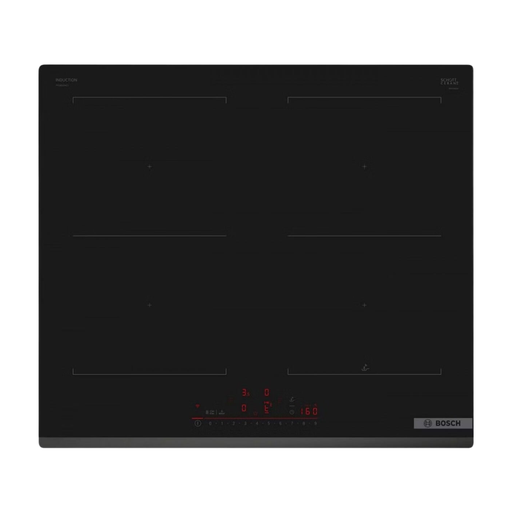
Why this model is a great fit: This standalone Bosch hob is a reliable choice for families. The CombiZone allows the use of large roasting pans for Sunday dinner, while the DirectSelect controls and child lock provide convenience and safety in a hectic family life.
The CombiZone links two cooking zones into one large area, directly addressing the "pseudo-flex zone" problem. Heat is distributed more evenly for oblong cookware.
Intuitive DirectSelect controls for direct, simple power level selection and a reliable PowerBoost function for rapid heating.

Why this model is a great fit: For a first kitchen or for budget-conscious renovators, this model offers the core benefits of induction technology without breaking the bank. It includes all the necessary basic functions like a timer, boost, and child lock.
The model provides clear specifications for the power of each zone (e.g., 2x1500W, 2x2100W). This helps set realistic expectations for power management and avoids the "misleading total power" pitfall.
Excellent value for money, offering a full set of features (Boost on all 4 zones, timer, touch controls) at an accessible price point.
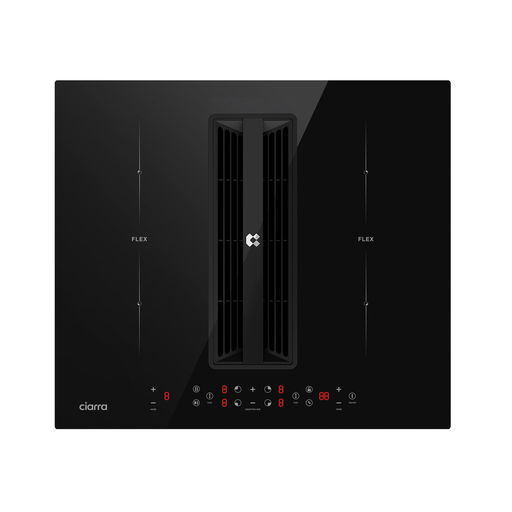
Why this model is a great fit: Ideal for open-plan kitchens and island units. This hob with an integrated extractor combines two appliances in one, creating a minimalist aesthetic without an obtrusive hood. The FlexZones also offer high flexibility for cooking.
This 2-in-1 appliance solves a fundamental design problem and bypasses the classic pitfalls by focusing on integration and aesthetics. The FlexZones are designed for versatile cooking.
Space-saving and elegant design that allows for an unobstructed view in the kitchen. The Plasma? filter technology efficiently purifies the air in recirculation mode without needing an exhaust duct.
We have compiled a complete, up-to-date list of products that fully meet these strict selection criteria and all relevant safety standards.
1. Do I need a special electrical connection for a standalone induction hob? Yes, in most cases, a three-phase electrical connection (often referred to as a high-power supply) is required, which must be installed by a qualified electrician. The total connected load of a 60 cm induction hob often exceeds 7,000 watts, which a standard 230-volt connection cannot handle.
2. What is the average lifespan of an induction hob? The lifespan heavily depends on the intensity of use and the quality of the appliance. With proper care and normal use, a high-quality induction hob can last 10 to 15 years. The ceramic glass surface is very durable; the electronics are usually the limiting factor.
3. Does an induction hob make noise during cooking? Yes, certain operating noises are normal and not a cause for concern. These include a quiet humming from the induction coils, a clicking from the power electronics, and the sound of the cooling fan that protects the electronics from overheating. The volume can vary depending on the power level and the cookware used.