
Lieferung heute & morgen

Qualitätsgarantie

Willkommens-Angebote freischalten: KOSTENLOSE Lieferung | Bis zu 80 % RABATT | Kostenlose 30-Tage-JoyPlus-Testphase
App herunterladen
A disorganised entryway, with jackets draped over chairs and shoes blocking the path, is a common problem in many homes. A functional coat rack promises a solution, but the selection is vast, and not every product lives up to its claims. Before you make a decision, it's important to understand the typical weaknesses that often only become apparent after the purchase.
This guide will help you separate the wheat from the chaff. We focus on the crucial features that define a good coat rack and show you how to avoid bad buys caused by exaggerated marketing promises or hidden design flaws.
Many products look appealing at first glance but prove to be impractical or short-lived in everyday use. Pay special attention to these three points:
To make an informed decision, you should focus on objective criteria. The following three aspects are crucial for the functionality and longevity of your new coat rack.
The material largely determines stability and lifespan. For wooden products like a wooden coat rack panel, it's important to distinguish between solid wood and engineered woods like MDF or particleboard. Solid wood is generally more robust and durable. For metal coat racks, such as a black metal coat stand, steel is often a good choice due to its strength. Look for a high-quality powder coating or paint finish that protects the metal from rust and scratches.
The choice of mounting type depends on your space and personal preferences.
Consider what exactly you want to store. Are modern coat hooks for jackets enough, or do you need a more comprehensive solution? Many systems combine hooks with a clothes rail, which allows for the use of space-saving hangers. Integrated shelves or a shoe rack for the hallway create additional storage space and ensure a tidy overall appearance. The shape of the hooks is also relevant: rounded edges are gentle on your clothing's fabric and prevent unsightly bumps.
Based on the criteria above, we have identified some products that are suitable for different needs and living situations.
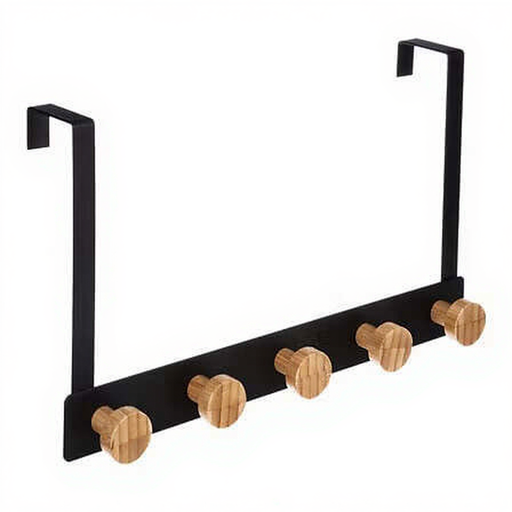
Why it's a great fit: Ideal for anyone looking for a quick and straightforward solution without drilling. This over-the-door rack makes optimal use of existing space and is perfect for rental apartments, bathrooms, or bedrooms to quickly create order.
The product completely bypasses the problem of complex installation and potential wall damage. Its function is clearly defined, avoiding misleading promises about load capacity, as it is designed for light to medium-weight garments.
Tool-free installation by simply hanging it over the door. Flexible to use and leaves no residue.

Why it's a great fit: This coat rack panel combines high-quality materials like FSC-certified solid wood and a robust aluminium alloy with an award-winning design. It is a durable and aesthetically pleasing choice for anyone who values quality and style.
Addresses the "misleading load capacity" pitfall with a manufacturer-specified capacity of 30 kg, supported by the use of solid wood and metal hooks. The lacquer finish protects the wood from moisture.
High load capacity and durable, verifiably certified materials (FSC rubberwood). Rounded edges are gentle on clothing.
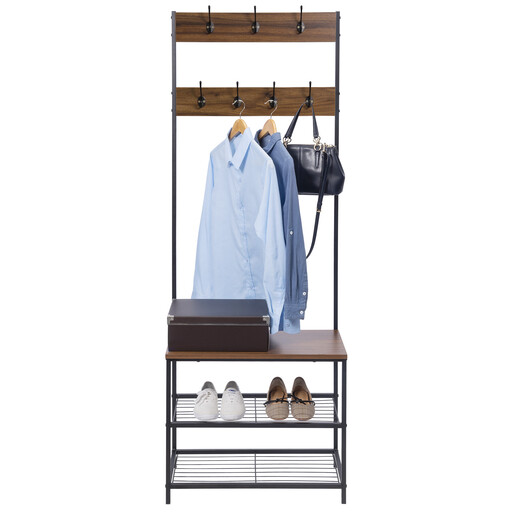
Why it's a great fit: This multifunctional hall tree is an all-in-one solution for the entryway. It combines hooks for jackets, a shoe rack for multiple pairs of shoes, and a practical bench for putting on shoes in a single, space-saving piece of furniture.
Counteracts the problem of "unstable construction." By combining the vertical stand with a wide base in the form of the shoe rack, it achieves significantly greater stability than simple coat stands with a single-post base.
3-in-1 functionality (coat rack, shoe rack, bench) provides maximum organisation in a minimal footprint. Ideal for hallways and entryways.
We have compiled a complete, up-to-date list of products that fully meet these strict selection criteria and German safety regulations.
1. How high should a coat rack be mounted? The standard height for mounting coat hooks or panels is about 170 to 175 cm (approx. 67-69 inches) above the floor. This ensures that even long coats do not touch the ground. In households with children, a second, lower-mounted rail at a height of approx. 110-120 cm (approx. 43-47 inches) can be useful.
2. What load capacity does a coat hook really need? For a single, heavy wool winter coat or a bag, you should account for a weight of 3 to 5 kg (approx. 7-11 lbs). A coat hook should therefore be rated for at least 5 kg to ensure safe use. For coat rack panels, the total load capacity, which is distributed across all hooks, is the crucial factor. Always check the manufacturer's specifications.
3. Can I install a wall-mounted coat rack on a drywall wall? Yes, installation on a drywall (plasterboard) wall is possible but requires special hollow-wall anchors. The maximum load capacity then depends more on the quality of the anchor and the condition of the wall than on the hook itself. For very heavy loads, it is recommended to screw the coat rack directly into the underlying wood or metal wall studs.