
Lieferung heute & morgen

Qualitätsgarantie

Willkommens-Angebote freischalten: KOSTENLOSE Lieferung | Bis zu 80 % RABATT | Kostenlose 30-Tage-JoyPlus-Testphase
App herunterladen
A freestanding shelf is a fundamental component for organising living and working spaces. Its primary function is to provide vertical or horizontal storage for various objects. Selecting a suitable model depends on specific requirements regarding material, construction, dimensions, and functionality. This guide analyses the technical criteria to consider when choosing a freestanding shelf, bookshelf, or office shelf.
The decision to purchase a shelf should be based on an analysis of objective parameters. The following criteria are relevant for your selection.
The choice of material affects the shelf's durability, load capacity, and maintenance.
Structural integrity is a critical factor for both safety and usability.
A freestanding shelf can offer more than just storage space. Its functionality is defined by its features.
Based on an analysis of product specifications and functional design, here are some models we're highlighting.
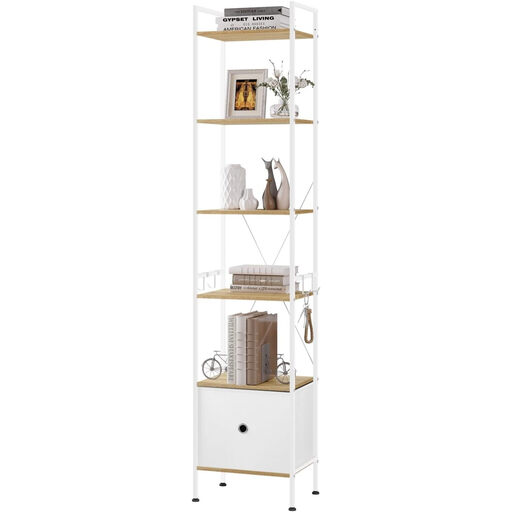
Why we recommend this product: This model combines a tall, narrow design for optimal use of vertical space with a versatile set of features. The combination of open compartments, a non-woven fabric drawer, and side hooks offers a flexible solution for various storage needs. Its construction, featuring E1-grade engineered wood and painted metal tubes with an X-brace, is designed for stability and durability.
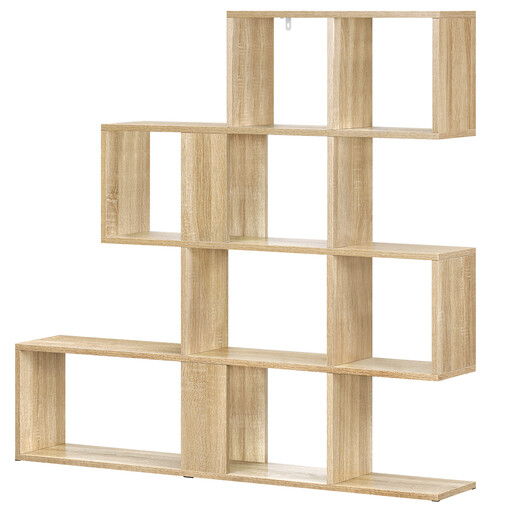
Why we recommend this product: The step shelf from eSituro stands out with its geometric design and dual function as both a storage unit and a room divider shelf. With 11 open compartments of varying sizes, it offers ample space for books, binders, and decorative items. The wide base and non-slip pads ensure a secure footing, while the included anti-tip kit allows for wall mounting to increase safety.

Why we recommend this product: This model is an extension of the first shelf featured, offering a wider 63 cm frame and two drawers for more enclosed storage. This makes it well-suited as an office shelf or a versatile living room shelf. The back panels on the open compartments prevent items from falling off. The use of FSC-certified engineered wood is an additional feature.
While freestanding shelves are a versatile solution for room organisation, the right lighting also plays a crucial role in a room's atmosphere and functionality. A well-considered light source can highlight the objects placed on the shelf and enhance the entire space. If you are interested in lighting concepts in addition to storage solutions, you can find more options for designing your space in our bright bedroom lamps category.
1. What is the difference between a freestanding shelf and a bookshelf? Technically, the term freestanding shelf is a general term for any shelf that is not wall-mounted. A bookshelf is a specialised type of freestanding shelf, with compartments typically optimised in height and depth for storing books. However, many modern freestanding shelves are designed to be multifunctional and are equally suitable for books, files, and other items.
2. How do you securely attach a freestanding shelf to the wall? Most taller freestanding shelves come with an anti-tip kit. This usually consists of one or more brackets or straps that are screwed to the top of the shelf and to the wall. It is important to follow the manufacturer's assembly instructions carefully and use wall plugs and screws appropriate for your wall type to ensure a stable and secure attachment.
3. What material is suitable for a basement shelf? For a basement shelf, materials that are resistant to moisture and temperature fluctuations are crucial. Shelves made of powder-coated metal or galvanised steel are often a good choice as they are corrosion-resistant. Plastic shelves are also an option. For engineered wood, you should ensure it has a good sealant or a coating suitable for damp environments to prevent the material from swelling.