
Lieferung heute & morgen

Qualitätsgarantie

Willkommens-Angebote freischalten: KOSTENLOSE Lieferung | Bis zu 80 % RABATT | Kostenlose 30-Tage-JoyPlus-Testphase
App herunterladen
A standing shelf with a drawer promises the ideal combination of open display space and concealed storage. However, pitfalls lurking in online selections can quickly turn a supposed organisational hero into a headache. Many buyers report wobbly structures or drawers that jam after only a short time. This guide shows you the crucial features to look for to find a durable and functional solution for your home or home office.
Before you make a decision, it's important to know the typical weak points that often only become apparent after assembly.
To avoid the problems mentioned above, focus on three verifiable criteria. These will help you objectively assess the quality of a shelf.
The choice of material determines not only the look but also the stability and lifespan of your shelf.
A tall shelf with drawers must stand securely. Look for the following features:
Measure the available space accurately. A narrow standing shelf in the living room can fill an unused niche, while a wider model can serve as a room divider. Consider what you want to store. An open shelf with a drawer offers flexibility: books and decorative objects can be placed on the open shelves, while small items disappear out of sight in the drawer. Additional features like a standing shelf with hooks can further enhance its utility by providing space for bags, headphones, or scarves.
Here are some models tailored to specific needs and room situations.
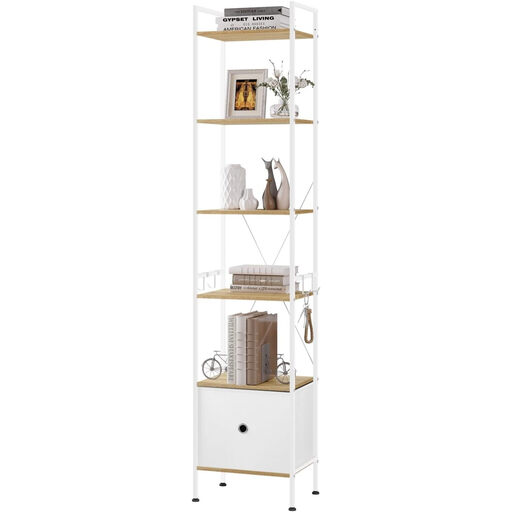
Why This Fits Their Persona: Ideal for users looking for an all-in-one solution for the home office or living area. It combines open shelves for files and books, a drawer for office supplies, and hooks for accessories.
The X-shaped metal bracing ensures high stability. The material specifications are transparent (melamine veneer, metal, non-woven fabric drawer), and it comes with two anti-tip kits for wall mounting.
High functionality thanks to the combination of 5 tiers, a drawer, and 4 hooks. Adjustable feet compensate for uneven floors.
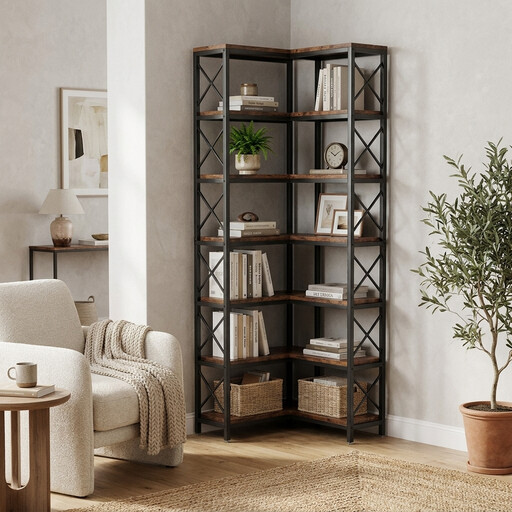
Why This Fits Their Persona: Perfect for anyone wanting to make the most of unused corners in smaller apartments or offices. This tall corner shelf creates maximum vertical storage on a small footprint.
The side X-braces and sturdy metal frame prevent the structure from twisting. The adjustable feet ensure a secure stance, even on the uneven floors of older buildings.
Specialised design for utilising corner spaces. With 7 tiers, it offers high storage capacity for books, plants, or decorative items.
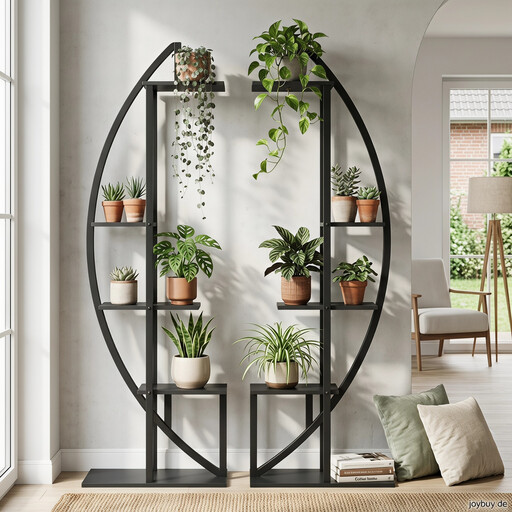
Why This Fits Their Persona: For users seeking a piece of furniture that offers both storage and a decorative element. The set of two shelves can be flexibly combined or placed separately.
The material combination of E1 particle board, solid wood legs, and a metal frame is clearly declared and promises greater stability than purely decorative, delicate plant stands.
Modular set of 2 for flexible design possibilities. The curved design stands out from standard shelves and serves as an eye-catching feature.
A standing shelf is more than just storage—it's a part of your decor. If you're looking for more stable and well-designed storage solutions, you'll find a suitable selection here.
1. How much weight can a standing shelf with a drawer hold? The maximum load capacity varies greatly depending on the model and material. It is usually specified per shelf in the manufacturer's product description (e.g., "15 kg per shelf"). Shelves with metal frames and thick engineered wood panels are generally more robust than lighter designs. Do not exceed the specified maximum load to ensure stability.
2. Do I have to secure a tall shelf to the wall? Yes, it is strongly recommended. Most manufacturers include an anti-tip kit to secure the shelf to the wall. This is an essential safety measure to prevent it from tipping over, especially if the shelf is tall, heavily loaded, or if there are children and pets in the household. Installation is simple and significantly increases safety.
3. What is the difference between a wood-look finish and real wood in shelves? "Real wood" or "solid wood" means the piece of furniture is made from solid, natural wood. It is typically more durable, heavier, and more expensive. "Wood-look" usually refers to a base panel (e.g., particle board or MDF) coated with a printed foil or a durable melamine veneer. High-quality coatings are very resilient and easy to clean, while simple foils are more susceptible to scratches and moisture.