
Lieferung heute & morgen

Qualitätsgarantie

Willkommens-Angebote freischalten: KOSTENLOSE Lieferung | Bis zu 80 % RABATT | Kostenlose 30-Tage-JoyPlus-Testphase
App herunterladen
A stand mixer with a bowl should knead dough, whip cream and mix ingredients evenly. In practice, it’s often only after buying one that you find out whether it suits your kitchen and the amount of work you want it to handle. So whether you’re a keen home baker, part of a family or simply cooking at home, don’t focus only on wattage or pictures of the attachments.
A high maximum power rating sounds impressive at first. On its own, though, it tells you little about how well an electric stand mixer handles stiff bread dough. The motor’s design, power transmission, permitted operating time and the maximum quantity specified by the manufacturer all matter too.
If you’re buying a dough mixer, check whether it’s explicitly designed for yeast dough, bread or pizza. Figures such as ‘peak power’ may differ from the rated power available during continuous operation.
A 6-litre or 6.5-quart bowl isn’t necessarily designed to hold that much while mixing. Ingredients need room to move when you’re mixing or whisking, so they don’t splash over the edge and the dough hook can work effectively. Check the instruction manual for recommended dough quantities.
A large bowl can take up unnecessary worktop space in a smaller household. Families and people who regularly bake bread and cakes, on the other hand, can make good use of the extra capacity.
A mixer with a dough hook, a whisk and a flat beater each have different uses:
A blender with a jug and blades is mainly intended for smoothies, soups and purées. It won’t fully replace a stand mixer for baking. If you only make dough occasionally, a hand mixer may be enough; for larger quantities, a stand mixer with a mixing bowl is usually more practical.
A bowl made from stainless steel is a popular choice for regular kitchen use. It doesn’t retain odours easily and is relatively easy to clean. Check the stated capacity, the bowl’s shape and that it sits securely on the mixer base. A handle can make pouring and transferring ingredients easier.
For a 6-litre model, also check whether the manufacturer distinguishes between the bowl’s total capacity and the recommended working capacity. This matters more for family-sized portions and heavy doughs than the number of litres alone.
Multiple speed settings let you add flour or liquid more slowly and whisk with greater control. A pulse function is useful for short bursts of power, but it doesn’t replace a consistently low speed for kneading.
A stand mixer with a whisk should offer enough speed control for working with light ingredients. For stiff doughs, low to medium speeds and reliable power transmission are more important.
Kneading creates vibrations. Non-slip feet or suction cups can help prevent the mixer from moving on a flat, dry work surface. A splash guard helps reduce mess when mixing.
Other useful features include:
The motor housing must not normally be immersed in water. Unplug the mixer before cleaning it or changing attachments. Always follow the instruction manual for quantities, operating times and compatible attachments.

Why this product suits this type of user: The 5-litre bowl, ten speed settings and three standard attachments cover everyday baking tasks in a home kitchen.
The product details specify 400 watts, a 5-litre stainless-steel bowl, overheating protection and suction cups. This makes it easy to check the key details before buying.
Tilt-head design, pulse function, dough hook, whisk and beater for bread, cakes, pizza and pastries.
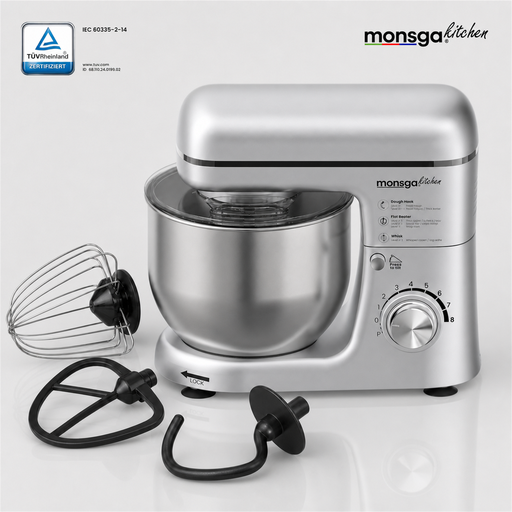
Why this product suits this type of user: This model is designed for households that regularly work with different types of dough, cake mixtures and creams.
The product details distinguish between a total capacity of 6.0 litres and a recommended capacity of 5.0 litres. Overload and overheating protection are also listed.
Stainless-steel bowl, eight speed settings, splash guard and attachments that are dishwasher-safe according to the product description.

Why this product suits this type of user: For anyone who wants to do more than knead, with a mincer and a jug for blending smoothies, sauces and purées too.
Each function is listed separately in the product description. It also specifies a safety lock and gives guidance on typical household quantities and operating times.
6-quart stainless-steel bowl, eight speeds, dough hook, beater and whisk, plus extra blending and chopping attachments.
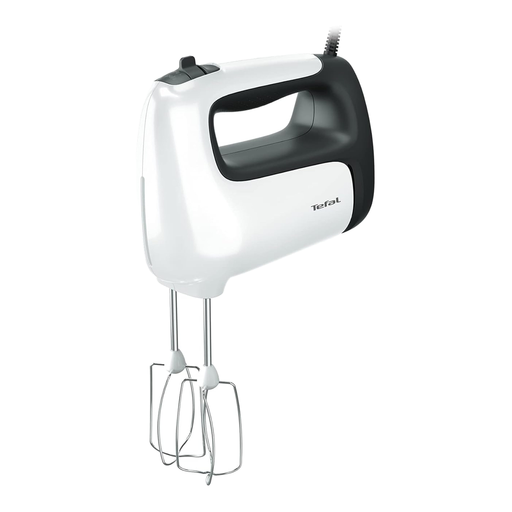
Why this product suits this type of user: This compact hand mixer doesn’t need a permanent place on the worktop and is suitable for smaller quantities and occasional baking.
Instead of buying a large stand mixer, you can keep your space and attachment requirements to a minimum. The product details specify 500 watts, five speed settings and a dough hook.
Compact design, non-slip base and attachments that are dishwasher-safe according to the product description.
We’ve put together a comprehensive, regularly updated list of products that meet these strict selection criteria and fully comply with the safety regulations in force in the EU.
For home use, 4 to 5 litres is enough for many cake and dough recipes. A 6-litre stand mixer gives you more room for family-sized portions and larger quantities of dough. What matters most is the manufacturer’s recommended working capacity, not just the total capacity printed on the bowl.
A stand mixer with a mixing bowl works hands-free and is particularly useful for larger quantities or regular kneading. A hand mixer is easier to store and is often enough for smaller portions. If you regularly make bread, pizza or stiff yeast dough, compare the stand mixer’s design, dough hook and permitted operating time.
There’s no reliable way to give a general lifespan. It depends on how often you use the mixer, the quantity of dough, how well you maintain it and whether you follow the recommended operating times. Don’t overload it, fit the attachments correctly, wipe the motor housing clean without getting it wet and let the mixer cool between longer kneading sessions. This helps you stay within the operating conditions specified by the manufacturer.