
Lieferung heute & morgen

Qualitätsgarantie

Willkommens-Angebote freischalten: KOSTENLOSE Lieferung | Bis zu 80 % RABATT | Kostenlose 30-Tage-JoyPlus-Testphase
App herunterladen
Whether you need them for school, the office, your studio, workshop or laboratory, stationery and markers need to suit the surface and the result you want. A fineliner that works for notes won’t necessarily work on glass, and a permanent marker is often the wrong choice for temporary labelling. Before you buy, check the line width, ink type, adhesion and how easy the mark is to remove.
A waterproof marker won’t adhere equally well to every material. Glass, metal, plastic, wood and stone all have very different surface textures. On smooth surfaces, the ink may run or take a long time to dry, while on absorbent wood it may soak in more deeply. A specialist glass marker or glass marking pencil is usually a better choice for smooth, non-absorbent surfaces than an ordinary felt-tip pen.
Yellow, white and red look different on paper than they do on dark plastic or clear glass. Opacity, contrast and line thickness are what matter. A thin brown marker may barely show on dark wood, while a white wax pencil stands out clearly on a black surface.
A water-soluble marker is useful for temporary marks, film or corrections you can wipe away with a damp cloth. A waterproof marker, by contrast, is designed for labels that need to stay visible. Always test on an inconspicuous area first to check that the mark can be removed without leaving a trace.
First, check what you’ll be writing on:
The tip determines how fine or broad your mark will be. A fineliner with a tip of around 0.3 mm is ideal for small writing and detailed drawings. A fine 0.6 mm tip is suitable for film, diagrams and precise labelling. A flip chart marker with a chisel tip and a line width of around 2–5 mm can create both narrow and broad lines.
If you’re choosing a mechanical pencil, check the lead diameter too. A 0.5 mm mechanical pencil is suitable for notes, sketches and technical details. A classic HB pencil offers a balanced hardness for school and everyday use.
For permanent marks, water and light resistance are important features to look for. Waterproof wax pencils may only come off glass or metal with a suitable solvent or scraper, so test the surface beforehand.
Follow the manufacturer’s safety instructions for markers with small caps and sharp leads. Keep products out of the reach of young children. Water-based ink may be washable, but it can still leave permanent stains on textiles or porous materials.
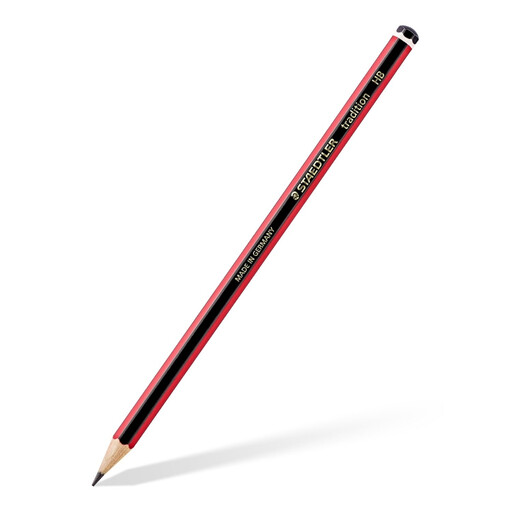
Why this product suits this profile: This HB pencil covers everyday tasks at school, university and home, from writing and sketching to making simple corrections.
The HB grade is clearly specified, so you won’t end up choosing a pencil that’s too soft or too hard for general writing.
Hexagonal barrel, break-resistant lead and a grade suited to writing and sketching.
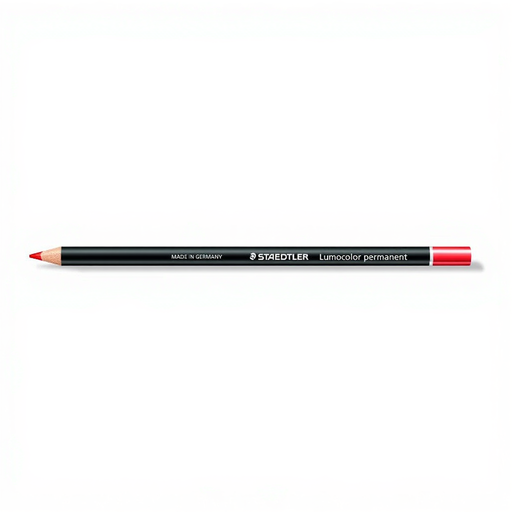
Why this product suits this profile: For buyers who need clearly specified materials and permanent marks on glass, plastic, metal, wood, leather or stone.
The product description specifically states that it produces waterproof, lightfast marks with an opaque red pigment.
Wax-based Glasochrom lead, opaque colour and a PEFC-certified wooden barrel, according to the product details.
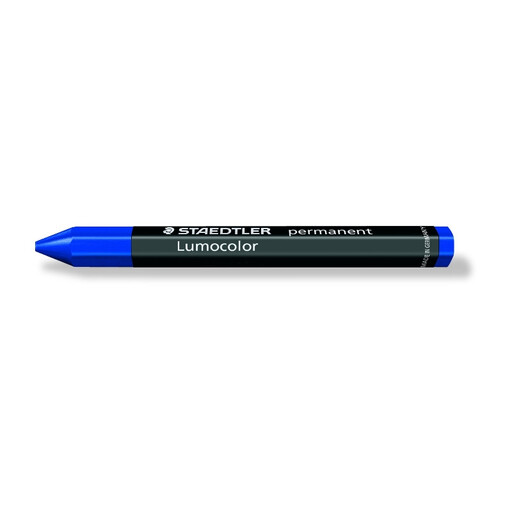
Why this product suits this profile: For tradespeople, carpenters and workshop or industrial users who need to mark damp, dusty or oily surfaces.
Its wax-based formula is designed for marking dry, wet, dusty and oily surfaces, so it shouldn’t be mistaken for a paper marker.
Waterproof, lightfast and odourless marking; hexagonal shape helps prevent it rolling away.
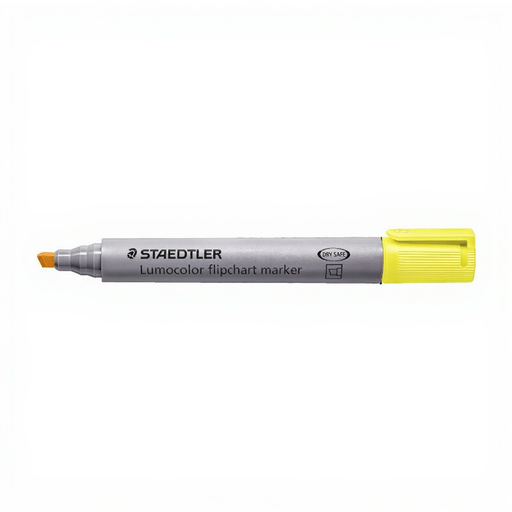
Why this product suits this profile: Suitable for flip chart paper, teaching and meetings when you need variable line widths between 2 and 5 mm.
The water-based ink is designed for paper, so you won’t mistakenly use this marker on glass or as a permanent marker.
Chisel tip with a 2–5 mm line width, low odour and DRY-SAFE technology, according to the manufacturer.
We’ve put together a comprehensive, regularly updated list of products that meet these strict selection criteria and the safety regulations in force across the EU.
For permanent marks, consider specialist glass markers, glass marking pencils or wax-based Glasochrom pencils. Look for descriptions such as waterproof, opaque and suitable for glass. For temporary notes, a non-permanent, water-soluble marker is more practical, as you can wipe it away with a damp cloth.
How long they last depends on how you use and store them, and whether you replace the cap properly. Always close the cap fully after use. Markers labelled DRY-SAFE can be left uncapped for longer, according to the manufacturer, but it’s still best not to leave them open unnecessarily. Direct sunlight and high temperatures can affect the ink or wax lead.
A carpenter’s pencil usually has a flat or hexagonal barrel and is designed for marking wood and building materials. For permanent, coloured marks, a waterproof marker or Omnigraph marking pencil may be more suitable. Choose according to the surface, how visible you need the mark to be and whether you’ll need to remove it later.