For complete stationery sets, a kit with a standard zoom is a sensible starting point, as long as you can adjust the angle of view to suit the height you have available for your camera. If you want to show small print or embossing in close-up, check the magnification of the specific lens or the close-up function on a compact camera: a kit zoom is not automatically a 1:1 macro lens. For consistent series of photos, use a sturdy tripod, keep the lighting the same and set the white balance deliberately. Canon UK identifies these as relevant considerations for product photography and challenging lighting conditions.
Who photographs stationery sets?
Set photographers
You regularly photograph complete stationery sets from the same overhead angle and need a suitable framing and a repeatable arrangement. Canon UK describes a tripod as a useful way to maintain consistent framing in product photography.
Detail photographers
You want to capture small prints, embossing or paper textures in close-up, with every detail clearly visible. What matters is the close-up capability of the specific camera and lens combination, not just the camera body's pixel count.
Colour and series photographers
You compare different versions with white or coloured paper across several photos and need consistent lighting and a controlled white balance. Canon UK notes that you can adjust the white balance in challenging lighting conditions.
What should you look for when buying?
Mirrorless camera with standard zoom
A good fit if: You mainly photograph complete sets laid out flat and want to vary the framing. Check that the focal length range is sufficient for the height you have available for shooting.
The trade-off: A standard zoom is not automatically a macro lens. Canon gives the RF-S 18–45 mm a maximum magnification of 0.25x when manually focused at close range, not 1:1.
Mirrorless camera with macro lens
A good fit if: You want to show small text, embossing or paper textures in close-up. Sony and Nikon both give their SEL30M35 and NIKKOR Z MC 50 mm f/2.8 a reproduction ratio of 1:1.
The trade-off: A macro lens is an extra piece of equipment. Check the mount, working distance and lighting setup. Depth of field also becomes more challenging at close range.
Compact camera with fixed lens
A good fit if: You want to take occasional close-ups without changing lenses. OM Digital Solutions gives the Tough TG-7 a close-up focusing distance of as little as 1 cm.
The trade-off: A focusing distance of 1 cm does not mean the reproduction ratio is 1:1. The short distance can also make it harder to light small stationery items.
First, test the framing with your set laid out and the camera at the height you plan to use. Then decide whether a full-set view is enough or whether individual details need greater magnification.
| What you need |
What to check before buying |
Who should pay particular attention? |
| Capture the whole set |
Compare the set size and camera height with the lens's angle of view; check exactly what's included in the specific kit. |
If I photograph the whole set from a fixed overhead angle, the camera height and framing need to work together. Around 31% of consumers put an overall view first. |
| Show small details |
Check the reproduction ratio of the specific lens, the mount and the space available in front of the subject. |
If I want to show tiny text or paper textures in close-up, I need a suitable close-up combination and enough room for lighting. Around 25% of consumers prioritise detail magnification. |
| Compare colours across a series |
Test with the lighting you plan to use; check the white balance and, if you intend to edit your photos, whether the exact camera model supports RAW. |
If I compare paper and ink colours across several sets, I want to control the effect of lighting and white balance. Around 25% of consumers put colour consistency first. |
| Plan a complete setup |
Check the lens, battery, charging options and accessories included with the specific offer; with a compact camera, bear in mind that the lens is fixed. |
If I want to put together as few separate components as possible, what actually comes with the offer matters to me. Around 19% of consumers prioritise a simple, complete setup. |
Common buying mistakes
-
Assuming megapixels determine how well a camera captures detail
How large small text appears in a photo also depends on the reproduction ratio of the lens you use. Greater magnification makes depth of field and lighting more challenging.
First decide how large you want the smallest text to appear in the photo. Then compare the reproduction ratio of the specific lens, its mount and the distance to your subject.
For greater close-up magnification, you may need an additional compatible macro lens.
-
Assuming a camera body offer is a ready-to-shoot kit
A camera body and a zoom kit are different options. Nikon says that a charger is not included with its Z50II body offer; lenses also vary depending on the offer.
Compare the exact variant and check every item included before making your decision.
-
Assuming a white background will automatically give you accurate colours
A sheet of white paper can show a colour cast in challenging lighting. A tripod keeps the framing steady, but it won't correct the colour of the light.
Test your lighting on the set and set the white balance deliberately before photographing a whole series. Canon UK recommends a tripod for consistent framing in product photos and explains how to adjust white balance in challenging lighting conditions.
Camera brands to consider
Canon
The EOS R50 is worth considering as a camera body or with an RF-S standard zoom for full-set views. For greater close-up magnification, you could look at separate lenses in the RF system.
- Canon UK gives the RF-S 18–45 mm a maximum magnification of 0.25x when manually focused at close range.
- This is not a 1:1 reproduction ratio. What comes in the box depends on the specific variant and bundle.
Sony
The ILCE-6400 is an APS-C E-mount camera body. The SEL30M35 is a separate lens option for close-up photography.
- Sony gives the SEL30M35 a 1:1 reproduction ratio and lists RAW support for the ILCE-6400.
- At its maximum magnification, Sony gives the distance between the front of the lens and the subject as 2.4 cm. Plan for the lighting setup and the need to buy the lens separately.
Nikon
The Z50II is an option for full-set views as a camera body or with a zoom kit; the NIKKOR Z MC 50 mm f/2.8 is a separate macro lens.
- Nikon gives the NIKKOR Z MC 50 mm f/2.8 a 1:1 reproduction ratio.
- This applies to the macro lens, not a standard zoom kit. Nikon says its Z50II body offer does not include a charger; what's in the box can vary between versions.
Fujifilm
The X-S20 is an X-mount mirrorless camera body for anyone who wants to edit RAW files and choose a lens to suit the shooting distance.
- Fujifilm gives the X-S20 26.1 effective megapixels and 14-bit RAW.
- These specifications don't guarantee a particular close-up magnification or colour accuracy under your lighting. The lens you choose and the lighting itself are what matter.
OM SYSTEM
The Tough TG-7 is a compact camera with a fixed lens, designed for occasional close-ups without changing lenses.
- OM Digital Solutions gives it a close-up focusing distance of as little as 1 cm and around 12 megapixels.
- The short distance can make it harder to light small stationery items. Focusing distance alone doesn't prove that the reproduction ratio is 1:1.
Camera offers at Joybuy
The following Joybuy offers list general photography or camera features. Before buying, check that the framing, close-up capability and lighting suit your specific setup for photographing stationery sets.
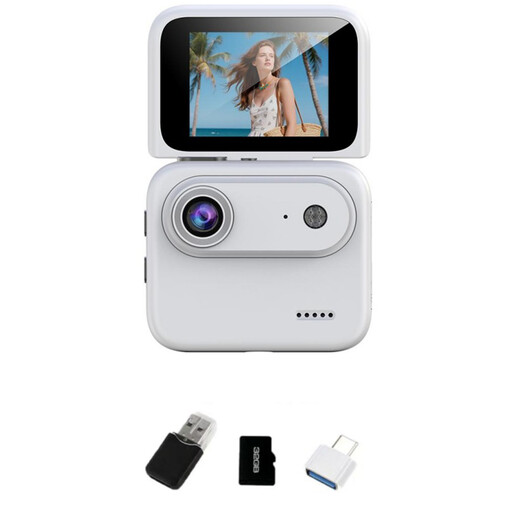 No image available
NAXSIR 4K Mini Action Camera, 32 GB TF Card, 2.0 inch Flip Display, 143° Wide-angle Lens, Built-in Image Stabilization, White
For stationery sets, check that you can get the framing you want from your planned camera position.
The product title lists a 143° wide-angle lens, image stabilisation, a 2.0-inch flip display and a 32 GB TF card. The listed version is white.
View at Joybuy
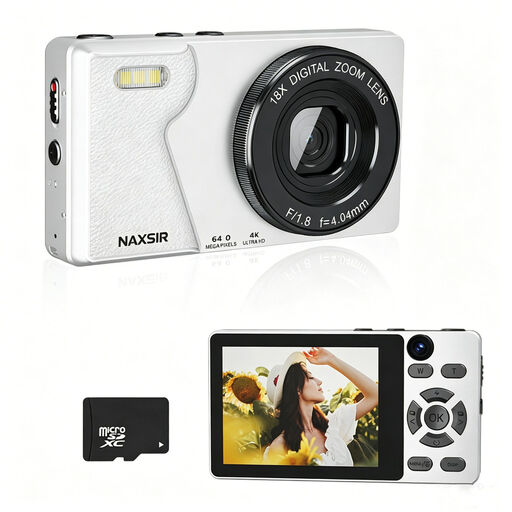 No image available
NAXSIR 4K Ultra HD Digital Camera, 64 MP, 18x Digital Zoom, Autofocus, 32 GB Memory Card
If you're considering a digital camera for photographing sets, test the framing and close-up capability on your actual subject. Don't assume the pixel count alone determines how large details will appear.
The product title lists a 64 MP photo resolution, 18x digital zoom, autofocus and an included 32 GB memory card.
View at Joybuy
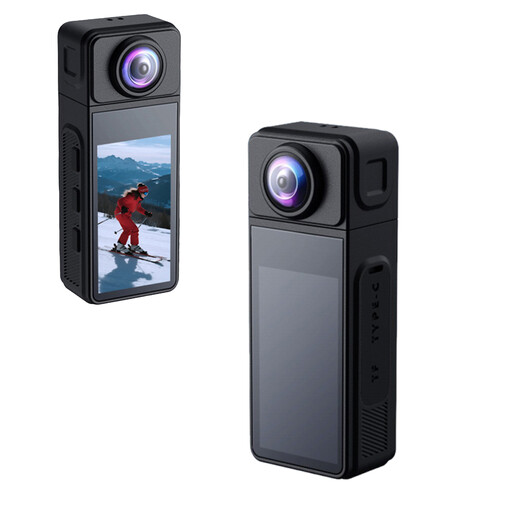 No image available
NAXSIR 2K Mini Action Camera, 270° Rotatable Wide-angle Lens, Magnetic Housing, Electronic Image Stabilization
For individual stationery photos, check that you can position the camera steadily where you want it and get the right framing for your set.
The product title lists a 270° rotatable wide-angle lens and a magnetic housing with electronic image stabilisation. The product description also lists a one-click photo function.
View at Joybuy
Frequently asked questions
How can I make photos of several sets comparable from the same angle?
Put the camera on a tripod and mark where the set goes. Canon UK describes a tripod as a useful way to maintain consistent framing; also keep an eye on the lighting and white balance if you change your setup.
Is a kit zoom automatically suitable for tiny text?
No. Compare the reproduction ratio of the specific lens included with the detail size you want. Canon gives the RF-S 18–45 mm a maximum magnification of 0.25x when manually focused at close range; Sony gives its separate SEL30M35 a 1:1 ratio.
What should I know about what's included and faulty goods when buying a camera online in Germany?
Check the lens, memory card and charging options for the specific version on offer. When you buy new goods from a trader in the EU, faults are covered by a legal guarantee of at least two years; these trader rules do not apply in the same way to private sales.


